














 |
| VOL. 23, NO. 18 | MARCH 27, 1998 |
|
University Archives, Columbiana Complete a Merger
he Office of the Secretary of the University recently merged the University Archives and the Columbiana Collection.
Formerly separate units, the Archives and Columbiana both house collections related to Columbias history.
The Archives maintains unpublished, unique institutional records such as the minutes of the Universitys Trustees and presidential correspondence, and Columbiana holds published sources, such as books and University publications, as well as a significant photograph collection.
The two collections, now called the University Archives and Columbiana Library, primarily benefit researchers, including faculty, students, administrators and the public.
Reference service hours have almost doubled. The new unit is open to the public from 9:30 A.M. to 4:30 P.M., Monday through Friday.
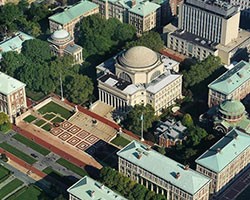
The Archives-Columbiana reading room in 210 Low has been reorganized to accommodate additional researchers and to create a better organized and more attractive research area.
Rhea E. Pliakas, formerly the director of the University Archives and now director of the University Archives and Columbiana Library, noted that other university and college archives retain both published and unpublished sources together. And for good reason. The sources maintained in the Archives and Columbiana are integrally related.
Researchers studying various aspects of the Universitys history often require materials from both the Archives and Columbiana. These materials should be housed, accessed and managed as a unit, she said.
While all staff provide reference service to the combined collections, Hollee Haswell, curator of Columbiana, continues to work on the maintenance of the Columbiana Collection, and David Hill, assistant director of the University Archives, works primarily on the maintenance of the archival collections.
The Archives-Columbiana unit frequently works with University schools and departments celebrating anniversaries, faculty working on historical publications, students with class projects, student groups, and administrators determining past policies and practices.
|