







 |
| VOL. 23, NO. 23 | MAY 20, 1998 |
|
A New Beginning
Vital Signs Remain Strong: A Banner Year for Columbia Now Comes to a Close
BY AMY CALLAHAN
f one could check the pulse on Alma Maters wrist, the beat would be strong and steady. Strong, as the University improves and grows in all areas, from its rising national and international profile and record-breaking admissions figures to its financial soundness. And steady, in that all signs point to sustained health and prosperity.
Indeed, the close of this academic year marks the conclusion of five years of unprecedented growth at Columbia.
Among the highlights of the last five years: the endowment grew to $2.6 billion, patent and licensing income doubled, annual gifts doubled, Columbia College became one of the most selective undergraduate schools in the nation, our professional schools of law, business and medicine emerged among the nations most competitive and Columbia strengthened relations with its neighbors with unprecedented University participation in community outreach. Columbia continued its role as a world-class research institution with considerable scientific discoveries, and the architecturally historic campus was fortified with major capital improvements to the Law Schools Greene Hall, Furnald Hall, Casa Italiana, the School of the Arts Dodge Hall and Journalism Hall. As we look around campus now, we see other once-in-a-lifetime projects underway: construction of the new student center, Alfred Lerner Hall, and a $70 million renovation of Butler Library.
This year, Columbia gained its 57th Nobel prize winner, alumnus Robert C. Merton, who was recognized for his work in economics. And the University received a $26 million gift from international businessman Z.Y. Fu, to revitalize the engineering school. The school is now named in his honor: The Fu Foundation School of Engineering and Applied Science.
 | | Z.Y. Fu gave $26 million to the engineering school. |
|
This year Columbia dedicated the Universitys first Torah scroll, welcomed as a visiting scholar Chinas most prominent dissident Wei Jingsheng and congratulated Columbia College sophomore Cristina Teuscher as she became the first ever Ivy League woman to win a national swimming title.
The Universitys gains were recognized in the financial world this spring when Standard & Poors Corp. upgraded Columbias debt rating from AA+ to AAA. The firm cited the Universitys increased selectivity, an expanded endowment, successful fundraising and effective financial strategies as the reason. Only eight other universities have this top rating: Caltech, Grinnell, Harvard, MIT, Princeton, Rockefeller, Stanford and Yale.
Columbia in New York
Prospective students consistently cite Columbias location in New York City as a major draw, and this year the University continued to expand its ties to the worlds greatest city. In the fall, the student Passport to New York was created with an agreement among Columbia, the Metropolitan Museum of Art and MoMA, which allows students to use their C.U.I.D.s for free entry. Internships and work-study opportunities were also created, including at Lincoln Center.
On Columbia Community Outreach Day last month, 850 students and members of the Columbia community fanned out across the city, assisting more than 40 social programs and neighborhood projects, including soup kitchens and restoration projects in Harlem. President George Rupp worked side-by-side with students and volunteers from Habitat for Humanity renovating housing in Harlem.
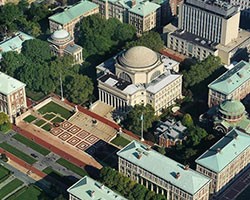
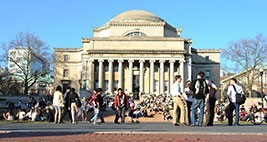
And while Columbia has been a fixture in Manhattan since 1754 (when the first class of eight students was held in the vestry of Trinity Church on lower Broadway), this year Columbia celebrated the 100th anniversary of the Morningside Heights campus, with several exhibits, including Mastering McKims Plan: Columbias First Century on Morningside Heights.
Other programs and events further connected Columbia to the neighborhoods surrounding the campus: An employment and training program sponsored by Facilities Management helped the University hire more than a dozen new full-time and temporary workers from New York City neighborhoods; and more than 150 Columbians attended a tribute to Dr. Martin Luther King Jr. in Harlems Apollo Theatre, at which University Chaplain Jewelnel Davis delivered a commemorative prayer. Columbia was recognized by Professional Women in Construction for the Universitys track record of hiring firms led by minorities and women. Nearly 35 percent of the construction firms building Lerner Hall are headed by women or members of minority groups, and close to 37 percent of the work force on that project has been similarly diverse.
International Presence
This year Columbia was also a hub of international activity. For the first time, representatives from North Korea and South Korea sat down to discuss future peace talks. Chinese and American officials also participated in the talks, sponsored by SIPA, which attracted international headlines. SIPA Dean Lisa Anderson and Barnards Ester Fuchs , director of the Center for Urban Policy, advised London city officials on how to better organize that citys government. London city officials who run a program similar to the Upper Manhattan Empowerment Zone also joined Columbians and journalists on a panel in February.
The importance of human rights work was underscored on campus this year: Columbia Law School launched a new program for legal education in human rights. The Reebok Human Rights Award ceremony, hosted by SIPA, was held in Low Rotunda in March.
Intercultural Studies
While the Core Curriculums intense study of Western art and thought from classical to modern times remains a major strength, Columbia continues to build its curriculum in African, Latin American and Asian studies, and in the diversity of American cultural traditions. The University named directors for the next year for the programs in Latino and Asian-American Studies. Economist Francisco L. Rivera-Batiz runs Latino studies and historian Gary Y. Okihiro heads Asian-American Studies. Also, the University announced Michael Eric Dyson joined the African-American Institute as a visiting professor, Lee Baker joined both the department of anthropology and the Institute, and Gina Dent, who joined the English department, is also working with the Institute.
In September, the Intercultural Resource Center moved to a new location at 552 West 114th St., where it continues to foster campus awareness and appreciation of African American, Asian American, Native American and Latino cultural contributions.
Discoveries and Research
Columbia proved once again its great place in the ranks of world-class research institutions, with numerous discoveries and findings in the fields of medicine, earth sciences and the humanities:
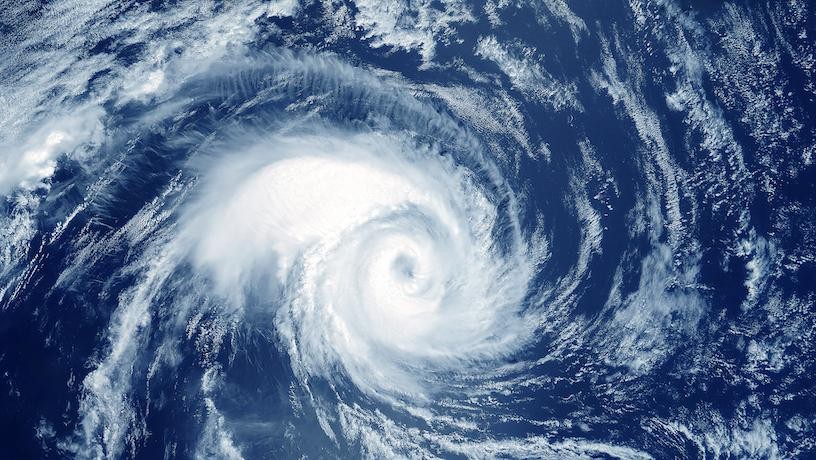
Last September, scientists at Columbias Lamont-Doherty Earth Institute accurately predicted El Niños worst year ever.
Researchers at Columbias College of Physicians and Surgeons announced in March that African Americans and Hispanics have an increased risk of Alzheimers disease.
A cycle of cooling in the earths climate was discovered by a team of scientists at Lamont-Doherty Earth Institute and announced in November. It was found to be a pervasive component of the Earths climate system.
Columbia scientist Wallace S. Broecker last fall warned the scientific world that greenhouse gases could cause the collapse of the oceans prevailing circulation system, resulting in plummeting temperatures in the North Atlantic region.
Seeking to learn the shape of the universe, astronomer David Helfand and graduate student Ari Buchalter announced they will launch satellites to measure cosmic microwave background radiationwhich will provide information about the density of the universe and allow scientists to deduce its shape.
In preliminary findings, CERCs Don Melnick identified a fourth subspecies of chimpanzee with DNA distinct from the three recognized subspecies.
Cyclical increases in the suns brightness may contribute to global warming, Richard Willson of Columbias Center for Climate Systems Research, announced in October.
Columbia physicists, directed by John Parsons, will help build the worlds most powerful particle accelerator located near Geneva. Columbians will provide the Large Hadron Collider with the most sensitive electronics ever made to detect bursts of new particles. William J. Willis will manage the $165 million in American funds contributed to the project.
Angela M. Christiano, professor of dermatology at Columbias College of Physicians & Surgeons, in January reported her discovery of the human gene associated with inherited baldness.
Seismologists at Lamont-Doherty Earth Observatory determined that an earthquake in Russia last summer was mistaken for a nuclear test by government leaders. Such an explosion would have been in violation of the Comprehensive Nuclear Test Ban Treaty.
The School of Social Works Denise Burnett found that Latino grandparents who care for their grandchildren had little formal education, less than $7,500 annual income and 70 percent of them suffered from fair or poor health. Her research was reported in February.
According to research announced in March by Vivien Gornitz of Columbias Center for Climate Systems Research, global warming could flood New York subways, airports and low-lying coastal areassuch as Wall Streetby the year 2030.
Greenhouse gases may be creating a large hole in the ozone layer over the Arctic, according to a report last month by Columbia climate scientist Drew Shindell. The depletion of ozone is thought to a cause of increased levels of skin cancer worldwide.
In April, Lamont-Doherty paleontologist Paul Olsen announce the discovery of 200-million-year-old reptile bones, which add to the scarce fossil record of these pre-dinosaur creatures. The prehistoric bones of the foot-long reptile were discovered in Pennsylvania.
Newsmakers
In Low Rotunda, Vice President Al Gore stressed the nations pending need for more teachers and encouraged students to dedicate their careers to educating children.
 | | Vice President Al Gore urged students to become teachers, in Low Rotunda last October. |
|
Acclaimed Francophone writer, Professor Maryse Condé, was named director of the new Center for French and Francophone Studies.
Stephen Friedman, senior chairman and a limited partner of Goldman, Sachs & Co., was named chairman of the University Trustees. The Hamilton Medal was awarded to University Trustee Alfred Lerner, chairman and chief executive of MBNA Corp., whose gift to the University is helping build the new student center, Lerner Hall.
In General Studies, Peter Awn began his first academic year as dean of that school and Bridget Burke, GS student council president, introduced several new student initiatives for General Studies students: developed specific GS programs with Career Services, increased interaction with the Universitys other undergraduate schools and helped create a new libraries policy that allows students who are parents to enter the libraries with their children.
Columbia Colleges Roger Lehecka, CC67, dean of students for 19 years, announced he will take on a new role at the College, that of director of alumni programs and special advisor to the dean. Paul Fernandes, the head baseball coach for 21 years, announced his resignation in April. However, he will remain as associate director of athletics.
In April, Harvard Professor Robert J. Barro backed out of an agreement to join the Columbia economics and Business School faculty. This unexpected news followed an article in The New York Times, which included an inflated salary figure and other incorrect details of the agreement.
School of the Arts: Film Division: Professor James Schamus, a film producer, released The Ice Storm to critical acclaim. The film was based on the novel by Writing Division alumnus Rick Moody. And two alumni won Pulitzer Prizes: reporter Will Englund, Journalism76, of The Baltimore Sun, and editor Bernard L. Stein, CC63, of the weekly Riverdale Press.
And many dignitaries and prominent thinkers and artists visited campus: Eli Wiesel launched a new Judaic Studies chair at Barnard with a series of lectures; Angela Davis delivered the Black Heritage Month keynote address in Miller Theatre on Feb. 27; Cynthia Ozick read at Barnard; Savion Glover danced in Miller Theatre, and the Rev. Jesse Jackson spoke to undergraduate students in Levien Gymnasium about the importance of affirmative action policies.
During one of the most raucous evenings on campus this year, a standing-room-only crowd filled Levien Gymnasium to watch the Columbia mens basketball team play nationally-ranked Princeton. The Lions were close at the half, but fell as the Tigers went on to the NCAA regional finals.
Moving Forward
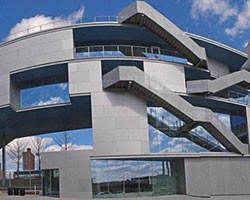
Meeting the needs of an evolving, modern University continue in Columbias planning. Provost Jonathan R. Cole recently announced the University has committed an additional $35.9 million to capital and operating costs of the Libraries. The new state-of-the-art Business and Law building is being constructed on Amsterdam Avenue. Plans are proceeding to build a new residence hall on Broadway at W. 113th St., and the new Alfred Lerner Hall student center is slated to open sometime in 1999.
But not all was celebratory on campus this year. While contracts were successfully negotiated with other unions this year, approximately 800 clerical workers, who are members of Local 2110 of the United Auto Workers, did strike for 16 days. At that time, parties agreed to a 4-year contract.
Law student Lynda Hong was killed in March allegedly by her ex-boyfriend who was arrested and charged with the crime. During a memorial service in St. Pauls Chapel, Hong was remembered by friends, family and school faculty as a dynamic, creative woman who was active in the Asian student association and a defender of womens rights.
And the University said farewell to two former University presidents, William J. McGill, who led Columbia to stability during the decade of the 70s, and Grayson Kirk, who, during his 17 years as president secured a place for foreign affairs in higher education.
|