














![]() |
|
| Vol.25, No. 01 | Sept. 3, 1999 |
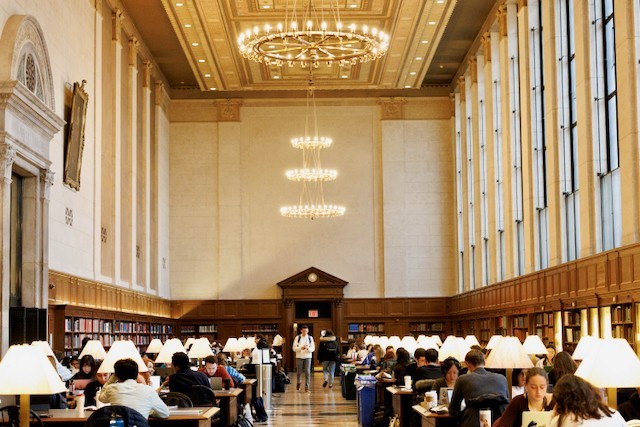
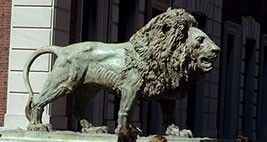
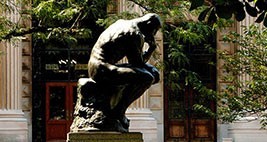
Thirteen-year-old Monica Villa from Houston enjoyed her Columbia visit so much that she wrote a letter of thanks to her tour guide, Jimmy Leung, GS'03: "Dear Jimmy, . . . It was cool. Well when I go to college I want to go there." And Cynthia Mejia, a seventh-grader also from Texas, poured out her enthusiasm for the school to her guide, Edward Lee, CC'99, by writing that "It was really neat seeing the statues and the buildings. My favorite thing was the cafeteria because it was so huge and pretty."
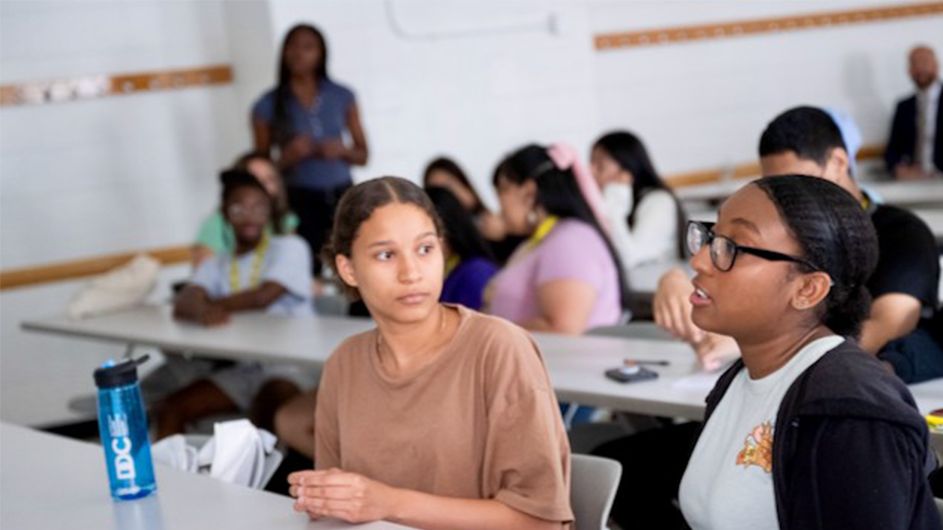
Though Monica and Cynthia are many years from becoming applicants, they and other visitors like them who are not applicants for admission now make up the majority of the approximately 40,000 people who pass through the University's Visitors Center yearly. New York's recent popularity as a city both to live in and to visit has contributed to the rise not only in the number of prospective students coming to Columbia but also in tourists who simply want to see the school much as they would, say, The Metropolitan Museum of Art. The Visitors Center has consequently responded to the influx by becoming a multi-faceted information hub providing the kind of visit that more closely resembles The Met's in its thoroughness and sophistication than the staid and cursory campus tour of old.
"We want to personalize our visitors' experience of Columbia as much as possible," Angela Hoyte, co-director of the Visitors Center, says, "because we get more and more people coming in who want something other than a general tour of the campus." Visitors' requests range from directions to the Statue of Liberty to a personal tour in Arabic for the son of a Saudi dignitary. "We try to help everyone no matter what is needed," Hoyte says, "and with a little notice we can do it in just about any language—from Armenian to Urdu."
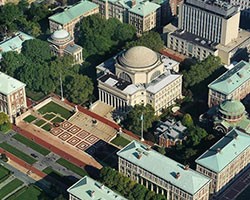
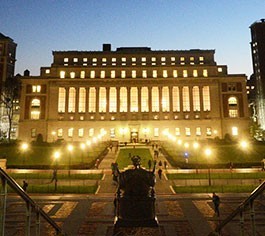
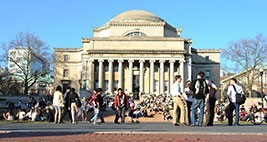
Located in 213 Low, off the foyer inside the building's main entrance, the Visitors Center is decorated with wood panelling, plush carpeting and deep, comfortable chairs to present a warm and a welcoming impression of the school, especially to often-overawed prospective students and their parents. Now Hoyte and her colleague Jodi Buyyounouski, who directs visitors' services for the prospective undergraduate applicant pool in grades 10-12, have added a portable CD player. The Beatles and Mozart help create, Hoyte says, "an even more relaxed and home-type mood in the Center."
The new Visitors Center in Low wasn't opened too soon. Buyyounouski reports that the number of visitors from grades 10-12 alone rose nearly 100 percent from 1995-1998 to more than 17,000. Visits by all other persons accelerated as rapidly, to reach above 22,000 also by the end of last year. And for this June alone visits by non-prospective college students jumped 94 percent ahead of the previous June. The center estimates that at the present rate of traffic more than 45,000 visitors should pass through its doors by the end of 1999.
The underlying explanation for the University's popularity among prospective students and tourists alike is New York City's improved reputation. But Hoyte points out that "Travel agents refer their clients to us because, with sites of historic and cultural value on the campus and in the neighborhood, they know that this is an area worth coming to see and that Columbia's Visitors Center gives tours—and the tours are free." The University as well as Morningside Heights are also listed in many prominent guides to the city, such as Fodor's, Time Out and Lonely Planet.
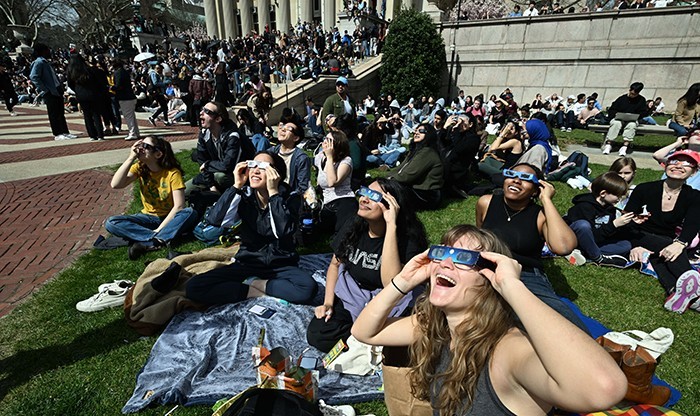
For prospective applicants, the Visitors Center can schedule enough activities to keep them busy almost all day and into the night: information sessions of both a general and a specific kind, tours of the whole campus or just one building, classroom and lab visits, meetings with professors and students and even overnight stays. Before the twice-daily undergraduate tour, the Visitors Center gives an hour-long information session during which a packet is handed out containing maps and booklets and a tour evaluation form.
As well as the undergraduate tours, the Visitors Center also provides tours for graduate students and tours of Columbia's science labs. And student-guides will occasionally improvise to accommodate a group. During a heat wave this summer, a guide devised an "AC Tour of Columbia" to keep sweltering visitors out of the sun and in the best air-conditioned buildings on campus.
The Center has also come up with a list of "Pretty Wacky and Wild Things To Do On an All-Kids Tour"; among them are finding the owl on the statue of Alma Mater, eavesdropping on conversations at the Whispering Bench and spinning the Henry Moore sculpture commonly known as "The Tooth" on Revson Plaza. The center even has a "Self-Guided Tour" for those who don't want to take a tour but prefer exploring the Columbia campus on their own.
With all the information it makes available to the public in every possible medium, the Center is nevertheless constantly at work refining it and gathering more. That leads Hoyte and Buyyounouski to worry that a visitor may come to feel overwhelmed. But with evaluations such as "yours is the best information session and tour in the Ivy League," they have yet to lose a night's sleep over it.
Undergraduate information sessions are weekdays at 10 a.m. and 2 p.m, followed by tours at 11 a.m. and 3 p.m. Graduate and general tours are Monday through Friday at 11 a.m. and 2 p.m. The Visitors Center's phone number is 212-854-4900; the fax is 212-854-4925.