




















![]() |
|
| Vol.25, No. 24 | Jun. 9, 2000 |
By Lauren Marshall
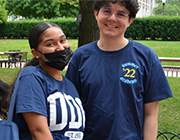
In 1965, two Columbia College students had an idea for a project to provide a common ground for youth from Upper Manhattan communities and students from the "Ivory Tower." The project's name was Double Discovery.
This year, as the Double Discovery Center (DDC) celebrates its 35th anniversary, the need for a bridge to higher education for low-income and first generation college-bound New York City youths is as strong as it was over three decades ago.
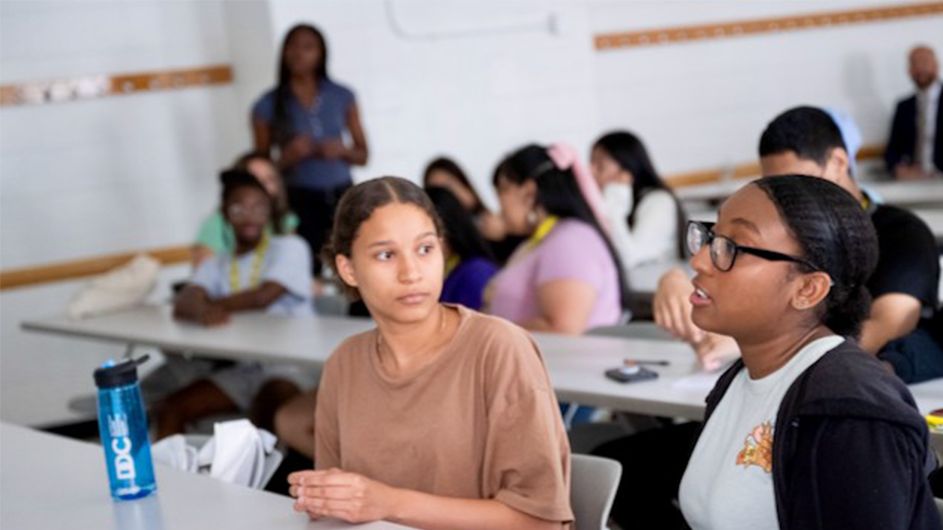
The DDC is an academic enrichment program that helps New York City students, particularly those from the communities surrounding Columbia University, to graduate from high school and college. Of those who participate in DDC programs, 96 percent graduate from high school and 66 percent go on to graduate from a four-year college. The national rate of college graduation is 46 percent.
At the DDC, some 30,000 high schoolers have learned about colleges and careers, gained a better sense of self and were encouraged to improve their academic work.
But they are just half of the beneficiaries of Double Discovery. Generations of Columbia students who have tutored and mentored Double Discovery students have also been affected by the experience, and for some their lives were changed because of it.
Roger Lehecka, CC'67, one of the two founding members of the Center, who went on to become Columbia College Dean of Students and is now Director of Alumni Programs, was one of those students. Lehecka and partner, Steve Weinberg, CC'66, formed the Double Discovery Center as a place for mutual learning.
"If someone had told me 35 years ago that the Double Discovery Center would still be here today, I would have been shocked. We thought that once we demonstrated that struggling students were smarter than high schools thought them to be, the schools would change."
Today the DDC serves approximately 1,000 students in grades 7-12 who either live or attend school in Upper Manhattan . To qualify for the largely federally-funded program, students must be either low-income or first generation college-bound. And the fundamentals are the same. "The DDC still serves very bright promising students who without a program, might not be successful," Lehecka said.