| |
| |
Alumni Profiles |
| |
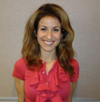 Tara Calderbank Batista '14PhD Tara Calderbank Batista '14PhD
Adjunct Professor, School of Business Administration
Stetson University
What do you do in your current role?
As part of my dissertation, I am currently surveying foster care alumni in Florida who have (and those who have not) participated in a program called Florida Youth Shine. The study explores youth empowerment in the foster care system. I am also teaching a section of professional communication at the Stetson University School of Business in Deland, Florida.
Tell us about your career path.
While working on my dissertation, I was unexpectedly offered a full-time contract as a visiting lecturer at Stetson when one of my former professors experienced a health crisis and rapidly retired. My plan was to continue working full-time at Stetson while I finished my dissertation for my PhD from CSSW, but then I was awarded a $20,000 fellowship from the American Association of University Women; since then, I have scaled back to teaching only one class per semester to adhere to the fellowship’s work restriction limit of 15 hours per week. I plan on graduating in May of 2014 and hope to secure a full-time academic job soon thereafter.
What do you enjoy about your job?
I truly love getting to know my students at Stetson and am thoroughly enjoying meeting and creating bonds with many of the foster care graduates whom I have surveyed and will continue to survey for my dissertation.
What impact did CSSW have on your career?
I don’t think I would have been able to conduct my dissertation study without the credibility of CSSW behind me. It opened and continues to open doors for me. In fact, key executives in Florida Youth Shine have expressed their gratitude for the opportunity to be involved in the Columbia University study. I’m also grateful that CSSW has made it possible for me to become an AAUW Fellow.
What do you remember most about your time at CSSW?
I remember staying up until 4 a.m. studying in the 9th floor cubicles. The 9th floor doctoral lounge was my home for the first two years of the program. I’m not kidding: I had a locker, a fridge, a pillow and a blanket; sometimes I even slept there.
Do you have any advice for CSSW students or alumni who are interested in your field?
Get your MSW before your PhD in social work, or get them simultaneously. This is the only field where the MSW is more important than the PhD for teaching in academia.
What are you reading and/or following now (e.g. book, blog, social media groups, etc.)?
I asked my colleagues in diverse fields to recommend a summer reading list that would enhance my writing skills. A colleague at Oxford who had majored in neuroscience suggested The Selfish Gene, by Richard Dawkins. Next on my list is Adam Smith’s Theory of Moral Sentiments, which was recommended to me by a history of economics major. Works by Jane Austin and Virginia Woolf are on my list, too. |
|
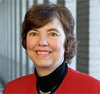 Elaine Congress '69 Elaine Congress '69
Professor and Associate Dean for Continuing Education and Extra- Mural Programs
Fordham University
What do you do in your current role?
I am Associate Dean for Continuing Education and Extra-Mural Programs and Professor at Fordham University. In my administrative capacity I develop and oversee many new initiatives and programs, including most recently a new Master in Science in Nonprofit Leadership degree program sponsored jointly by the Graduate School of Social Service and the Graduate School of Business Administration, as well as a joint MSW/MPH program with Mt. Sinai. As an academic I am actively engaged in writing professional publications and presenting at conferences. In the course of my academic career I have written seven books and over 40 articles with a focus on cultural diversity and competence, social work values and ethics, and social work with immigrants and refugees.
Tell us about your career path.
I was not always an academic! After graduating from CSSW I worked first as a practitioner, then supervisor, and finally administrator in a mental health clinic in Brooklyn that serviced primarily poor Latino clients. When I was at the clinic, I first started to supervise students from Hunter and then enrolled and graduated from City University of New York with a DSW. After graduation I moved into academia, first by adjunct teaching and then into the positions of Assistant Professor, Associate Professor, Director of the Doctoral Program, and finally to Professor and Associate Dean. Over the years I have become very interested in international work and now serve as representative for the NGO International Federation of Social Workers at the United Nations, as well as on the NGO Executive Committees of the Migration Committee and the Indigenous Committee.
What do you enjoy about your job?
As an administrator I enjoy developing and conducting new programs. Although building new interdisciplinary collaborations can be challenging, the work is very exciting and empowering. As an academic I relish the opportunity to work in an environment where writing which I have always liked to do is encouraged and rewarded. I also enjoy attending national and international conferences and connecting with social work educators around the world.
What impact did CSSW have on your career?
CSSW was where I had my start as a professional social worker. That is where I first learned about social work values and the importance of respect for all from diverse backgrounds. I also learned about effective clinical skills to use in my interactions with clients in a mental health setting.
What do you remember most about your time at CSSW?
CSSW was then housed in the Carnegie mansion (the corner of 91st and 5th Avenue), a neighborhood very different from where most of our clients lived. During my two full time years at Columbia I remember being very busy with a 21 hour field placement with process recordings and 12 hours of class work with papers and exams. Before I was accepted into CSSW, I was able to take Human Behavior in the Social Welfare as a non-matriculated student. At the time I was working as a caseworker in the welfare department in New Haven, Connecticut and welcomed the opportunity to learn more from CSSW about a professional social work approach to working with clients.
Do you have any advice for CSSW students or alumni who are interested in your field?
My advice would be to pursue a field of practice and population you are interested in, but not to close off opportunities for new professional experiences. I was initially educated as a clinician which later provided a good foundation for program development and administration. I was initially interested in mental health, but my doctoral education led me to study ethics for social workers and my first professional social work position developed my interest in expanding knowledge in cultural competent practice.
What are you reading and/or following now (e.g. book, blog, social media groups, etc.)?
I am now reading a book on nonprofit leadership and management as I want to increase my knowledge in this area. Most recently I am working on a new book that will focus on integrating social justice into nonprofit management and will serve as a textbook for the new master degree program. For R and R (late at night) I am reading Alexander McCall Smith’s book Trains and Lovers. I am continually impressed by his understanding of human nature, especially women and have read most of the books in his African series beginning with The #1 Women Detective Agency and his Edinburgh series with Isabelle Dalhousie.
|
|
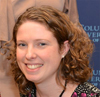 Emily Ball Jabbour '06 Emily Ball Jabbour '06
Performance Coordinator/Social Science Research Analyst
Administration for Children and Families
U.S. Department of Health and Human Services
What do you do in your current role?
In my current role, I am the Performance Officer for the Administration for Children and Families. I am responsible for overseeing the performance management activities and metrics across the 60+ programs at my agency, as required by the Government Performance and Results Act (GPRA) of 1993 and the recent GPRA Modernization Act of 2010.
Tell us about your career path.
I was accepted to the Presidential Management Fellows program - a two year fellowship to recruit future government leaders from graduate programs - during the Spring of my 2nd year at CSSW. Through this fellowship program, I took a position in the Administration for Children and Families (ACF), which is the primary federal agency that oversees human services programs, and have worked there for the last 7 years. During my initial two year fellowship, I also completed a six month detail working for the U.S. House of Representatives as a Health Fellow for the Energy and Commerce Health Subcommittee.
What do you enjoy about your job?
I love the macro level perspective that my job provides, such that I get to work with all of ACF's programs to learn about everything from child welfare programs to TANF to refugee programs to economic support programs. I like that I get to work across many different groups and levels of colleagues, and often have the opportunity to work with leadership at both the agency and department level.
What impact did CSSW have on your career?
I truly owe my current career to CSSW, as I would not have had the policy background to prepare me for a role in federal service. I also strongly believe that I would not have been accepted to the Presidential Management Fellowship without the support the school provided in terms of coaching and guidance.
What do you remember most about your time at CSSW?
I remember being incredibly busy during my time at CSSW! From economics group meetings to field work to student government to studying - I was always running from one thing to the next in order to take full advantage of the CSSW experience.
Do you have any advice for CSSW students or alumni who are interested in your field?
Get involved with talking to alumni in the policy field early on in your job search. I think the policy field still does not realize the immense talent that a social work professional interested in policy work brings to the table, as opposed to a more traditional Public Policy background, so often there is not a clear sense of what jobs are out there for social work/policy professionals. Talking to policy track alumni really helped me expand my understanding of what jobs might be possible for me upon graduation.
What are you reading and/or following now (e.g. book, blog social media groups, etc.)?
I recently read the book Lean In by Sheryl Sandberg, in great part motivated by the fact that I have an 11 month old daughter and am learning how to be a working mom. I found the book very inspiring and it gave me increased confidence that it is possible to have a career and a family. |
|
 Alena Gerst '09
Licensed Clinical Social Worker and Yoga Instructor
New York City Hospitals
What do you do in your current role?
I bring my social work skills to the medical profession, particularly working in mind/body health and wellness. I work in an outpatient mind/body health and wellness center for women with disabilities as a part of NYU Medical Center, providing individual and group counseling and leading meditation and breath workshops for anxiety and depression. As a certified Yoga teacher, I also integrate my clinical and mind/body backgrounds on inpatient units at New York City hospitals, and in private practice.
Tell us about your career path.
After obtaining my degree in psychology, I came to NYC from Arizona in 1998 as a professional dancer and singer. As a dancer I was naturally drawn to Yoga to maintain health and fitness. Over time, I became increasingly drawn to service beyond entertaining an audience, so after 10 years in the business, I decided to get my masters in social work while also studying to become a Yoga teacher.
What do you enjoy about your job?
I love being in a position to help people obtain the tools to lead more independent lives. I also relish helping people learn about the powers within themselves they can use to feel better. And I am thrilled to be positioned in a clinic whose mission is to spread knowledge on the benefits of not just curing a disease, but healing and being well.
What impact did CSSW have on your career?
CSSW's clinical focus on health, mental health and disabilities was perfect for me. The coursework and electives taught me the clinical tools I needed to get started on my career, while also allowing space for me to explore my interests in mind/body health and wellness. I was able to integrate my interests into my research with full support of my professors.
What do you remember most about your time at CSSW?
The accessibility and commitment of my professors to see me succeed.
Do you have any advice for CSSW students or alumni who are interested in your field?
Informational interviews are extremely helpful. If you read an article or go to a lecture that is of interest to you, contact the expert and ask if they can answer some questions about their trajectory and training. Nine times out of ten, they will be happy to talk to you.
What are you reading and/or following now (e.g. book, blog, social media groups, etc.)?
I subscribe to several wellness and health related emails, blogs, and periodicals. My favorites are MindBodyGreen, Dr. Frank Lipman's Weekly Roundup, and Yoga Therapy Today. I am awaiting publication of my first book, which is a wellness handbook for performing artists, and have begun collaborating on my second book about wellness with a friend and colleague who is a physician and acupuncturist. |
|
|
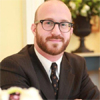 Ethan Haymovitz ‘05 Ethan Haymovitz ‘05
Grants Officer
International Gay and Lesbian Human Rights Commission
What do you do in your current role?
I always thought my role as Grants Officer at the International Gay and Lesbian Human Rights Commission was interesting, given that it is a somewhat unconventional role for a social worker to fill. I am the go-to person for all issues related to proposals, reports, and grants management, and the primary point of contact for foundation program officers. I collaborate with program directors and staff on project-specific proposals and reports, maintain our electronic grants calendars and database, prepare acknowledgements, coordinate deliverables, research new funding sources and keep abreast of the international human rights funding landscape. We receive 62% of our funds from private sources, so it is a pretty important position.
Tell us about your career path.
I actually started my career as an academic, having spent my first year out of Columbia in a PhD program at Cornell studying the psychological origins of gender and sexual orientation in children. A critical moment for me was when I decided to apply for a grant from the National Institutes of Health to support my research and actually won it; ironically, it was then that I decided that academia wasn't for me, dropped out, moved back to New York and started looking for work in the "real world." My grant writing skills became my calling card, as I was able to demonstrate them to employers easily by submitting writing samples along with my resume. Others know the skill when they see it, but I don't know if writing is for everyone; I was a chronic journal-keeper for ten years before I became involved with grant writing. This really beefed up my ability to work through "writers' block" to the point where I no longer experience it.
What do you enjoy about your job?
I absolutely love my work. I was born to be a writer; it comes naturally to me and I enjoy it. But perhaps most importantly, I am deeply passionate about the issue to which I find myself devoted in this particular role. I have written on behalf of many different causes in the past, but this one is very close to my heart. The way same-sex relations and unconventional gender identities are received in many parts of the world is appalling. I feel honored to be in a position in which I can leverage my skills to fight such injustice.
What impact did CSSW have on your career?
Like many, I was drawn to social work in the first place because of my commitment to social justice. I often describe my education there as more theoretical; because social workers do so many different things with so many different tools, my primary lesson was to observe social dynamics and assume professional responsibilities that would be consistent with my values. That said, the six-week course on grant writing required of all AGPP majors ultimately opened many doors for me.
What do you remember most about your time at CSSW?
I remember being very disappointed to find that - unlike those of my peers - my curriculum was almost entirely circumscribed. Because I was a dual major in social research and AGPP, I was only able to take one elective during my first year and that was it! This turned out to be a boon for me, however, as I have since learned that structure is where I thrive.
Do you have any advice for CSSW students or alumni who are interested in your field?
If you want to be a grant writer, start volunteering now to assist organizations that lack the resources to prepare serious grant proposals. If you have two or three strong writing samples in your portfolio, you can easily score a job in the field.
What are you reading and/or following now (e.g. book, blog, social media groups, etc.)?
I always like to know what my fellow CSSW alumni are doing, so I keep up with the School's activities and communications. I also follow Young Nonprofit Professionals Network, Idealist.org, the United Nations Young Professionals Network, and the International Federation of Social Workers, and a cornucopia of queer-themed organizations, groups, and feeds.]
|
|
 Kazuko Kato ‘13 Kazuko Kato ‘13
Public Policy Specialist
Novaces, LLC
What do you do in your current role?
I’m currently working on a contract as a Public Policy Specialist in Oklahoma City as part of task order DR-4117-OK under FEMA and the Economic Development Administration (EDA). I’m leading the efforts in drafting a resilience-based model for economic development following the tornado storms of May 2013.
Tell us about your career path.
I work in disaster recovery and emergency management and have worked on different areas in the industry. Prior to working in economic development, I worked in New Jersey for Superstorm Sandy recovery managing policy for four federal programs that provided assistance to homeowners and landlords. These programs were part of the CDBG-DR and Housing and Urban Development (HUD) recovery efforts. In Bogotá, Colombia I worked with the Bogotá Ombudsman to conduct a program evaluation and make policy recommendations to address the issue of gender-based violence within the internally displaced people (IDP) in Colombia. While in Colombia, I interned at the Bogotá City Council where I contributed to the proposal of legal accords to protect women and children who had been victims of sexual abuse and domestic violence.
What do you enjoy about your job?
I enjoy my job because every project is unique and I learn something new each time. It's a fast paced and challenging environment. I like working in policy for disaster management because it allows me to have a macro-level impact, while having some exposure to the micro level. The policies and programs I have contributed to are new, which is very exciting as they have the potential of becoming best practice models. These policies and programs may be used as guidelines for future natural disaster relief initiatives so the work will be long lasting and influential.
What impact did CSSW have on your career?
The main contribution that CUSSW had on my career was providing me with the tools to understand things from a micro level perspective and translating them into policy in order to have a macro level impact. I believe that in order to be a well-informed policy maker, it is vital to have the set of skills that allow me to really understand the needs of the population.
What do you remember most about your time at CSSW?
I remember being incredibly busy and always running around. I over loaded summer and fall semester and became a frequent visitor to all the libraries at Columbia.
Do you have any advice for CSSW students or alumni who are interested in your field?
I would encourage students who are looking into a policy track to take advantage of their field placements and get as much policy and advocacy knowledge as possible. If interested in the international policy track, definitely look into having an international placement. The experience and exposure I got from my international placement is invaluable. Lastly, explore courses at SIPA—I took several classes at SIPA and think they had a tremendous impact on my overall academic development.
What are you reading and/or following now (e.g. book, blog, social media groups, etc.)?
I recently finished reading I am Malala by Malala Yousafzai and Wave by SonaliDeraniyagala. I plan on reading The Grapes of Wrath by John Steinbeck next.
|
|
 Stephen Knezek '96
Private Practice
What do you do in your current role?
What do you do in your current role? I am currently in private practice. I see a wide variety of clients from children to the elderly. I am seeing more people in the 18 year old to 31 year old time of life (Millennials) who present multiple challenges and many opportunities to help--both as individuals and members of a family. I am a clinical supervisor providing both advanced supervision and supervision for LCSW Licensure. I also am a consultant who helps clinicians to build and maintain a thriving private practice both with and without insurance. I tutor social workers who are preparing to take their license examination. I am co-leader of the NASW/CT Region 2 Meetings in New Haven, CT.
Tell us about your career path.
I started working in mental health at the Hospital of St. Raphael's in 1975 and became a RN in 1983. In 1993 I applied for and was accepted into the MSSW program at CSSW--graduated in 1996 and have been a LCSW and in private practice for 14 years. From graduation until LCSW, I worked at Catholic Family Services and Hospice in Branford, CT--the first in-patient Hospice in the USA.
What do you enjoy about your job?
I love connecting with people and forming an alliance that helps them to grow as individuals--whether I am working with them as a psychotherapist, supervisor or consultant. I love working with young people and their families. Early intervention is the best possible preventative medicine.
What impact did CSSW have on your career?
Enormous. CSSW ('96) showed me the importance of systemic family therapy--I have used this approach to help thousands of families! I learned The Functions of Public Welfare and Regulating the Poor from my Policy Professor, Richard A. Cloward (The most satisfying A+ I received in graduate school!). I learned how to effectively work with adolescents from Katherine Gordy Levine, who wrote When Good Kids Do Bad Things. My Family Therapy Course with Professor Martha Dore has been the course that I have used the most in my practice. I learned how to do an in depth genogram of a family using my own family as a guide, and while my mother was visiting us from Texas, Dr. Dore allowed me to bring my mother to class! My mother worked in the mental health field and was curious about what I was learning--she also gave all us students a different generational perspective on family life and family therapy based on her observations and experience. I received a world class education from CSSW and I will be forever grateful.
What do you remember most about your time at CSSW?
All my professors really cared about us and worked hard to see that we learned what we needed to know to be contributing members of our social work profession. Many of us have moved on to leadership positions. Also, I had fun. I'll never forget coming in to Manhattan to mentor and greet the incoming class. We went on an awesome Circle Line tour around the entire island! We also had Dim Sum in Chinatown!
Do you have any advice for CSSW students or alumni who are interested in your field?
Relax, have fun. Don't take yourself too seriously. Soak in the whole experience--you will remember it for the rest of your life.
What are you reading and/or following now (e.g. book, blog, social media groups, etc.)?
I contribute to and follow the HelpPro Blog. I follow and contribute to @theMoodBooster tweets. I am looking into Viktor Frankl's Search For Meaning after reading an interesting article about it in The Atlantic magazine. |
|
 Natasha Josefowitz '65 Natasha Josefowitz '65
Author and Journalist
What do you do in your current role?
My 20th book and latest book of poetry, Living Without the One You Cannot Live Without: Emerging from Loss, is now available. I have a biweekly column in a local paper which is also published on natashajosefowitz.blogspot.com. I am also a consultant working with researchers, businesses, universities, and investors in the areas of public health and emerging technology.
Tell us about your career path.
I taught the first course in the country on women in management at the University of New Hampshire. I used the case method I learned at Columbia to teach my MBA students and wrote several books on work issues. I became an international speaker and for ten years I had a weekly segment on public radio and a monthly television segment. Along the way, I found that using humor and poetry was an effective way of breaking through cultural and emotional barriers to bring real change to the way people interacted with and perceived their coworkers.
What do you enjoy about your job?
The opportunity to reach people on both an intellectual and emotional level through my columns and poetry and to interact with them when I do readings.
What impact did CSSW have on your career?
I always remember social work’s mantra: start where the client is. I use this as a guide in all my professional and personal interactions, and it has served me well.
What do you remember most about your time at CSSW?
My two internships: one as an adoption worker and the other as a clinical social worker at Mt. Sinai Hospital.
Do you have any advice for CSSW students or alumni who are interested in your field?
I have found that my background in social work has been useful as a springboard in all my endeavors.
What are you reading and/or following now (e.g. book, blog, social media groups, etc.)?
Super Brain by Deprak Chopra and, recently, The Social Animal by David Books. |
|
 Michael A. Lewis ‘90 Michael A. Lewis ‘90
Associate Professor
Silberman School of Social Work, Hunter College
What do you do in your current role?
I’m currently an Associate Professor at the Silberman School of Social Work at Hunter College, teaching courses in public policy and quantitative methods. My research interests are also in public policy and quantitative methods, mainly applied statistics and machine learning.
Tell us about your career path.
After finishing the Columbia School of Social Work, I enrolled in the CUNY Graduate Center in the department of sociology. I also worked part-time (full-time during the summers) as a community organizer in the East New York section of Brooklyn, NY. After completing the program at CUNY, I was on the faculty of the Stony Brook University School of Social Welfare for about 12 years and started at Silberman about five years ago.
What do you enjoy about your job?
The thing I enjoy most about my job is interacting with students in the classroom. Although my job requires me to engage in research and I enjoy doing that very much, there is nothing like being able to get paid for discussing topics you really care about with people who apparently care as deeply about them as you do.
What impact did CSSW have on your career?
CSSW had a huge impact on my career. This is because that is where I met Richard Cloward, the person, other than family members, who has had more of an impact on my career path than any other person I’ve known. Part of that impact included connecting me to his partner Frances Fox Piven, who ended up being chair of my dissertation committee.
What do you remember most about your time at CSSW?
I remember the times spent in Richard Cloward’s classes, talking with him outside of class, and friends I met while there and who I’m still in touch with.
Do you have any advice for CSSW students or alumni who are interested in your field?
My advice may sound strange coming from a social worker and perhaps it’s a bit too specific. But given what I do, I would tell such a person to study as much mathematics and computer programming as they can, especially calculus, linear algebra, and a high level programming language such as Python. This would be good preparation for the mathematical and statistical programming demands found in modern applied statistics.
What are you reading and/or following now (e.g. book, blog, social media groups, etc.)?
Most of what I read has to do with the kind of work I do. Along these lines, I’m reading a book called Lectures on Probability and Mathematical Statistics by Marco Taboga. |
|
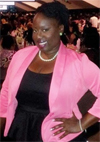 Yetundi Oshodi '12 Yetundi Oshodi '12
Family Service Specialist
Juvenile Justice Initiative
NYC Administration for Children's Services
What do you do in your current role?
Currently, I serve as a Family Service Specialist for the Juvenile Justice Initiative (JJI) of NYC Administration for Children’s Services. JJI is an alternative placement program that advocates for youth who have been adjudicated juvenile delinquents and who are placement bound to receive intensive home based therapeutic programs.
Tell us about your career path.
I started at New York City’s Administration for Children's Services (ACS) as a Child Protective Specialist (CPS), investigating allegations of child abuse and neglect. I completed my MSW at CSSW while serving in this role as a reduced residency student. Shortly after graduation, I applied for my current position within ACS.
What do you enjoy about your job?
I have always had an interest in law and the justice system, so I really enjoy participating in the family court process. Additionally I also enjoy advocating for youth to have the opportunity to receive services that may lower their chances at recidivism.
What impact did CSSW have on your career?
I majored in Social Enterprise Administration (SEA) and found that this methodology really helped to diversify my skill sets and allowed me to be multifaceted in a very well-rounded way. The skills I learned allowed me to work well in all fields, even those outside of social work. Prior to my enrollment, I knew what it was like to participate in a program but SEA taught me how to budget, plan, execute, and evaluate those programs. I am still looking forward to using the Not-for profit, staff development and human resource management knowledge I gained while at CSSW.
What do you remember most about your time at CSSW?
I remember the passion that I had when I was in school; the environment was conducive to creativity and great imaginations. We all had the sense that we could actually “change the world” together. While I was in school, there were so many invaluable resources available, from professors, to the library, to printing paper that are just not available in the same way after graduation.
Do you have any advice for CSSW students or alumni who are interested in your field?
If you are already working within an agency, or if you are interested in a certain agency learn about all of its programs within its divisions, and schedule informational interviews with prominent individuals within the divisions that you are interested in. No matter your field, create vision boards and keep good relationships with the people you meet.
What are you reading and/or following now (e.g. book, blog, social media groups, etc.)?
A great book to read on an honest immigrant perspective is Americanah by Chimamanda Adichie. I just read a great article called Building a New Racial Justice System Movementby Rinku Sen. |
|
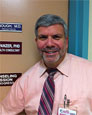 Barry Panzer '89PhD Barry Panzer '89PhD
Psychotherapist
Mental Health Consultant
Pediatric Obesity Clinic
What do you do in your current role?
I have maintained a full time psychotherapy practice with children, adults, and families for more than thirty-five years. In 2011 I also assumed the role of Mental Health Consultant to the Pediatric Obesity Clinic at Brookdale University Hospital and Medical Center. This position involves clinic, teaching, and research activities.
Tell us about your career path.
My first clinical position was in the Department of Child Psychiatry at Kings County Hospital, followed by several consultant positions at special education schools and group homes for the developmentally disabled. During this period I also received postgraduate certificates in family therapy and cognitive behavior therapy. For nearly 10 years I was the senior clinician at the NYC Sudden Infant Death Syndrome program, which ultimately become the topic for my doctoral dissertation.
What do you enjoy about your job?
Helping individuals and families achieve a better life has given my life meaning for nearly four decades. It is especially challenging to be at the forefront of responding to the childhood obesity epidemic.
What impact did CSSW have on your career?
I entered the program with advanced clinical skills, and graduated with a great appreciation for scientific analysis and applications in intervention research. More than any skill acquisition, CSSW provided exposure to greatness, legendary professors such as Carol Meyer, Alfred Kahn, David Fanshel, and Howard Polsky.
What do you remember most about your time at CSSW?
The enthusiasm, diversity, and intellectual capacity of my classmates, many destined to become leaders in our profession. Unforgettable? My pager beeping during a class with Professor Meyer and her interrupting the lecture for me to do a case presentation based on the patient contacting me.
Do you have any advice for CSSW students or alumni who are interested in your field?
There is no substitute for achieving excellence and maintaining your expertise. Read the biography of Dr. Alfred Schweitzer. Choose generativity over stagnation.
What are you reading and/or following now (e.g. book, blog, social media groups)?
Books about Acceptance and Commitment Therapy (ACT), and The Dream Team by Jack McCallum. |
|
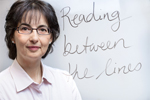 Annette Poizner '93 Annette Poizner '93
Psychotherapy Private Practice
Toronto, Canada
What do you do in your current role?
I am a psychotherapist in private practice. I tend to work with clients when conventional psychotherapy hasn't helped. Clients find me because I do something called projective personality assessment, a practice that has the trained clinician collecting material from them– simple drawings, made up stories, earliest memories, and even samples of handwriting, all of which can be analyzed to derive personal information about them. So I "look under the hood," so to speak, and get information about clients which allows me to target issues in the therapy that follows.
Tell us about your career path.
Twenty-five years ago, I received profound feedback from a therapist who analyzed handwriting and projective drawings. I went on to study graphology. When I did a psychology doctorate at the University of Toronto (after Columbia) my doctoral dissertation explored the use of graphology within psychotherapy. More recently, an academic publishing house has just published my academic text entitled, Clinical Graphology: An Interpretive Manual for Mental Health Practitioners.
What do you enjoy about your job?
I love discovering the mysterious intricacies of the psyche and consider it an honor and a privilege to work with people in this capacity. I am endlessly fascinated by this work. And I love working with really interesting people from a range of professions and callings.
What impact did CSSW have on your career?
Columbia is a school which allows students to pursue their own interests. One professor found the psychology of handwriting to be an interesting topic and gave me the opportunity to do an independent study. That work ultimately found its way into my literature review and my doctoral dissertation.
What do you remember most about your time at CSSW?
I remember the absolute excitement of living in Manhattan. The dynamism of the city. I came from Toronto, Canada and returned home after I finished the degree. I miss New York and look for any excuse to visit!
Do you have any advice for CSSW students or alumni who are interested in your field?
Some students in the clinical track might have an agenda, down the line, to practice psychotherapy. For those students, I would suggest they explore the world of projective psychology, reading and learning, because these skills are extremely marketable. Clients are intrigued to learn about their personality style, gifts and challenges etc.; it draws them in, makes you competitive and establishes your credibility as a person who has insight into them and can be helpful.
What are you reading and/or following now (e.g. book, blog social media groups, etc.)?
I have a long-standing interest in the psychology and traditional medicines from other cultures. I've recently come upon the revised edition of a fascinating classic, Dragon Rises, Red Bird Flies: Psychology and Chinese Medicine. So this is the Chinese medical version of the DSM! I find it fascinating!
|
|
 Amber Rickert '02 Amber Rickert '02
Clinical Manger of School-Based Programs
D'Veal Family and Youth Services
What do you do in your current role?
I am a Clinical Manager of School-Based Programs at D'Veal Family and Youth Services in Pasadena, CA. I provide strategic leadership to assigned programs and utilize leadership to foster professional growth and build staff morale throughout the agency. I also supervise, train, and evaluate staff under my supervision administratively and for the Board of Behavioral Health. In addition, I am a MAP agency trainer, certified to train agency staff in MAP (Managing and Adapting Practice) protocols. In addition, I have a private practice in which I practice Emotional Transformation Therapy (ETT) which utilizes wavelengths of light along with the therapeutic relationship to rapidly heal states of deep emotional distress.
Tell us about your career path.
I have both a Master's of Social Work and a Master's of Public Health from Columbia University. I originally focused on policy and sociomedical sciences. After a year working at Columbia University in the School of Dentistry on an oral health care initiative, I realized I wanted to do direct practice. So I found a job at Center for Employment Opportunities working with ex-offenders (out of Rikers) and non-custodial fathers helping them to adjust to life after incarceration. I also simultaneously did a post-graduation training in psychoanalytic psychotherapy at IPTAR, the Institute for Psychoanalytic Training and Research to assist me in learning the psychoanalytic constructs that I had missed in graduate school because of my policy focus. The year after that I moved to Los Angeles and had a baby. When my son was six months old I went back to work at a residential treatment facility for severely emotionally disturbed children, Hillsides. After five years providing psychotherapy and individualized treatment for this population, I was offered a position at D'Veal Family and Youth Services as a clinical supervisor for their school-based program at John Muir High School in Altadena, CA. After a year-and-a-half in that position I was promoted to Clinical Manager of School Based programs, overseeing all of the school-based services at the agency. While I was doing this, I was also getting my training in Emotional Transformation Therapy and starting my private practice. I am now a Level 5 trained practitioner of ETT and am working towards my certification.
What do you enjoy about your job?
I have a lot of autonomy and flexibility in my position and am able to present new ideas to the management team, which is open-minded and progressive. I was recently able to implement a staff-wide wellness training and program called TRE, Tension and Trauma Releasing Exercises. TRE involves engaging in exercises that promote a sense of calm and well being. They greatly assist with managing stress, compassion fatigue, burnout and secondary traumatization. The agency provided the support and opportunity to offer this to the staff. I also enjoy working with a diverse client-base and staff and have grown tremendously as a leader.
What impact did CSSW have on your career?
My field placements at Catholic Charities in Bushwick and at the United Nations/St. Luke's Roosevelt taught me a tremendous amount regarding how to work independently and solve problems creatively and quickly. Both of my internships were solo experiences and they taught me how to rely on myself and get in touch with my clinical instincts. I was thrown directly into the work at Catholic Charities (I was working with court-ordered mothers who had abused their children) and it taught me a great deal about working in a challenging environment with "resistant" clients.
What do you remember most about your time at CSSW?
My field internship at Catholic Charities and my policy classes with Richard Cloward who was always challenging and supportive.
Do you have any advice for CSSW students or alumni who are interested in your field?
Don't be afraid to dive right in and start learning. Learn to work independently but find good leaders and supervisors to guide you. Trust them. Find a mentor, listen to them. Read a lot. Exercise vigilant self-care. Do not take this for granted.
What are you reading and/or following now (e.g. book, blog social media groups, etc.)?
Power Vs. Force, The Hidden Determinants of Human Behavior, by David Hawkins, M.D., PhD. Resonant Leadership: Renewing Yourself and Connecting with Others Through Mindfulness, Hope, and Compassion by Richard Boyatzis and Annie McKee. |
|
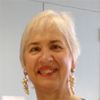 Mary G. Ross '75 Mary G. Ross '75
Former Hospital Social Work Director
What do you do in your current role?
I am presently a volunteer for my development's Neighborhood Watch as the Coordinator, serve as President of my church's United Methodist Women, Long Beach UMW Social Action pro tem Mission Coordinator, Shawl Ministry knitter and PTA volunteer.
Tell us about your career path.
I retired from being a Hospital Social Work Director serving in New York State and California. I was Vice President and President of the Empire State Chapter of Hospital Social Work Directors and Secretary/Treasurer and Vice President of the Western New York Society (American Hospital Association) Social Work Directors. I started the Social Work Department in my local village hospital right after I graduated from Columbia!
What did you enjoy about your job?
It was challenging and there was always something new to learn as I assisted staff in delivering social work services. I always had my own caseload, which was quite fulfilling. Meeting and assisting persons to reach their full potential was the best.
What impact did CSSW have on your career?
Had it not been for obtaining my Masters Degree in social work, I could not have accomplished all that I have. This includes my volunteer time in various organizations after retiring to be a stay at home mom for three children. I participated in all of my children's school's PTAs, holding all of the offices, except Treasurer, as well as serving on the CA State Thirty-Third District PTA as Chair of Education, and my United Methodist Women's work.
What do you remember most about your time at CSSW?
I recall the small classes, running from one end of campus over to 113th Street and spending hours at the library. My field placements were particularly meaningful.
Do you have any advice for CSSW students or alumni who are interested in your field?
Explore, read, and volunteer in the field. There are so many interesting positions!
What are you reading and/or following now (e.g. book, blog social media groups, etc.)?
I belong to a book club, all former PTA/PTSA friends, and we read various genre each month. Last month we read Julia Barnes' The Sense of an Ending. This month it is Dan Sharpiro's Mom's Marijuana and next month we read Beryl Markham's West With The Night. |
|
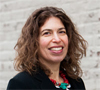 Alissa Schwartz '08PhD Alissa Schwartz '08PhD
Founder and Principal
Solid Fire Consulting
What do you do in your current role?
I create and provide earthy, pragmatic, and engaging solutions to complex organizational challenges. My core practices consist of participatory facilitation, evaluation, planning, and design. I work with nonprofits, philanthropies, and social change communities that are fired up with the passion of their cause, and I have a special focus on arts and culture, human rights and social justice, and children and youth. I’m based out of New York City and work locally and nationally.
Tell us about your career path.
It’s definitely long and winding and full of interesting turns, all with a throughline of helping groups work together better. I went from street theater artist to arts educator to crisis phone line supervisor to working with street youth to advocacy work for homeless people to organizational consulting. I’ve always been fascinated with group and organizational processes, and I am obsessed with figuring out how we can be more satisfied and productive when working together. Humans are very, very social and yet we don’t having the easiest time working well together. After I got my doctorate, I worked as an internal director of evaluation for a large multiservice nonprofit in NYC before I launched my own consulting business, although I’ve engaged in some form of consulting for many years.
What do you enjoy about your job?
I love taking my skills and expertise into new settings. I have technical expertise in program evaluation and research and process expertise in group and organizational design and planning. I love partnering with organizations and communities that are passionate about their mission and helping them to solve workplace mysteries, make strategic decisions, and get to where they want to go. My joy place is designing and facilitating meeting and change processes and watching the lightbulbs above people’s heads go off as they lean in together and develop collective solutions. It always blows my mind to see what people can create together when the setting is conducive to innovation, creativity, and good, hard work. Every time I see meaningful collective action happen, it gets me excited about being a human.
What impact did CSSW have on your career?
I would have never known about the field of evaluation if it hadn’t been for being asked to teach masters level students about it! I’ve been teaching graduate students research, evaluation, and community engagement methods since 2006, at many different schools, and I’ve learned quite a lot in the process. The other impact CSSW had on me was the cross-disciplinary nature of my studies. Not only did I receive wise instruction and guidance from practice, policy, and administration faculty, I was able to work closely with faculty in other parts of CU and Teachers College (the Business School, Organization and Leadership), many of whom had strong ties with CSSW faculty.
What do you remember most about your time at CSSW?
Riding up and down in elevators, whether it was at McVickar Hall or in the new building. It was a great way to bump into friends and faculty. And of course, waiting in the hall while my dissertation committee decided my fate! I am so grateful for the wise, deep mentorship from my dissertation sponsors, Barbara Simon and Jim Mandiberg. I’ll never forget the first day I taught a class. I was a nervous wreck. It got a lot easier after the first session.
Do you have any advice for CSSW students or alumni who are interested in your field?
Learn about what it takes to develop a business, especially marketing and branding. Being an expert in your skill or content area will only take you so far. What will keep you going is knowing how to define your niche and connect with the people who need your services. Ask me again in five years, and I’m sure I’ll have different advice to give!
What are you reading and/or following now (e.g. book, blog, social media groups, etc.)?
I’ve been really into Seth Godin’s blog, and have also been enjoying Brene Brown’s Daring Greatly about the power of being vulnerable and its relationship to deeper connection. I also write a blog, www.art-intellect-practice.com that reflects on my practice, and I belong to a bunch of listservs that keep me up to date in my practice areas, including: Art of Hosting, National Coalition for Dialogue and Deliberation, and Cultural Research. I also read a lot of picture books to my daughter, and especially enjoy sharing with her the ones I grew up with. One favorite is Lore Segal’s Tell Me a Mitzi. |
|
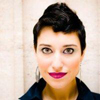 Jenna Benn Shersher '07 Jenna Benn Shersher '07
Associate Regional Director
Anti-Defamation League
Chicago/Upper Midwest Region
What do you do in your current role?
I am currently the Associate Regional Director of the Anti-Defamation League in the Chicago/Upper Midwest Region and the Founder of Twist Out Cancer. At the Anti-Defamation League I oversee international affairs advocacy, young leadership development, social media, marketing and PR for the agency at a national level. At Twist Out Cancer I am the founder and visionary for the foundation which provides psychosocial support for cancer survivors and their loved ones.
Tell us about your career path.
I have been at the ADL for the last six years and in that time my role and responsibilities have grown ten-fold. As a recent young adult cancer survivor I was able to leverage social media to create a necessary community of support. This network has enabled me to spearhead the social media efforts of ADL and likewise enabled me to create my own foundation in 2011.
What do you enjoy about your job?
At ADL my day to day work is completely dependent on the news cycle. I never find myself doing the same thing each day. I love the energy and pace and I have been fortunate to have a boss that has been completely open to developing my skills and affording me opportunities to grow. At Twist I feel that I am able to significantly impact cancer survivors and offer them new outlets for creativity and support.
What impact did CSSW have on your career?
I am incredibly indebted to CSSW for providing me with the clinical and managerial skill set. I use these skills in my day to day activities at the ADL and at Twist Out Cancer. I am [also] thankful that I learned about human resources, program development and implementation and financial management. I still use my coursebooks!
What do you remember most about your time at CSSW?
I absolutely loved my coursework! In particular I loved the courses taught by Judith Marks and Shelly Akabas. I think of them often and believe I am a more thoughtful professional because of them.
Do you have any advice for CSSW students or alumni who are interested in your field?
I think its important to find a job where there is room to grow.
What are you reading and/or following now (e.g. book, blog, social media groups, etc.)?
Cutting for Stone by Abraham Verghese
|
|
 Nathan Smith '02 Nathan Smith '02
Social Worker
Harlem Village Academy High School
What do you do in your current role?
I am currently a School Social Worker at Harlem Village Academy High School. Primarily I am responsible for providing individual and group counseling to students and supporting teachers within the classroom to improve relationships and interactions with students. Additionally, I help to establish working relationships between the school and the Harlem community.
Tell us about your career path.
Before I began doctoral studies at Fordham University's Graduate School of Social Service, I served in a dual position at Harlem Village Academy High School as Dean/Social Worker for three years. Previously I served at the Knowledge is Power Program in New York City as the Founding Social Worker and Founding Counseling Director. I was responsible for providing direction to the counseling program and creating workshops geared towards college persistence for high school and college-age alumni.
What do you enjoy about your job?
I enjoy most working with young people engaged in life's complexities and helping them navigate those obstacles. Satisfaction comes from knowing the young people I work with tussle with finding themselves and ultimately reaching a level of success they can be proud of.
What impact did CSSW have on your career?
The skills and knowledge I acquired at CSSW has helped me in my career as an administrator and practitioner. Equally important were the connections I have kept with CSSW classmates and made with alumni. In almost every position I held after CSSW I managed to work with fellow graduates within the same organization
What do you remember most about your time at CSSW?
I remember most my participation with the CSSW Black Caucus. It was extremely important that I find a support system to push me to my destination. I also remember how much fun I had in class. The professors kept me engaged, motivated and excited about becoming a Social Worker.
Do you have any advice for CSSW students or alumni who are interested in your field?
It really doesn't matter if your experience was different or similar to that of high schoolers but what matters is can you bring yourself to understand their experience. High schoolers are not concerned about your credentials. They're concerned about your willingness to care and help them.
What are you reading and/or following now (e.g. book, blog social media groups, etc.)?
How Children Succeed: Grit, Curiosity, and the Hidden Power of Character by Paul Tough and How It's Being Done by Karin Chenoweth. |
|
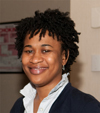 Tonia Spence '02 Tonia Spence '02
Director, Outpatient Clinic
Jewish Board of Family and Children's Services
What do you do in your current role?
I am currently the Director of an outpatient clinic in Harlem for JBFCS. I supervise staff, 2nd year MSW students, and ensure that clinicians are receiving the support they need to work with children and their families. I also ensure the clinic is fiscally sound.
Tell us about your career path.
I started as a 6th grade teacher after undergraduate school. I worked on various school committees, met with parents and children but realized I wasn't making the type of impact I was hoping to make with the families of my students. I received my Masters in Special Education (after teaching for 3 years) and decided I should continue on to get get my Masters in Social Work. I then worked as a Special Educator Itinerant Teacher (SEIT) with preschool children and their families. Working with children individually and supporting the families to implement strategies, was rewarding. The impact was clear and the families involvement was consistent because of the nature of the work. As an SEIT, I was able to also work part time at an outpatient clinic where I recognized I needed to build my clinical understanding. Once I accepted how much it takes to really build a clinical understanding that can have an impact, I left NY to participate in a Fellowship Program at Yale University's Child Study Center. Now I am back in NYC at JBFCS.
What do you enjoy about your job?
Working with the next generation of social workers, as they will affect change with their new ideas, energy, and understanding of the global landscape.
What impact did CSSW have on your career?
CSSW was the place where I began to understand that we bring so much of who we are into our work; and with that comes the responsibility of understanding how who you are affects your practice/work in the communities being served. I learned skills such as learning to respect everyone's opinion, that engagement is the foundation of social work, to start where the client is as it allows for the clinician to get to know who they are working with and gives the client a chance to tell their story, and Maslow's hierarchy of needs. The more I work with families, the more this concept has lead me to do clinical case management first before even trying to do psychotherapy. What I've learned is that it is hard for a mother to bring her child in for misbehaving in school when her children are hungry, without shelter, and/or they feel unsafe. When I begin here I am not only engaging the family, I am starting where the client is.
What do you remember most about your time at CSSW?
Being a woman of color who often was looked to to answer questions about people of color and feeling unable to state that each person is different, and although we may share some commonalities the most important work we can do is to get to the know the client and family sitting in our office.
Do you have any advice for CSSW students or alumni who are interested in your field?
Become a life long learner. Take a class every year in something to ensure you are always growing and developing your skills.
What are you reading and/or following now (e.g. book, blog social media groups, etc.)?
Reflective Supervision and Leadership by Mary Claire Heffron and Trudi Murch, The Whole Brain Child by Daniel Siegel and Toxic Charity by Robert Lupton.
|
|
 Janelle Stanley '12
Alternatives to Suspension Coordinator
Harlem Renaissance High School
What do you do in your current role?
I am the Alternatives to Suspension Coordinator at Harlem Renaissance High School (HRHS), in East Harlem, NYC. I designed and now run the program at our school that provides in-school alternatives to out-of-school suspensions. My job is to work with students who would ordinarily be suspended, providing them with counseling and support instead of punitive, ineffective punishments. Since I started the program in 2012, our school has had a 60% reduction in out-of-school suspensions.
Tell us about your career path.
My first career was in international technology and business strategy consulting in the 1990s and early 2000s. I retired in 2005, and took a couple years off when I had my daughters (twins, now ages 9). I worked part time as an interfaith hospital chaplain while my daughters were young, and started graduate school (MDiv-MSSW joint degree) knowing that when I re-entered the workforce full time, I wanted to be in a career that held deeper meaning for me. My first year field placement was at HRHS, and I fell in love with the staff, students, and environment. I kept in touch with the principal, and volunteered for a year. After that year was up, I told the principal that I wanted to try a program that addressed out of school suspensions, and he said yes!
What do you enjoy about your job?
I love that I am encouraged to bring my full self to my job. My program - Alternatives to Suspension - engages me at multiple levels: from the high-level program management, which draws on my previous career in consulting, to the 1:1 and group counseling I provide to the students on a daily basis. I am also encouraged to harness other interests in service to the school community. For example, I started a community garden at the high school while I was an intern that is still thriving; and I co-lead a school club where I teach karate 3 days a week and I partner with a teacher at the school to teach a karate class during the school year.
What impact did CSSW have on your career?
Most of my work is directly with the students. I had little clinical experience or training before CSSW, and I would not be able to do my job without an ecological understanding of each student with whom I work. CSSW gave me the training and ability to meet each client where they are at, and proceed from there.
What do you remember most about your time at CSSW?
The year-long clinical seminar I took in Trauma-Focused Cognitive Behavioral Therapy (TF-CBT) has had an enormous influence on how I work. I would not be half the social worker I am without that experience. I wish - only in retrospect! - that every clinical class had utilized video role-plays. It felt like torture at the time, but it really helped develop my clinical practice.
Do you have any advice for CSSW students or alumni who are interested in your field?
So much of any good job is the people you work with, so stay in contact with the people you enjoy. For those who are specifically interested in school social work, think outside the box. Traditional school social work is difficult to break into. CBOs that partner with schools are great alternatives, or do what I did and find an issue that inspires you, and then find a way to make that your job.
What are you reading and/or following now (e.g. book, blog, social media groups, etc.)?
I read the NYTimes, Jezebel.com, and dnainfo.com nearly every day (except weekends). I read a lot on self-defense and violence - Rory Miller writes clearly on self-defense (http://chirontraining.blogspot.com/), and Aaron Beck writes well on aggression & violence. My favorite new cookbook is the Posh Pescetarian. I'm a fantasy / urban fantasy junkie, and go through new paperbacks crazy-fast (fav authors: Jim Butcher, Ilona Andrews, Patricia Briggs, Jacqueline Carey). I also just finished How Children Succeed, by Paul Tough, which is amazing; and I recently started The Unthinkable: Who Survives When Disaster Strikes, by Amanda Ripley, which is also very good. |
|
 Michael Tozzoli '96 Michael Tozzoli '96
Chief Executive Officer
West Bergen Mental Healthcare
What do you do in your current role?
I am the CEO of West Bergen Mental Healthcare. West Bergen is a large multifaceted community mental health organization that has a strong emphasis on children, families and outcome based programs.
Tell us about your career path.
My career path has been varied, particularly as it relates to the size of agencies and leadership training. I was the Director of an Outpatient Counseling Department in a very large psychiatric hospital for a few years and this helped me understand the role of middle management, and particularly the challenge of interpreting an organization's mission to the line staff. I joined the team at West Bergen Mental Healthcare as the Administrative Director overseeing new program development and general administration. As part of a carefully articulated succession plan (something atypical in the nonprofit sector!), I was appointed CEO in 2005. My predecessor remained on staff as a major gifts officer.
What do you enjoy about your job?
I enjoy my role’s requirement to intersect West Bergen programs with that of the overall field. I particularly enjoy launching new and innovative programs that, in several cases, lead the field.
What impact did CSSW have on your career?
CSSW had a huge impact on me. It was during that time that I realized that my practice did not necessarily have to be micro in focus (i.e. purely clinical) and that my impact could be broader and more macro.
What do you remember most about your time at CSSW?
The diversity and strength of the students immediately comes to my mind when I think about my time at CSSW. I still maintain several strong connections with people I met at CSSW and work with them on many different levels.
Do you have any advice for CSSW students or alumni who are interested in your field?
Continue to think big and diversify your skill base. The field is much broader than the majority of social work thinks, and your ability to impact people/communities/issues is greater than you can imagine!
What are you reading and/or following now (e.g. book, blog social media groups, etc.)?
I just finished Far From the Tree by Andrew Solomon. It reminded me that all relationships are complex and that the greater society plays an important role in all dynamics. I am a daily reader of the Harvard Business Review and the Stanford Social Innovation Review. Leading a nonprofit requires many different skills that I continue to broaden and work on. |
|
|
