|
WEEK
13. THE LURE OF THE FUTURE AND RETURN OF THE REPRESSED: URBAN
DESIGN TODAY
|
 |
 |
 |
 |
 |
 |
 |
 |
 |
 |
 |
 |
 |
 |
 |
 |
 |
 |
 |
 |
 |
Neo-traditional urbanism and neo-avant-garde deconstructivism; the primacy of experience; public art and civic space; the centrality of infrastructure and the decentralism of edge cities.
Patricia C. Phillips, ed., City Speculations (New York, l996), pp. 50-65, 72-77, 94-99
Elizabeth A. T. Smith, ed., Urban Revisions: Current Projects (LA, l994), pp. 3-15, 71--
Rem Koolhaas, S, M, L, XL (New York, 1995), pp. 960-971, 1238-64, 1268-69
Recommended:
Michael Sorkin, ed., Variations on a Theme Park (New York, l992)
John Chase, Margaret Crawford and John Kaliski, eds., Everyday Urbanism
(New York, 1999)
Mike Davis, City of Quartz: Excavating the Future in Los Angeles
(London, New York, l990)
----------, The Ecology of Fear: Los Angeles and the Imagination of
Disaster (New York, 1998)
Allen J. Scott and Edward W. Soja, eds., The City: Los Angeles and
Urban Theory at the End of the Twentieth Century (Berkeley,
l996)
Peter Katz, ed., The New Urbanism (New York, 1994)
Anastasia Loukaitou-Sidiris and Tridib Banerjee, Urban Design Downtown
(Berkeley, 1998)
Dolores Hayden, The Power of Place: Urban Landscapes as Public History
(Cambridge, l995)
Nan Ellin, Postmodern Urbanism (New York, l996)
Rosalyn Deutsch, Evictions: Art and Spatial Politics (Cambridge,
l997)
William Mitchell, City of Bits: Space, Place and the Infobahn (Cambridge,
1995)
Peter Wolf, Hot Towns:The Future of the Fastest Growing Communities
QUESTIONS:
l. To what extent do various new housing proposals of the present show a nostalgia for the past - whether for the "traditional town," the dense and varied urban neighborhood, the tradition of the avant-garde, etc.?
2. Is place still necessary in present-day cities? Can we have all our exchanges of ideas, information, markets and human life through virtual space? What does this leave for the places where work or public life have occurred in the past? Think of this in terms of specific sites like the New York Stock Exchange as well as generic types of activities like shopping or conferring.
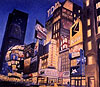
3. Are cities increasingly viewed as tourist destinations, whether in the US or in Europe? How does this effect their major spaces, both new and historic? How does it effect districts for commerce, culture, recreation? How does it effect their poorer, less designed, and socially more marginal areas?
4. How does one design infrastructure and ecology into cities? Are there general rules or principles or should one always focus on the specifics of that location? How do these concerns affect the conventional forms and processes of urban design?
5. What is your favorite American city? What place in that city comes to mind? How would you describe what you find appealing? How do you think the residents (and other groups) might react to your opinion?