|
WEEK
4. MANUFACTURING CIVIC AND COMMERCIAL CULTURE
|
 |
 |
 |
 |
 |
 |
 |
 |
 |
 |
 |
 |
 |
 |
 |
 |
 |
 |
 |
 |
*** First assignment due
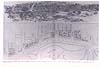
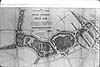
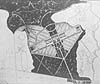
Urban growth and civic ambitions; embellishing the national and regional capital; civic centers for businessmen and progressives; themes and variations on formal types.
READING:
Daniel Burnham and Edward Bennett, with Charles Moore, Plan of Chicago
(1909; Chicago, l997), esp. pp. 99-110
Mario Manieri-Elia, "Toward an 'Imperial City,'" in The American City
from the Civil War to The New Deal, ed. Georgio Ciucci, et.
al. (Cambridge, l979), esp. pp. 5l-121
Images in Werner Hegemann and Elbert Peets, The American Vitruvius:
An Architect’s Handbook of Civic Art (New York, l922; l992)
Recommended:
Peter Bacon Hales, Silver Cities: The Photography of American Urbanism,
1839-1915 (Chicago, l983)
William H. Wilson, The City Beautiful Movement (Baltimore, l989)
Robert Fogelsong, Planning the Capitalist City, the Colonial Era to
the 1920s (Princeton, l986)
Daniel Bluestone, "Detroit's City Beautiful and the Problem of Commerce,"
Journal of the Socieity of Architectural Historians 47
(September l988): 245-62
-------, Constructing Chicago (New Haven, l99l)
John Zukowsky, Sally Chappell, Robert Bruegman, The Plan of Chicago,1909-79(Chicago,
l979)
Richard Longstreth, ed., The Mall in Washington, 1791-1991 (Washington,
D.C., 1991)
Jan Cigliano and Sarah Bradford Landau, eds., The Grand American Avenue,
1850-1920 (San Francisco, l994)
Mansel Blackford, The Lost Dream: Businessmen and City Planning on
the Pacific Coast, 1890-1920 (Columbus, Ohio, 1993)
QUESTIONS:
- Is it possible, perhaps even necessary to have public places that
seek to represent a common or collective identity for all the citizens
in a city? Is this especially important or difficult in a culturally
diverse democracy ?
- How did the professionalization of architecture in the United States
at the end of the 19th century affect our monumental public spaces?
Whom did architects understand as their clients?
- City Beautiful architecture was deeply involved with transportation,
urban infrastructure and swift, efficient movement through urban space.
Can we therefore think of this architecture as modern?
- Are the grand public spaces of the City Beautiful era still meaningful in today¹s society? What kinds of contemporary spaces might (or try to) take their role in symbolizing public culture?
Discuss Questions on the Bulletin Board