|
WEEK
6. THE SOCIAL SCIENTIST AND THE C.B.D.
|
 |
 |
 |
 |
 |
 |
 |
 |
 |
 |
 |
 |
 |
 |
 |
 |
 |
 |
 |
 |
 |
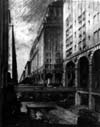 |
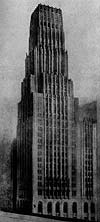
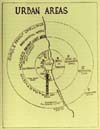
Investment, predictability, exclusion and the invention of zoning; the culture of business; the design implications of the automobile, the slab city/spread city of the Regional Plan Association of New York; regulations to protect free market capitalism.
*** Second assignment due
READING:
Thomas Adams, Building the City, v. 2 of the Regional Plan of
New York (New York, 1931), esp. pp. 112-22
Max Page, The Creative Destruction of Manhattan, 1900-1940 (Chicago,
1999), pp 52-67
Carol Willis, "Zoning and Zeitgeist: The Skyscraper City in the l920s,"
Journal of the Society of Architectural Historians 45 (March
l986): 47-59
Recommended:
Robert Fishman, ed., The American Planning Tradition: Culture and Policy
(Washington,2000_
David A. Johnson, Planning the Great Metropolis: The 1929 Regional
Plan (London, 1996) Robert Fitch, The Assassination of New York
(New York, l993)
Robert Park, Ernest Burgess, and R.D. McKenzie, eds., The City (Chicago,
1925)
Carol Willis, Form Follows Finance: Skyscrapers and Skylines (New
York, l995)
M. Christine Boyer, Dreaming the Rational City (Cambridge, l983)
John D. Fairfield, The Mysteries of the Great City: The Politics of
Urban Design, 1877-1937
(Columbus, Ohio, 1993), esp. pp. 117-240
QUESTIONS:
l. What are the various intentions and effects of zoning?
2. Should a municipal government take responsibility to stabilize a central business district and its high land values? Is this "free market" capitalism or government intervention?
3. What is the role of utopian fantasies about the commercial American cities? Do they affect what is imagined? Built? Proposed? Experienced?
4. What are the perceptions of urban or cosmopolitan life in the central business districts you know? How does it vary for different people (male/female, CEO/clerical worker/manual laborer/architect) and at different times of day or night?
5. Is the commercial architecture of today's CBD's up to the par of the past? Why?