|
WEEK
9. COMMERCIAL CULTURE AS URBAN LIFE
|
 |
 |
 |
 |
 |
 |
 |
 |
 |
 |
 |
 |
 |
 |
 |
 |
 |
 |
 |
 |
 |
 |
 |
 |
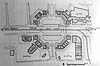
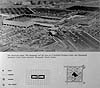
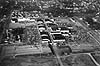
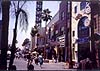
From the panopticon world of department stores to the world-as-exhibition in the mall; the rise and demise of Main Street, shopping centers and "cities-within-cities" as American public space.
READING:
Victor Gruen, "Cityscape and Landscape," Arts & Architecture
(September 1955), rept. in Joan Ockman, ed., Architecture Culture 1943-1968
(New York, 1993), pp. 194-199
Margaret Crawford, "The World in a Shopping Mall," in Michael
Sorkin, ed., Variations on a Theme Park (New York, 1992),
pp. 5-30
Ann Bergren, "Jon Jerde and the Architecture of Pleasure," Assemblage
37 (1998), pp.8-35
Recommended:
William R. Taylor, ed., In Pursuit of Gotham: Culture and Commerce
in New York (NY,1992)
Richard Longstreth, Main Street (Washington, l987)
-------, From City Center to Regional Mall… in Los Angeles,
1920-1950 (Cambridge, l997)
Chris Wilson, The Myth of Santa Fe: Creating a Modern Regional Tradition
(Albuqurque,1997)
Karel Ann Marling, ed., Designing Disney’s Theme Parks (New York
and Paris, 1997)
Victor Gruen and Larry Smith, Shopping Towns U.S.A. (New York,
1960)
Mark Gottdiener, et.al, Las Vegas:The Social Production of an All-American
City (Boston,1999)
You Are Here: The Jon Jerde Partnership (London, 1999)
John Hannigan, Fantasy City: Pleasure and Profit in the Postmodern
Metropolis (London, 1998)
QUESTIONS:
l. What kinds of spatial, social and economic innovation typically happen in commercial architecture? What is the range between the best and the worst?
2. What input can an architect have in commercial architecture? Is it necessarily based only on the bottom-line and some superficial ornamentation?
3. What is the history of shopping at the mall? What are its attractions? What spatial factors help create this allure?
4. Can commercial architecture provide "public space," or is it inherently limited - even manipulative - because it's privately owned and regulated?