|
WEEK
1: INTRODUCTION: PATTERNS OF COMMUNITY AND CONFLICT
|
 |
 |
 |
 |
 |
 |
 |
 |
 |
 |
 |
 |
 |
 |
 |
American particularism and transnational influences; intersecting histories of architecture, landscapes, streets and policies; the distinctiveness of place and the patterns of cultural norms.
READING:
Alex
Krieger, "The American City: Ideal and Mythic Aspects of a Reinvented
Urbanism," Assemblage 3 (July l987): 39-59 David Harvey, Spaces
of Hope (Berkeley, 2000), pp. 133-181
Architectural history is of course an essential underpinning to the broad patterns of urban design. Dell Upton, Architecture in the United States (New York, l998) is recommended as well as (more conventional) Leland M. Roth, A Concise History of American Architecture (New York, l979). Useful sources for visual references include John Reps, The Making of Urban America (Princeton, l959; l995); Alexander Garvan, The American City (New York, l996); and Jon Lang, Urban Design: The American Experience (New York, l994). Look ahead to readings about contemporary urban design, urban theory and urban problems,
Although there is a condensed reader for the class, students are encouraged to explore beyond these excerpts in the original texts kept on reserve, especially for illustrations.
QUESTIONS:
1. What are distinctively American kinds of urban forms,
spaces and
experiences? What kinds of variations and alternatives exist here?
2. What has been imported from other places (from Europe, Asia, Africa,
and later from Latin America to the north)? What real and imaginary spaces
have been exported from the Americas to other parts of the world?
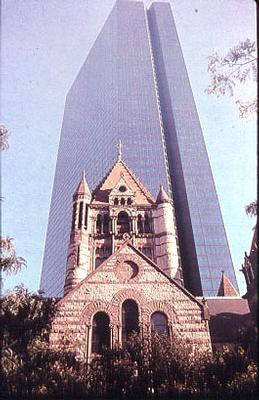
3. What kinds of spaces and structures affect how cities work, how they are experienced, how they change over time? Think first about "iconic" spaces that represent urbanity and specifically American urbanism, both good and bad. What places evoke "the city" for different groups?
Then consider "typological" spaces designated for or symbolic of activities like business, domestic life, industry, transportation, shopping, entertainment, leisure, health. How do we know these uses? What happens when they change?
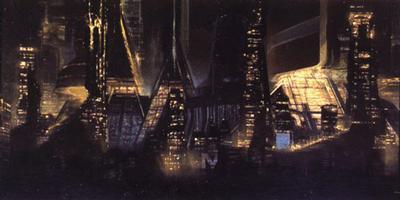
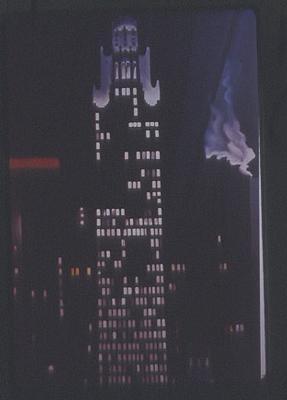
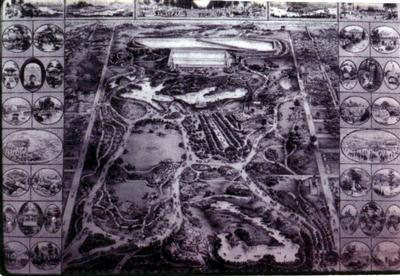
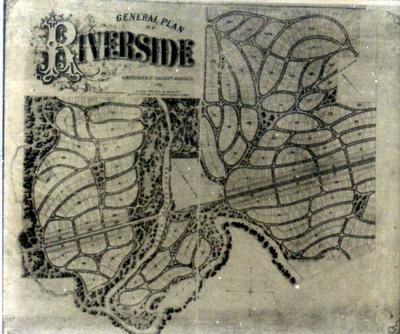
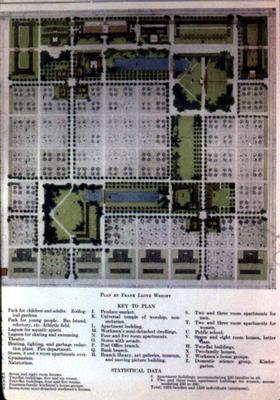
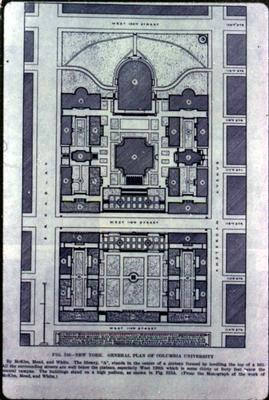
4. Consider various ways to study cities. What can you learn from aerial views; site plans; axonometric or perspective drawings; diagrams and statistical charts; digital imagery; street photographs (with people or without them; taken in the morning or nighttime; professional images and amateur snapshots); etc? What about different kinds of texts (diaries; journalism; professional reports; novels; poetry; historical treatises; manifestos about the future; etc.)? What are the limitations of each of these modes? What tends to be left out?
5. Finally, ask yourself what you expect to learn from this class. How will you ask questions or raise alternative views? What can you explore on your own? What do you want to learn more about? What do you want to change?
Think about specific places, streets and neighborhoods you can visit
on the weekends, or when you go home for vacation, as well as kinds of
places. Banish boredom. Cities are always filled with surprises.