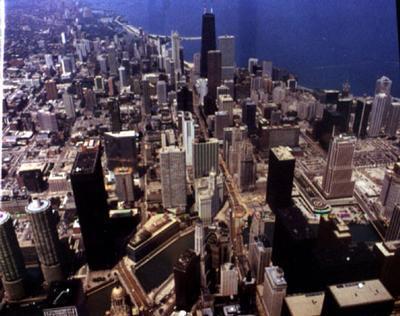
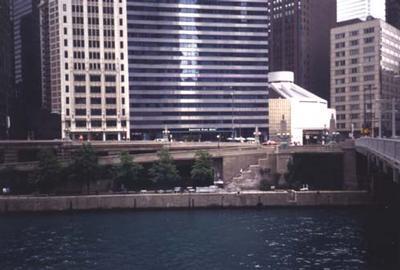
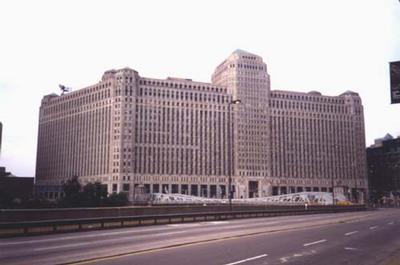
Left foreground is Michigan Avenue Bridge (1920) and Wacker Drive (1926) connecting Chicago's North and South Sides
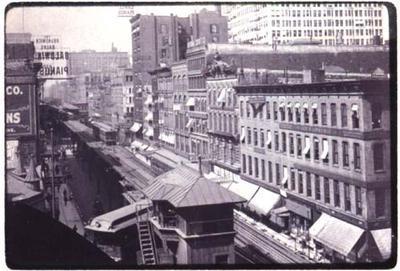
'Chicago Loop' of early skyscraper district surrounded by elevated-train tracks in 1897
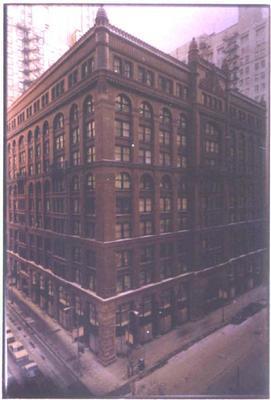
Rookery Building in the Chicago Loop, Burnham and Root, 1886-87
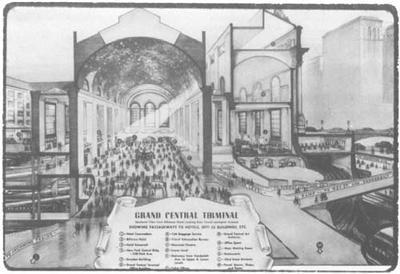
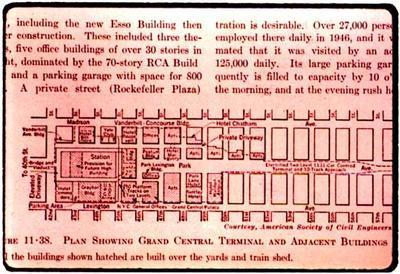
�Terminal City� of Grand Central Station, New York William Wilgus, chief engineer with Warren and Wetmore, architects, 1912-13
Development of Park Avenue, New York, above underground train tunnels marks beginning of �Midtown� commercial/residential development. William Wilgus, 1917
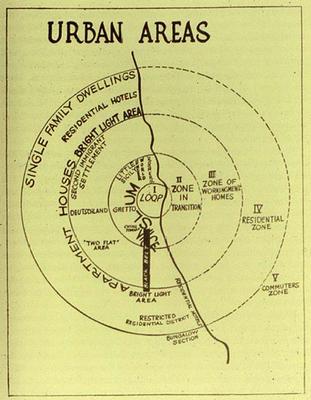
�Metropolitan Rings� model of urban expansion (�Chicago School of Sociology�), fromThe City, 1925, by Robert Park, Ernest Burgess and Roderick McKenzie
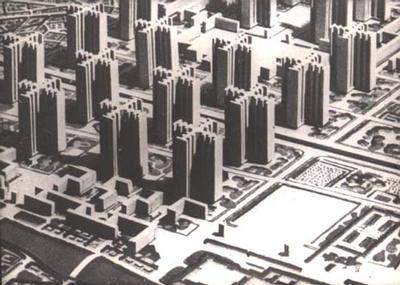
Plan Voisin for Paris, Le Corbusier, 1925
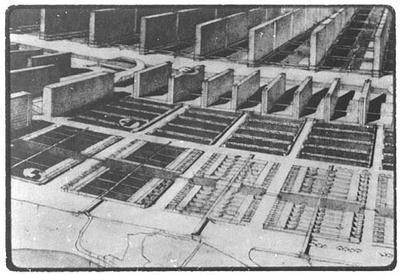
�Rush City Reformed� proposal by Richard Neutra c. 1927. From Neutra's Wie Baut Amerika? of 1927
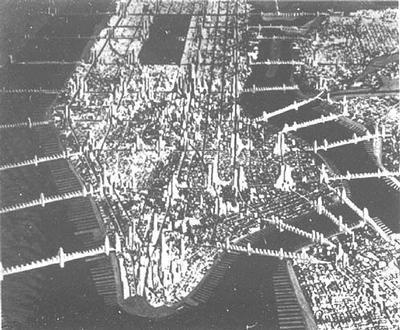
�Skyscraper Bridges� from Raymond Hood's �Manhattan 1950� proposal of 1929. Drawing by Hugh Ferriss
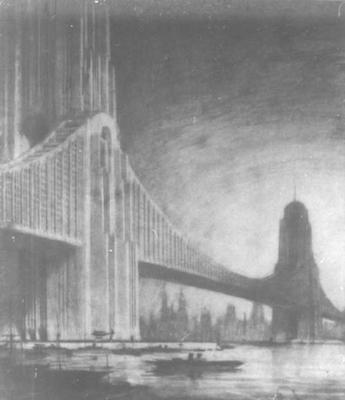
Detail of Hood�s �Skyscraper Bridges,� published in Hugh Ferriss�s The Metropolis of Tomorrow, 1929
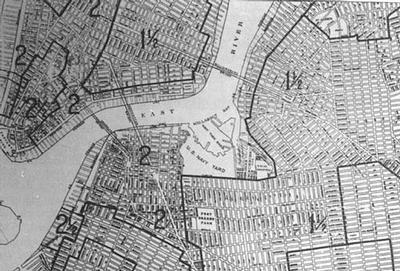
Height districts from New York City�s first Zoning Law, 1916
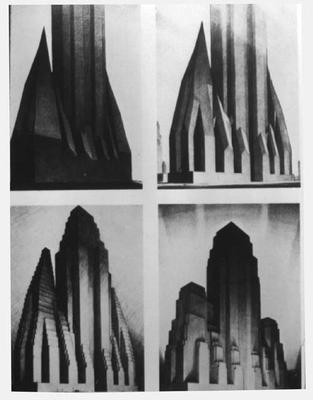
Massing elaborations of New York�s 1916 Zoning Law by Hugh Ferriss,c. 1922
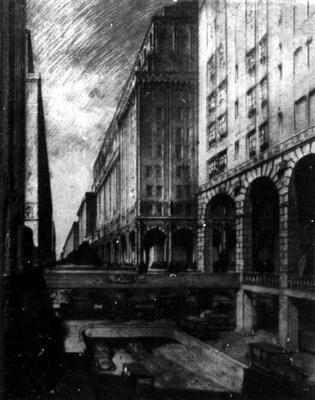
Multi-level street-system proposals for New York City by Harvey Wiley Corbett, 1922-24; drawing by Hugh Ferriss
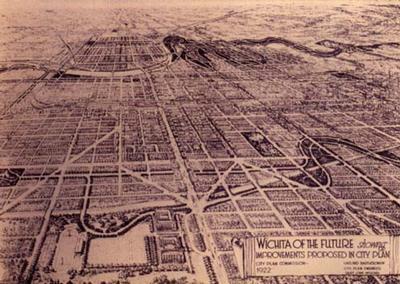
�Comprehensive plan� for Witchita, Kansas. Harlan Bartholomew, 1922
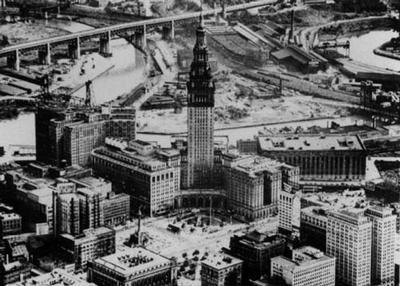
Terminal Tower Group, Cleveland. Graham, Anderson, Probst and White for O.P. and M. J. Van Sweringen Brothers, 1922-23
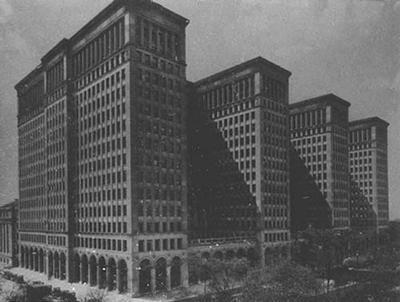
General Motors Building in downtown Detroit's �New Center.� Albert Kahn, 1922
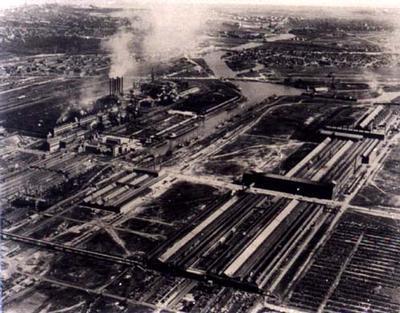
Ford River Rouge Plant, outside Detroit. Albert Kahn, 1917-38
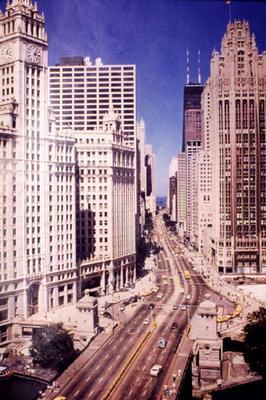
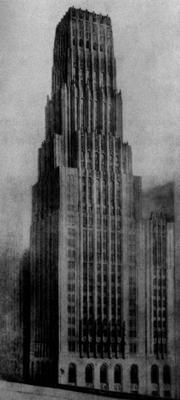
Michigan Avenue with (r) Chicago Tribune Tower by Howells & Hood, and (l) Wrigley Building by Graham, Anderson, Probst & White, 1919-24
Second-place proposal for the Chicago Tribune Tower, Eliel Saarinen, 1922
Wacker Drive double-level riverfront limited-access roadway, Chicago. Edward H. Bennett, 1926
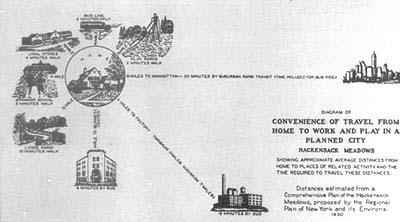
Separation and connections between central-city towers, industrial factories and suburban residential/commercial district in the Regional Plan of New York and Environs, 1929-31
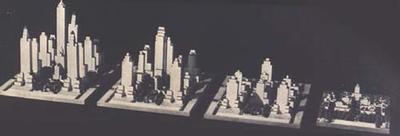
Models of four types of business districts (central-city to suburban) from the Regional Plan of New York and Environs, 1929-31