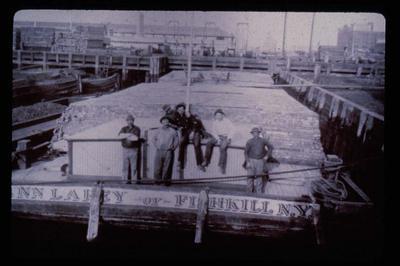
Another major building supply to come down the river from the Hudson Valley was brick. Brickmaking was amajor industry along the Hudson from Haverstraw to Saugerties.
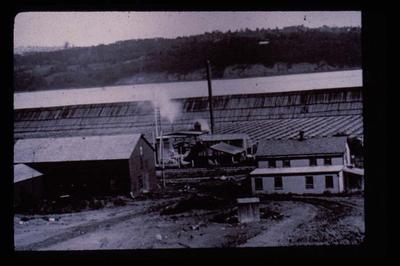
Brick Factory near Beacon
Settlers had been making brick on a small scale for their ovens and chimneys for a long time. In 1809, an Englishman, James Wood, recognized the commercial possibilities of using the clay pits so conveniently located by the river.
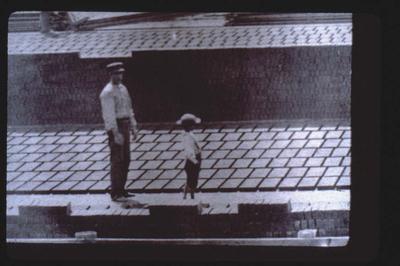
Brick Yard with Man and Boy
He launched an industry which eventually employed thousands of people up and down the river, and produced the billions of bricks needed to build New York and other major cities.
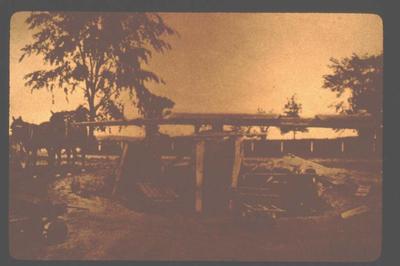
Mules Working a Treadmill
Bricks were made by adding sand to clay which was then mixed to the right consistency by men or horses working a treadmill.
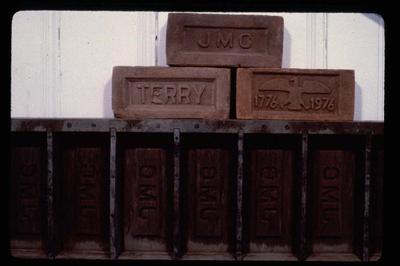
Brick Molds
artist:
Stanne
The stiff, heavy mixture was then fed into a machine which pressed the clay into rectangular shaped molds.
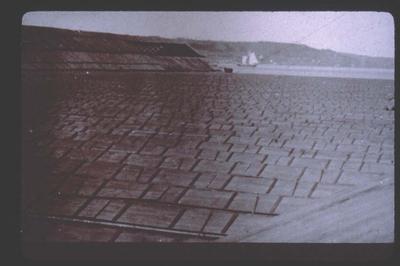
Brick Drying Yard
The shaped bricks were allowed to dry in the sun or in a drying room for several days.
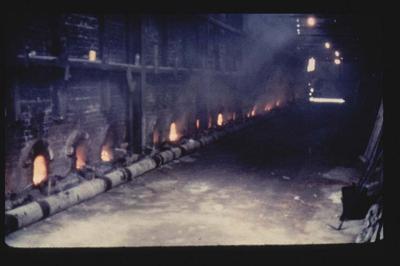
Brick Kilns
artist:
O'Connor
Then they were fired in a kiln for about a week at an even temperature. James Wood later speeded up the firing time by adding charcoal dust to the mixture of sand and wet clay. As the industry grew, better machines were developed to mix, shape, and fire bricks.
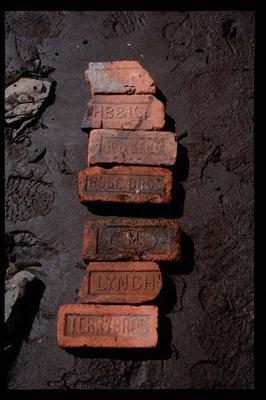
Bricks at Ulster County Park
artist:
Stanne
Each company stamped their name or a design in an indentation of the brick called a "frog." If you walk along the shores of the Hudson, you might find bricks like these representing various companies.
New York City Townhouses
artist:
Burger
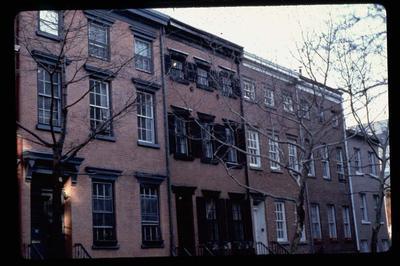
Bricks were shipped by barges to New York City, where a growing population had sparked a demand for building materials. City ordinances encouraged building with fireproof bricks, as opposed to wood.
Worker in Brickyard
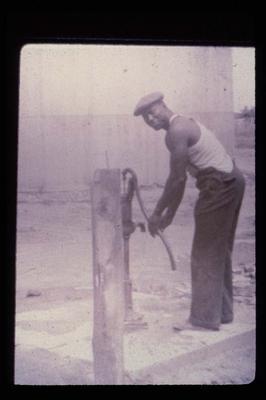
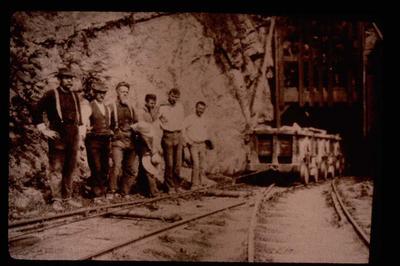
Brickmaking was seasonal work. The yards started up in April and closed in November, when the weather was too cold and damp to dry bricks. Each spring brickmakers came from other parts of the country to find work. Black workers from the South traveled north to work in the brickyards.
Man with Ice Saw
artist:
Kricker
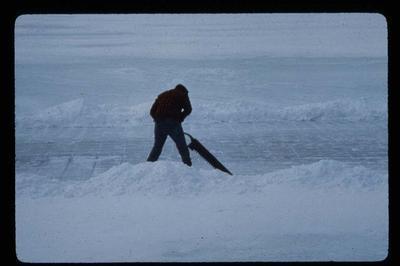
Because the brickyards closed in the winter, some workers found work in another seasonal industry: ice harvesting.
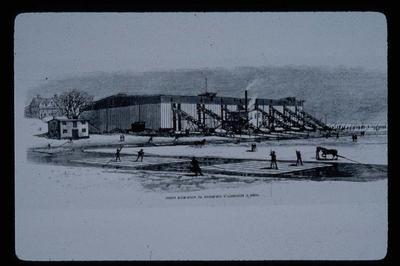
Drawings of Ice Industry
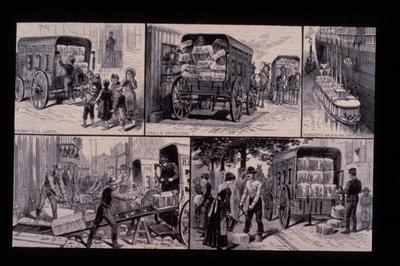
Before electricity, refrigeration, especially in the summer, was difficult. Many homes had an insulated box, called an icebox, into which they put a large cube of ice. In New York City this ice often came from the Hudson.
Men on Ice
artist:
Kricker
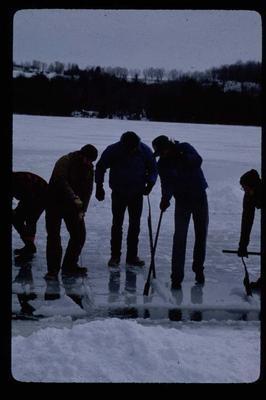
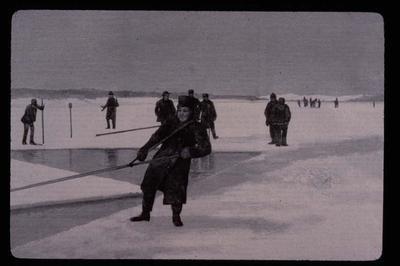
After the snow was plowed off the ice by horses pulling plows, workers used huge saws to cut ice into squares. Next they cleared a channel through which to send the blocks of ice once they were cut off.
Horses and Sleigh
artist:
Kricker
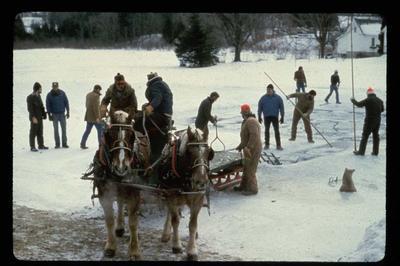
The blocks were pulled out of the water and loaded onto horse-drawn sleighs.
Ice House Ramp
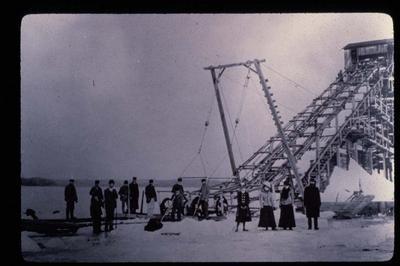
At Large ice companies the blocks of ice were loaded onto ramps like this. The ice was stored in insulated buildings until summer, when ice would bring a nice profit.
Ice Barges
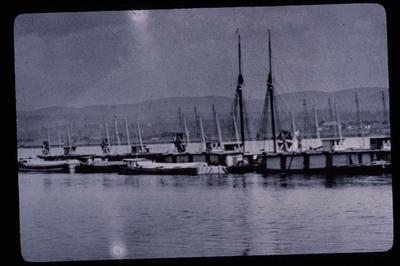
Then they were shipped down river in special barges which used windmills to continuously pump melting ice water from the bottom of the boat. Can you see the windmill on these barges?
Ice Workers
It was hard, cold work, and men worked overtime in case the weather changed and the ice became unsafe. Man and horses did occasionally fall in, but prompt action and a little whiskey (for the men, not the horses) usually warmed them again.
Ice House
There were a number of large ice companies along the Hudson. Finally, a combination of electric refrigeration and polluted river water led to the decline of the ice industry.
Building under Construction
artist:
Burger
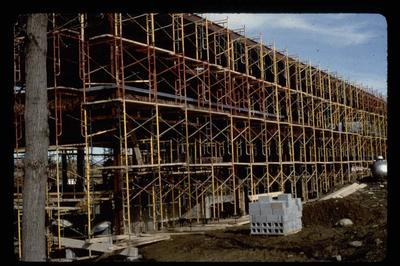
Ice wasn�t the only industry hurt by the newer technology. Bricks were largely replaced by steel and other products as building styles changed. Bricks are just too heavy to be used in tall buildings. One by one, most of the brickyards closed.
Limestone Pits
Many of the industries mentioned so far relied on natural resources found in the Hudson Valley. Most of them used materials harvested from the earth, then cut or shaped into a usable product.
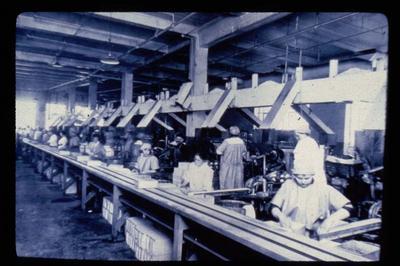
Smith Brothers Factory in Poughkeepsie
By the mid 1800s, this pattern began to change. The industrial revolution, with its new machines, made a different kind of industry possible. Factories were built to manufacture everything from buttons to bottles, using resources from all over the world.
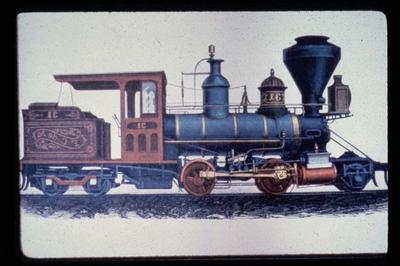
Train
The coming of the railroad made it possible to get raw materials from distant places. Manufacturers could also ship goods out of the region, thus increasing the size of their market considerably.
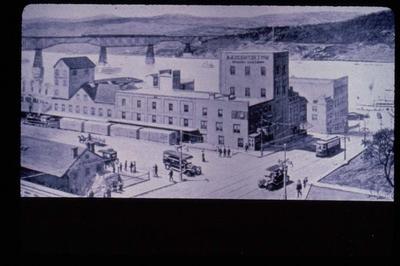
Reynold's Grain Merchant Building in Poughkeepsie
What did this mean for the Hudson Valley? Large factories were built up and down the river. Many towns became manufacturing centers almost overnight. The age of the farmer and the village blacksmith were all but gone, and the Hudson Valley entered a prosperous, busy period.
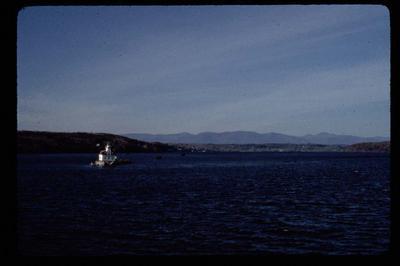
River with Esopus Lighthouse
artist:
Stanne
If you travel on the river now, there is little evidence of this time. You can still see a few factories, oil tanks and power plants, but there is little evidence of earlier industries.
Hudson River from Olana
artist:
Stanne
Despite centuries of human activity, much of the Hudson River still looks as beautiful and unspoiled as it did when Henry Hudson first sailed up it.