previous image
  1 
  2 
  3 
  4 
  5 
  6 
  7 
  8 
  9 
  10 
  11 
  12 
  13 
  14 
  15 
  16 
  17 
  18 
  19 
  20 
  21 
  22 
  23 
  24 
  25 
  26 
next image
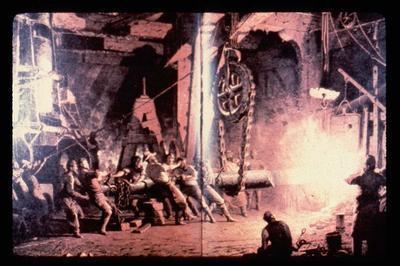
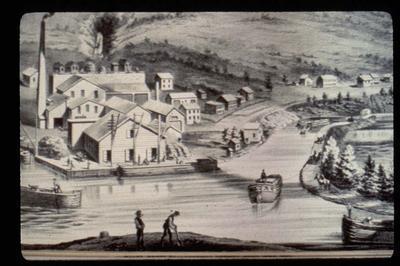
Cold Spring Foundry
Cold Spring Foundry

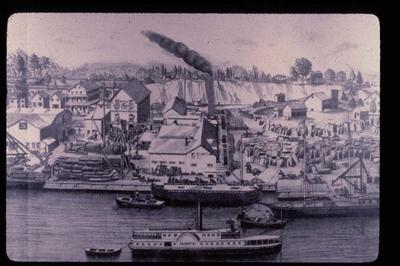
Foundries like this one at Cold Spring made cannons, anchors, and parts for steam engines. There are no more iron foundries on the Hudson. Steel and aluminum have replaced iron in many industrial and home uses.
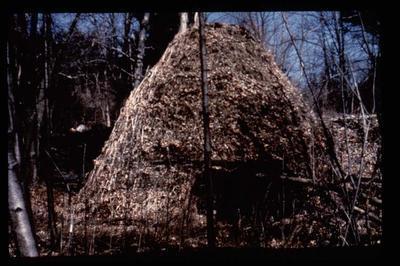
Charcoal Hut
Charcoal Hut
artist:  O'Connor

The growth of the iron industry fostered another occupation: charcoal burning. The iron furnaces required vast amounts of charcoal to keep them going. Charcoal burners went into forests, cut down trees and piled them up. They covered the pile with earth, lit the wood and waited for two weekds while it smoldered, producing charcoal.
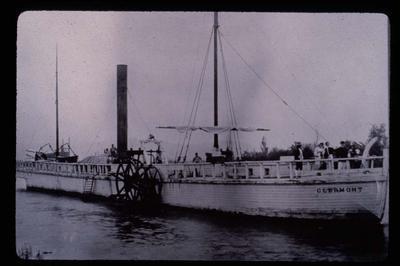
Replica of the Clermont

By the 1800s many changes were taking place in the Hudson Valley. The area was becoming more populated and people began searching for ways to speed up transportation. In 1807, Robert Fulton launched a new kind of boat on the Hudson, one which had sails but relied mostly on steam for power.
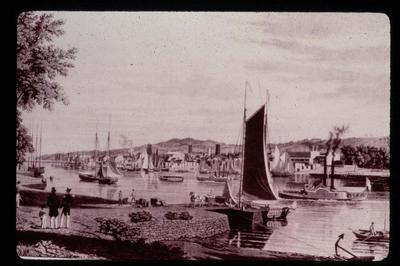
"Troy"
"Troy"
artist:  W. J. Bennett

The first steamboats had a tendency to blow up. They didn't even go very fast, and so sloops competed successfully with them for years. As the design of steamboats improved, however, they took over most of the passenger trade. A steamboat could kep a schedule which a sailboat, being at the mercy of the wind, never could.
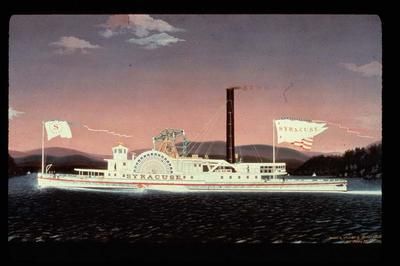
"The Syracuse"
"The Syracuse"
artist:  William Bard

Some steamboats carried cargo but most carried passengers, often in elegant comfort. The second half of the 19th century was the golden age of the steamboats, and many grand and famous boats sailed the Hudson.
D and H Canal at Le Fever Falls

Another innovation in transportation which developed at the same period was the building of the canals. At that time it took as much money to send a ton of merchandise 30 miles over land as it took to send it to England.
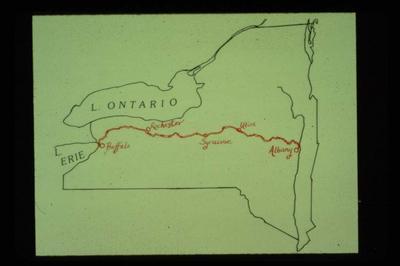
Map of Erie Canal
Map of Erie Canal
artist:  Porter

Shipping goods my water was obviously more efficient, but the river didn't go everywhere. An ambitious group, supported by DeWitt Clinton, decided to extend New York waterways by building a canal from Lake Erie to the Hudson River.
Building the Erie Canal

In 1817 work was begun. Nothing of this scale had ever been attempted before, and many people thought it couldn't be done. The workers were armed with litle more than picks and shovels. When the canal was finished eight years later, it was 364 miles long.
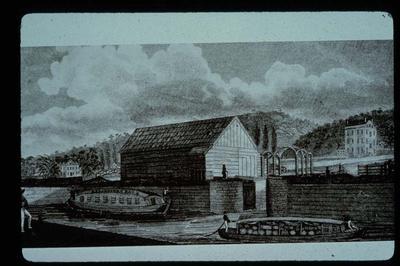
Canal Barges
Canal Barges

The Erie Canal had a tremendous effect on New York State. Albany and New York City became important centers of commerce. Small villages along the canal changed into thriving communities almost overnight. Wheat from the Midwest came down the canal and manufactured goods and settlers went west.
Dairy Farmers
Dairy Farmers

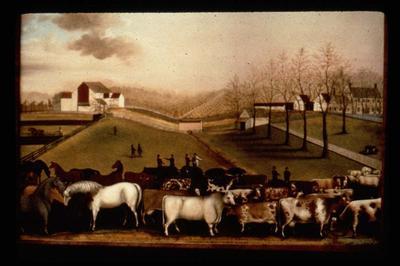
Most farmers in the Hudson Valley couldn't compete with the cheaper Midwestern wheat, and they turned to dairy farming or planted fruit trees.
New York State Barge Canal
artist:  O'Connor

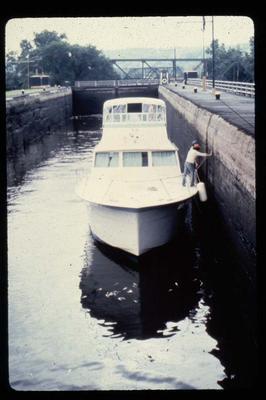
Basically, canals are man-made waterways, which allow boats to avoid rapids and waterfalls by controlling the changes in water level.
New York State Barge Canal 2
artist:  O'Connor

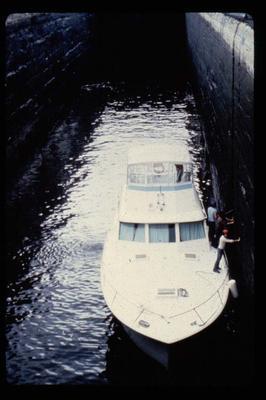
Boats and barges enter a section of the canal called a "lock," which has a water-tight door at either end. While the boat waits in the lock, the water is raised or lowered to match the level of the next section of the canal.
Aqueduct at High Falls
artist:  Burger

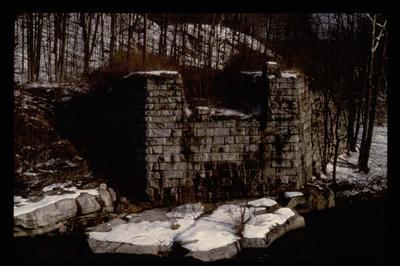
If a canal had to cross a stream or chasm, an aqueduct was built. The stone foundations are all that remain of this aqueduct at High Falls in Ulster County.
Canal
Canal

Barges loaded wiht products were pulled by mules walking along towpaths beside the canal. Can you see the towpath on the left side of this canal? Often whole families lived on barges, knowing no other life than the slow trips back and forth along the canal.
Canal
Canal

Shortly after the Erie Canal was completed, the Delaware and Hudson Canal was begun. It was built with private funds by the Wurts brothers who owned rich coal fields in Pennsylvania but had no way of getting their product to market.
Map of D and H Canal

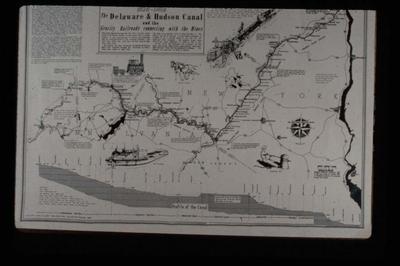
The completed canal was 108 miles long with 108 locks. It went from Pennsylvania to the Hudson River at Kingston. It was a slow process to travel the length of the canal with all those locks, but not as slow (or as expensive) as going over land.
Coal Barges
Coal Barges

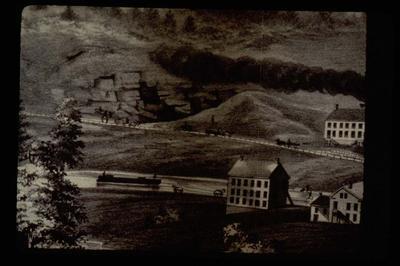
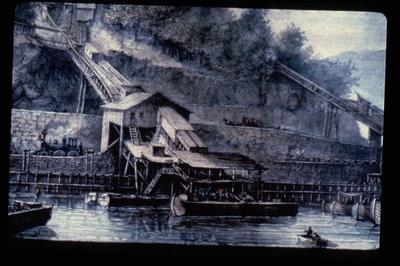
Coal was used to heat homes and there was much demand for it. It was mined from the earth and loaded onto special trains that took it to waiting barges. When the barges reached the end of the canalm coal was loaded onto boats which took it down the Hudson to New York City.
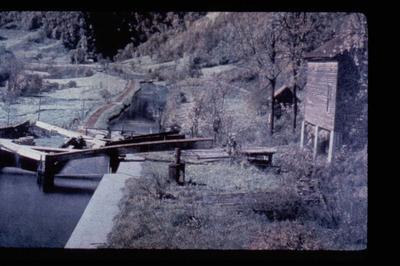
Lock of D and H Canal at High Falls
artist:  Burger

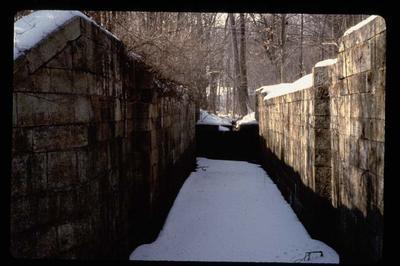
The Erie Canal still operated as the canal itself has been enlarged several times. The Delaware and Hudson Canal is filled in, though you can still see the locks in some places. Notice the indentations where the door hinges fit.
Limestone Pits at Rosendale

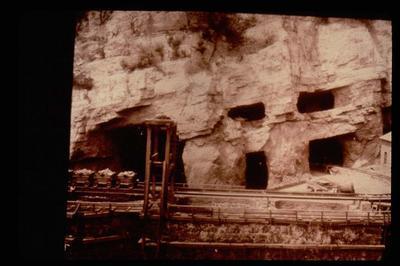
Although coal was not a resource found in the Hudson Valley, another building material -- limestone -- was found at numerous sites along the river. During the building of the D and H Canal, limestone at Rosendale was found to make an excellent natural cement.
Cement Barrels
Cement Barrels

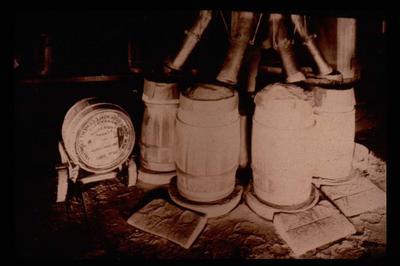
Cement is made by burning limestone and grinding it into a powder. When the powder is mixed with water, it hardens to a rock-like material.
New York and Rosendale Lime and Cement Company

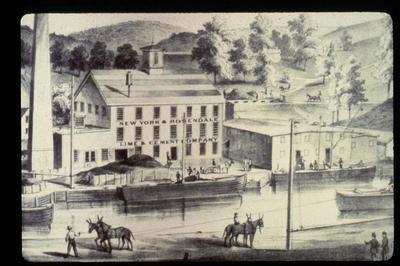
The success of the Rosendale cement companies depended in large part on their location next to the D and H Canal. The limestone was mined, butned, and crushed into a powder all within sight of the canal.
Barge with Cement
Barge with Cement

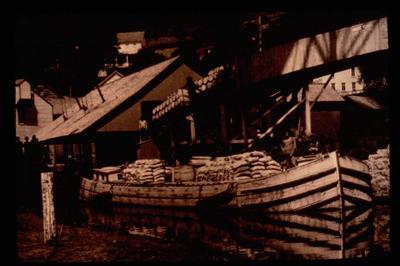
The powdered cement was put into barrels or sacks and loaded onto barges which took it down the Hudson.
Lone Star Cement Co.

Later, a technique was developed for making a quicker setting product, called Portland cement, and many Rosendale companies closed. There are still cement factories near Coeymans, Hudson, and, of course, Cementon -- all making Portland cement.
Brooklyn Bridge
Brooklyn Bridge
artist:  Burger

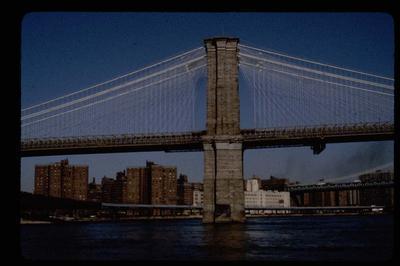
Many of our thruways were made wiht a mixture of natural cement and Portland cement. There is also Rosendale cement in the Brooklyn Bridge and the base of the Statue of Liberty.
Bluestone Quarry at Malden

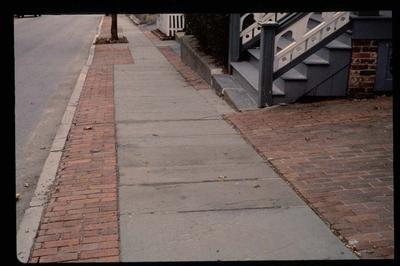
The Hudson Valley supplied many different building materials to growing cities like New York. Bluestone, a type of flat stone, was cut out of the hills and shipped to cities to make sidewalks.
Bluestone Sidewalk
Bluestone Sidewalk
artist:  Burger

You can still see sidewalks made out of Ulster County bluestone in towns and cities in the Hudson Valley.