
|
|
|
|
|
| Introduction | Assignment | Presentation | Mapping Tool |
|
|||
|
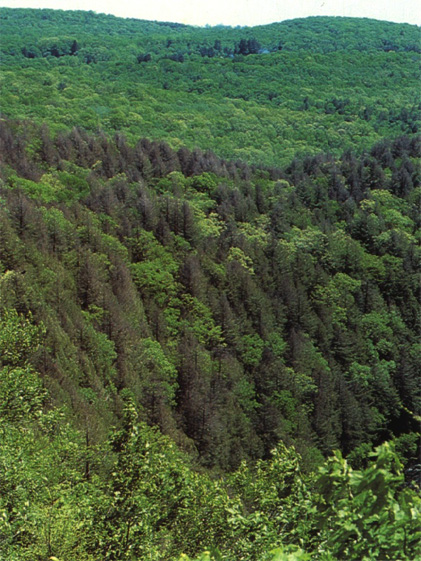
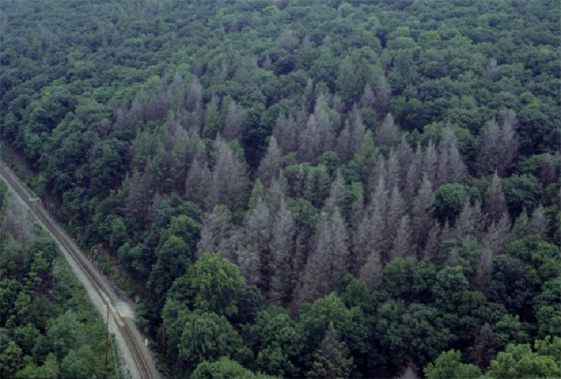
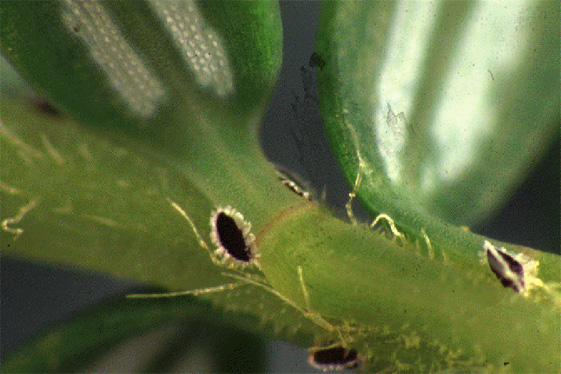
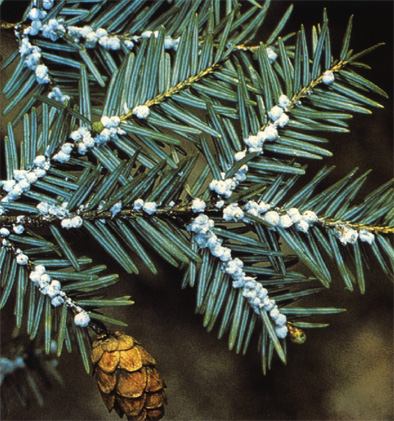
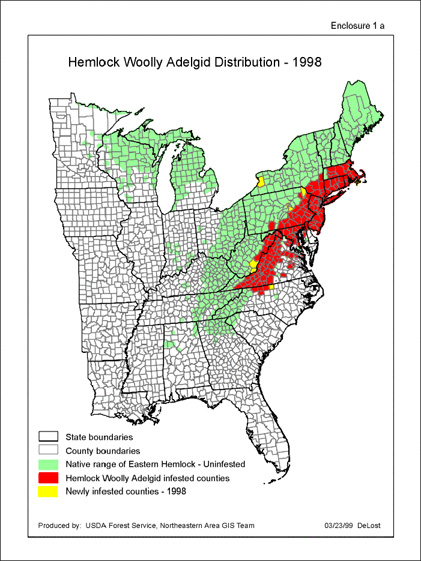
INTRODUCTION Habitat degradation proceeds at an ever-escalating pace. Land is cleared, pollutants are released into the air, land, and water, and roads are cut with increasing frequency as the human population continues growing exponentially. The effects of habitat degradation compromise the quality not only of the land area directly around the degradation, but also typically affect additional land surrounding the site. A frequent consequence of habitat degradation is a simplification of the environment. As land is compromised, conditions essential for the persistence of indigenous species vanish and those species go extinct. As a consequence, the only species that are left after the degradation are those that can cope with the radical environmental changes. These species are only a subset of the original community. Many scientists have argued that as biodiversity is reduced, the stability of the ecosystem is also reduced, in that the ecosystem is less able to respond to environmental perturbations than it was originally. SAY WHY Therefore, a possible long-term outcome of habitat degradation is that the ecosystem will not be able to recover quickly. Habitat degradation is usually thought of in terms of human activities that clearly and directly damage the environment, such as when land is cleared for farming or development or when pollution is dumped into the ocean. Such activities directly and immediately decrease the biological utility of the environment in their immediate area. However, there are many human activities that may unexpectedly degrade habitat, including the release of chemicals that have led to the ozone hole and global warming. An equally important but less obvious degrader of habitat is the introduction of exotic species. The most successful introduced species, such as the gypsy moth in the Northeastern U.S., have directly contributed to the extinction of indigenous species. Approximately 68% of all the extinction events where the main causative factors are known involve the introduction of an exotic species. The introduction of the domestic cat alone into Hawaii has been estimated to be responsible for the extinction of more than twenty species of birds found only there. The majority of introduced species are successful. Successful introduced species are successful because they are introduced. As a consequence of being taken from their original location, they are isolated from the predators, parasites, and pathogens that evolved to interact with them. Therefore, in their new habitat the introduced species experience "predatory release" and are often able to grow without most of their normal ecological restraints. Consequently, population sizes of these species tend to explode and decimate their host species and competitors. A similar situation is currently happening in the Northeastern U.S. involving the Eastern Hemlock tree (Tsugae canadensis) and an introduced pest feeding on them called the Hemlock Woolly Adelgid (HWA, Adelges tsugae). The HWA, an aphid-like insect that feeds on Hemlock phloem, was introduced into the Pacific Northwest in 1924 from Japan with a timber delivery and had made its way to the east coast by the 1950’s. Since its introduction into the eastern U.S., HWA has expanded its range primarily to the Northeast and now is found as far north as Massachusetts, covering approximately 25% of the entire Hemlock range. In many areas infested with HWA, the health of Hemlock has declined precipitously, with heavily infested trees yellowing and eventually becoming entirely defoliated shortly before the trees die. There are no natural predators that can effectively control the population of the HWA, and it seems that the northern spread is slowed only by cold temperatures. Hemlock is a significant and valuable forestry and ornamental tree, and
also provides many valuable unique benefits to forests that have the tree
growing in them. As such, Hemlock is a tree that is very much worth preserving
from this artificially introduced species that threatens to extensively
degrade habitat in the Northeastern U.S. and greatly reduce the biodiversity
therein.
YOUR ASSIGNMENT I. (2 hours) Estimate the number of acres in Black Rock Forest covered by Hemlock since 1937. Compare aerial photos to determine areas of maximum Hemlock stand degradation and calculate changes in total area of hemlock stands. Methodology:
II. (7 hours) With your lab partner, design, conduct, and analyze a field-based experiment that examines some community ecology aspect of the Hemlock-adelgid relationship. Several possible questions follow. Be sure to include questions of your own design. 1. What are the effects of adelgid infestation on community diversity of organisms living on or under Hemlock trees that are either heavily infested or not at all infested? 2. What is the short-term effectiveness of one of the many HWA control methods in the BRF? 3. How strong is the correlation between branch yellowing and adelgid infestation? How could you determine whether the damage to the Hemlock observed in the Northeast is actually due to adelgid action? To improve the results of the experiment, multiple groups should collect
data for the same study. Talk to the other groups to find partners interested
in addressing similar questions.
PRESENTATION You must finish both components of Assignment 18 before the end of the
day. Tomorrow morning, before the lecture, all lab groups will present
10 minute oral reports. Each of you will present a part of your group’s
results. You will be graded not only on the outcomes of your experiments,
but also on how well you work together and on the final oral presentation.
|
|
|
MAPPING TOOL Select a hemlock stand by clicking within one of the white boxes: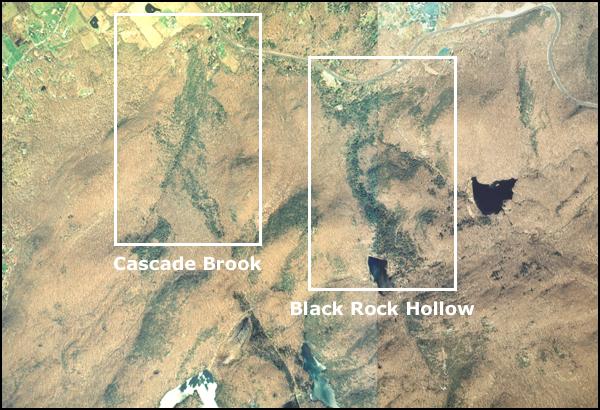
Back to Top Land Use
|
|