The architecture of religion underwent
many changes between 1562 and 1657. Early Buddhist architecture in Kyoto varied from
simple structures to complex temples and shrines. By the Heian Period (784-1185),
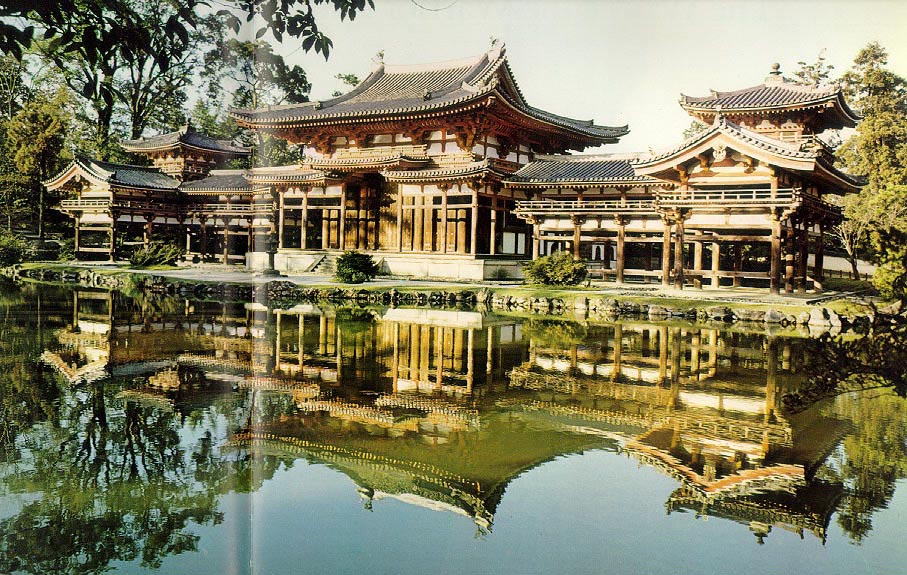
extravagant gardens such as the one at Kyoto’s Byodoin
had already become an integral part of the religious |
|
experience. These Pure Land Buddhist sects
attempted to re-create the Western Paradise on earth. After the fall of Kyoto, during the
Kamakura Period (1185-1333), a somber attitude settled in Kyoto. As told through the Tale
of Heike and the Hojoki, a feeling of impermanence resulted from Kyoto's deteriorated
state. In many ways, the practices of Zen Buddhism already incorporated these sentiments.
By the 1600's, these attitudes would be infused in not only the architecture of Zen
Buddistm, but also in the |
|
architecture of the increasingly popular
Neo-Confucianism. Garden
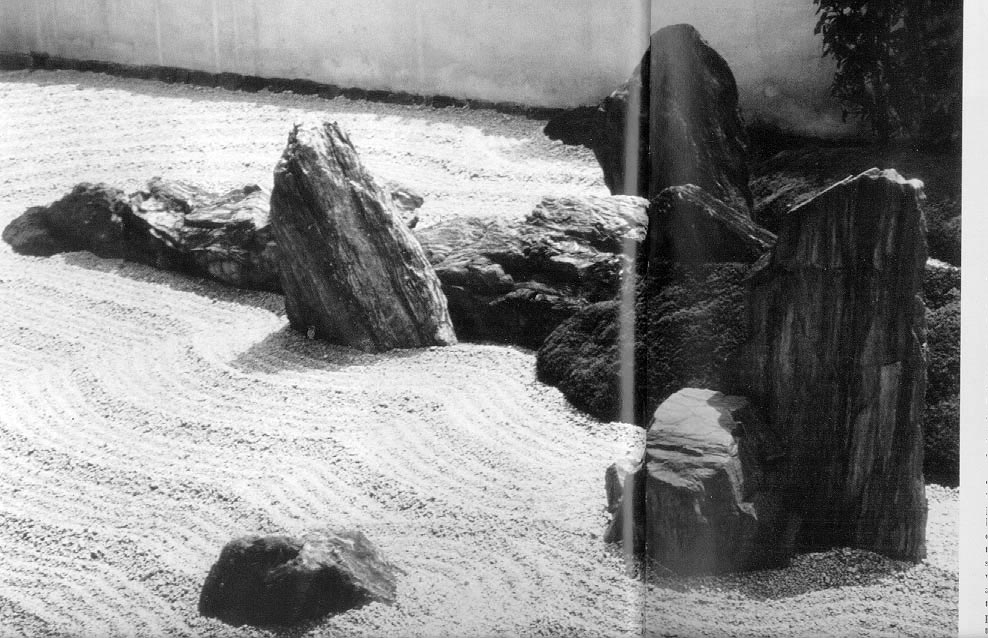
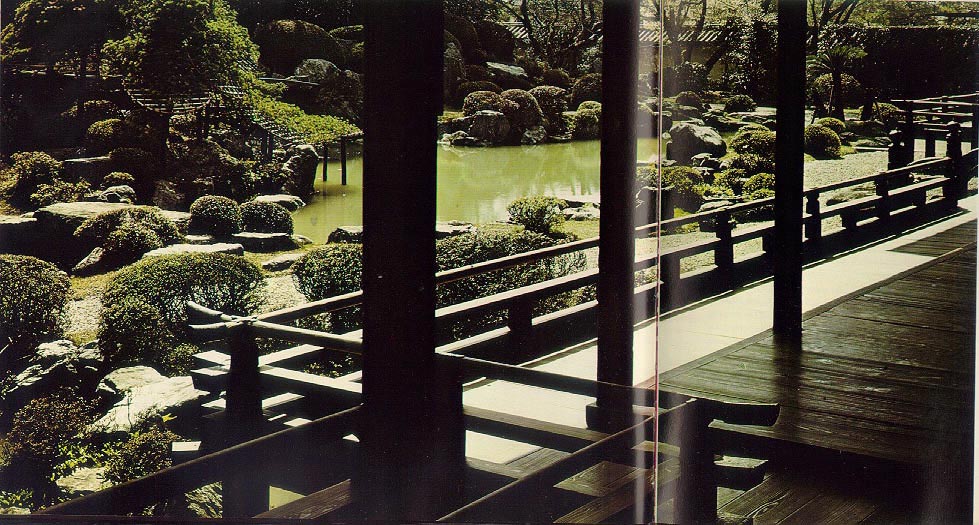
aesthetics varied greatly during this time, as can be seen by the differences between
Ryoanji and the
renovated Sambo’in. At the same time that these
gardens and monumental castles such as Nijo Castle were
being built, teahouses |
|
such as Taian were also
gaining popularity. Ironically, as diabolically different as they may appear, castles and
teahouses seem inseparable within Japan's historical context. |
|
|