Amino acids with C-beta branching
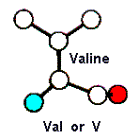
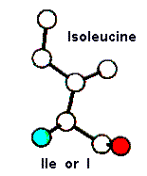
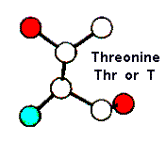
Whereas most amino acids contain only one
non-hydrogen substituent attached to their C-beta
carbon, C-beta branched amino acids contain two (two
carbons in Valine or Isoleucine; one carbon
and one
oxygen in Theronine) . This means that there is a lot more bulkiness near to
the
protein backbone, and thus means that these amino
acids are more restricted in the conformations
the main-chain can adopt. Perhaps the most pronounced
effect of this is that it is more difficult
for these
amino acids to adopt an alpha-helical conformation, though it is easy and
even
preferred for them to lie within beta-sheets.