|
|
|
|
|
|
|
|
|
|
|
|
|
|
|
|
|
| • |
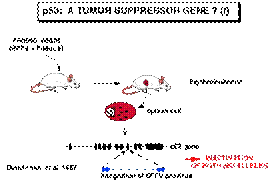
In these
tumors induced by the Friend
|
|
|
virus, the
p53 gene found in the tumor
|
|
|
cells is very
often rearranged, leading
|
|
|
to an absence
of expression or the
|
|
|
synthesis of a
truncated or mutant
|
|
|
protein (Mowat
et al. 1985) The
|
|
|
mutation often
affects one of the
|
|
|
conserved
blocks of the protein
|
|
|
|
(Munroe et al.
1988). In all cases
|
|
|
studied, the
second allele is either lost
|
|
through loss
of the chromosome, or
|
|
|
inactived by
deletion. In this tumor
|
|
|
model,
functional inactivation of the
|
|
|
p53 gene
seems to confer a selective
|
|
|
growth
advantage to erythroid cells
|
|
|
during the
development of Friend
|
|
|
leukemia in
vivo.
|
|