|
|
|
|
|
|
|
|
|
|
|
|
|
|
|
|
|
|
|
|
| • |
Transgenic
mice carrying a mutant p53 gene
|
|
|
develop many
types of cancer, with a high
|
|
|
proportion of
sarcomas (Lavigueur et al.
|
|
|
1989). This
observation led various authors
|
|
|
to study
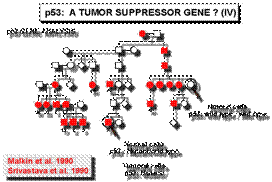
patients with Li-Fraumeni
|
|
|
syndrome. This
syndrome presents as a
|
|
|
familial
association of a broad spectrum of
|
|
|
cancers
including osteosarcomas, breast
|
|
|
cancer, soft
tissue sarcoma and leukemias,
|
|
|
appearing at a
very early age. Statistical
|
|
|
analysis
predicts that 50 % of these
|
|
|
individuals
will have a tumor before the age
|
|
|
of 30, and 90
% before the age of 70. Germ-
|
|
|
line mutations
in the p53 gene have been
|
|
|
found in
several families with this syndrome
|
|
|
(Malkin et
al. 1990; Srivastava et al. 1990). In
|
|
|
all cases
there is a strict correlation between
|
|
transmission
of the mutant allele and
|
|
|
development of
a cancer.
|
|