|
|
|
|
|
|
|
|
|
|
|
|
|
|
|
|
|
| • |
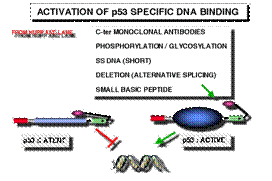
The
carboxy-terminus of Hp53 has been
|
|
|
shown to play
an important role in
|
|
|
controlling
the specific DNA binding
|
|
|
function.
Wils type p53 is found in a latent
|
|
|
form whicvh
does not bind to DNA. The
|
|
|
specific DNA
binding activity was shown to
|
|
|
be activated
by various pathways:
|
|
|
phosphorylation
(Hupp et al., 1992), antibody
|
|
specific for
the carboxy-terminus of the
|
|
|
protein (Hupp
et al., 1992), small peptides
|
|
|
which could
mimic the carboxy-terminus of
|
|
|
the p53 (Hupp
et al., 1995), short single
|
|
|
stranded DNA
(Jayaraman & Prives, 1995),
|
|
|
deletion of
the last 30 amino-acids (Hupp et
|
|
|
al., 1992)
and the interaction with a cellular
|
|
|
protein
(Jayaraman et al., 1997).
|
|
|
| • |
This
observation suggest that micro-
|
|
|
injection of
antibodies such as PAb421
|
|
|
induces an
activation of the transcriptional
|
|
|
activity of
p53. Such hypothesis have been
|
|
|
confirmed
(Hupp et al., 1995)
|
|