FWP:
SETS
HOME: {14,9}
SOUND EFFECTS: {26,7}
WARNINGS: {15,15}
The divan form of this ghazal has no closing-verse; its original closing-verse was {54,6x}.
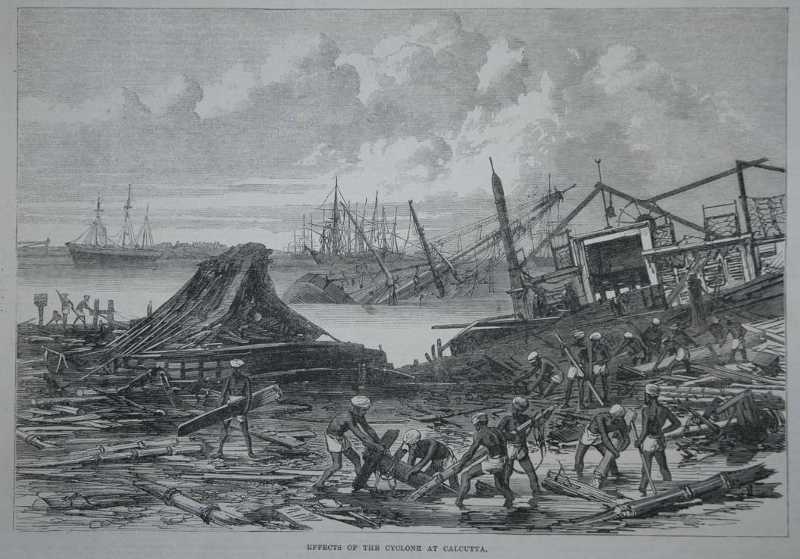
What a satisfying phrase it makes to say dar-pa-e diivaar-o-dar in the second line. The first dar means 'on', the second one means 'door', but juxtaposed in this way they not only provide fine alliteration, but also give a sense of emphasis and urgency. Then there's also the fine wordplay: dar-pa-e literally means 'on the foot of' (as in 'on the heels of' in English), so that the image is of one runner who is chasing another, and is quite close behind. Thus 'Wellbeing' is urged to step to one side, and 'Arrangement' to move off, just as would be prudent advice to bystanders in an actual chase scene.
When the lover warns off 'Wellbeing' and 'Arrangement' (Ghalib enjoys in such abstract personifications), is he acting for their sakes, since he fears for their safety in the coming flood of tears? After all, they're just the kind of entities that would be associated with an orderly, comfortable house-- one with its 'walls and doors' intact.
Or is he impatiently dismissing them, since he himself is sick of them and is eager to enjoy the flood? And of course, it may be a flood of tears-- one for which the lover himself is responsible, as in {111,16}. For a full range of the lover's possible reactions to the flood, see the spectacularly complex {15,10}.
Moreover, the walls and doors may themselves be eager to
welcome the flood, which may be pursuing them in almost an erotic way; in
{58,9}, their greeting to the flood takes
the suitably ambivalent form of (what at least appears to be) a 'dance'.
Nazm:
It's as if Wellbeing is a woman, and Arrangement is a man; the poet says to them both that they should save themselves and leave, for fear that otherwise they might drown. (50)
== Nazm page 50