FWP:
SETS == A,B; EK; PARALLELISM
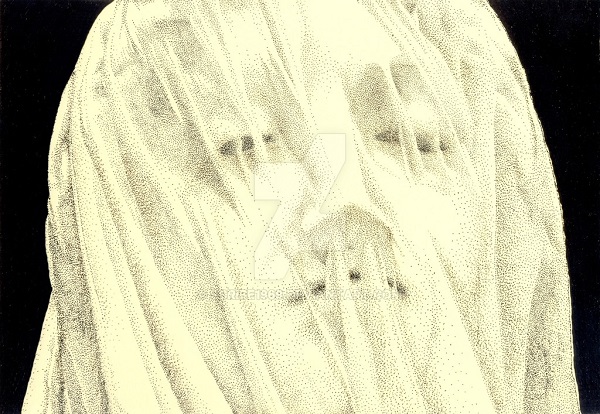
VEIL: {6,1}
We have two independent, parallel lines, and we have to decide for ourselves how they are related to each other. Here are a few possibilities:
=The lover sees a fold in the beloved's veil, and fearfully deduces that it's caused by her brow's being ominously furrowed in anger. (How attentively he watches her, and how paranoid he is about her displeasure!)
=The lover already knows that the beloved is angry under her veil. And now-- her anger has actually caused a fold in her veil. (What power she has, so that her frown is even shared and obediently conveyed by her veil!)
=When an earthquake or volcanic eruption happens, the lover knows Who is, invisibly behind the veil of this material world, seriously displeased. This reading might be called simply a mystical version of the first one. I only mention it because I can't help but think of it when I read this verse. If this material world is a veil for God's presence, what a perfect expression of secret divine anger such ominous 'folds in the veil' would be!
On a more human level, we can actually say that in this case the signalling system goes both ways. For we've seen in {34,1} that the beloved knows from the lover's furrowed brow about his hidden grief. Such studies in implication are one of Ghalib's ways of making multiple meanings out of minimal information.
The tone in which the verse is read-- fearful, or fascinated, or rueful, or amused, or matter-of-fact-- will be able to shape its implications very substantially. And of course, the tone too is something we have to choose for ourselves. Like a veiled face, the verse gives us no clues.
Note for meter fans: To scan :taraf as :tarf is rare, but permissible.
Nazm:
[He has scanned tevarii in the Delhi style, not the Lucknow style.] The gist is, seeing a fold in the veil, the anxiety arises in the lover that perhaps her brow is wrinkled, she's angry about something. (99-100)
== Nazm page 99; Nazm page 100