FWP:
SETS == BASKIH; SYMMETRY
GAZE: {10,12}
RELIGIONS: {60,2}
WINE: {49,1}
For background see S. R. Faruqi's choices. For more on Ghalib's unpublished verses, see the discussion in {4,8x}. This verse is from a different, unpublished, formally identical ghazal,, and is included for comparison. On the presentation of verses from unpublished ghazals like this one along with formally identical divan ghazals, see {145,5x}.
To make grammatical sense of the first line, we need to read ta;Gaaful-mashrabii as, literally, 'heedlessness-drinking', with a sense to be determined by the context; for more on such noun compounds, see {129,6x}. It could mean 'drinking of heedlessness' (parallel to 'wine-drinking'); or 'drinking while in a state of heedlessness' (a state of the drinker's); or 'drinking in a manner full of heedlessness' (a quality of the action of drinking). Mystical possibilities of course arise, as well as images of intoxication and erotic longing.
And then, the second line can be read as either 'A is B' (the glance is a sacred-thread) or 'B is A' (the sacred-thread is a glance). When these possibilities are put together with the convenient doubleness of baskih ('although' or 'to such an extent'), the array of permutations becomes impressive. Here are a few of the most obvious ones:
=Although 'heedlessness-drinking' has created a state of incompleteness, still the speaker is undeterred, and is eager to continue his efforts: the beloved's coquettishly heedless glance that he has been 'drinking in' is like the line that marks a wine-flagon that's still half-full.
=Although the speaker's inattentive 'heedlessness-drinking' has created a state of incompleteness, still he is undeterred, and is eager to continue his efforts: the line that marks the wine-flagon as still half-full allures him like the glance of a beloved.
='Heedlessness-drinking' has created such a state of deficiency that it makes the speaker desperate to remedy the lack: the beloved's coquettishly 'heedless' glance that he has been 'drinking in' compels him the way a half-finished flagon of wine, demanding to be finished, compels a drinker.
='Heedlessness-drinking' has created such a state of deficiency that it makes the speaker desperate to remedy the lack: the line of wine in the half-finished wine-flagon is as irresistible as the coquettishly 'heedless' glance of a beloved.
Compare {117,4x}, another verse about the zunnaar-e miinaa ; on the zunnaar more generally, see {60,8}.
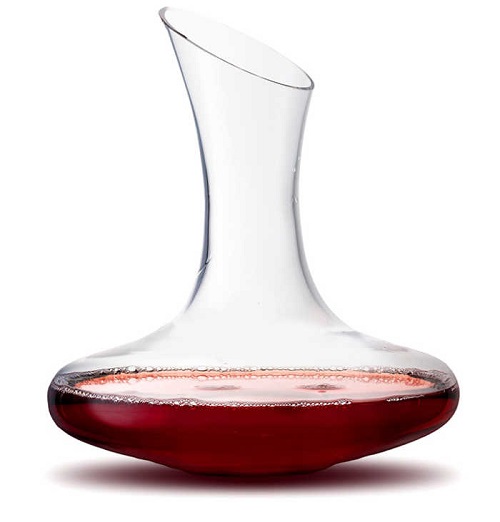
For more about the complexities of lines on wine-vessels, see {81,6x}.
Zamin:
zunnaar-e miinaa = the line of the wine-flagon, or the 'hair' of the glass.
That is, since the beloved is accustomed to showing heedlessness, her gaze is not usually outside her eye, like the line or 'hair' of the wineglass. The zunnaar-e miinaa he has said only for the wordplay of drinking. There was no occasion for incompleteness. For the line of the wine-flagon not to be separate from the wine-flagon, or for the gaze not to come out of the eye, cannot be a proof of the incompleteness of eye or flagon.
== Zamin, p. 360