| Muhyi-ud-Din AURANGZEB ALAMGIR (r.1658-1707) | |
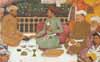 |
Prince Dara Shikoh, Aurangzeb's oldest brother, was temperamentally better suited to translating the Upanishads into Persian than to ruling the empire; after his execution, he was buried in Humayun's tomb |
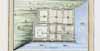 |
Prince Shah Shuja, governor of Bengal, had a lovely palace on the Ganges in *Rajmahal*-- before he tangled with Aurangzeb |
 |
The luckless Prince Murad Bakhsh sought to claim the throne in 1657; hopelessly outmaneuvered, he was executed in 1658; his name lives on in *Moradabad* |
| *AGRA FORT* |
Shah
Jahan
himself lived till 1666, kept in luxurious captivity
within the
Agra Fort; his presence was a source of continuing
embarrassment to his
allegedly devoted son |
 |
When push came to shove,
Aurangzeb
was more
than a match for his brothers, and for the East India
Company as well--
though not for *the
Marathas*,
even after Shivaji himself died in 1680 |
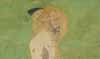 |
Some portraits of Aurangzeb; despite his anti-artistic bias, he also created the new *Moti Masjid* inside the Red Fort, and added the Badshahi Masjid to the *Lahore Fort* |
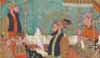 |
Aurangzeb with Shaistah Khan and other nobles, in a scene painted perhaps by Bichitra |
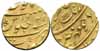 |
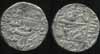
Aurangzeb minted some truly lovely coins |
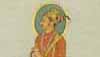 |
Raja Karan Singh of Bikaner, who during his long reign was Aurangzeb's enemy, then ally, then enemy; and an image of a "courtier in the Deccan" |
 |
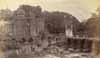
The often-rebellious Azam Shah, Aurangzeb's third son, did not outlive him |
 |
In 1681 Aurangzeb set off to pacify the Deccan once and for all; as his headquarters there he built up the city of AURANGABAD, near the old headquarters fort of *Daulatabad* |
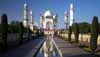 |
In Aurangabad, the "Bibi ka
Maqbara" entombs his wife Rabia Daurani (it was built by
his son Prince
Azam Shah) |
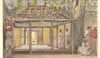 |
Aurangzeb was buried in a (relatively) simple tomb in Khuldabad, near Aurangabad; even in death, he never came back from the Deccan |
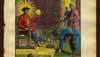 |
Contemporary European depictions of the *Mughals*and their realm were not always very helpful |
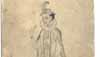 |
And here's a contemporary Deccani depiction of a young European |
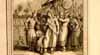 |
From the 1700's, we have depictions by *PREVOST* and others of some of the important figures in Aurangzeb's life |
 |
Aurangzeb became the hero of *a tragedy by Dryden*, and father of the imaginary princess *Lalla Rookh*; modern "Mughal" images of him are still being painted |