|
The Indian National Congress (1885) and
the steady push toward independence
|
|
|
|
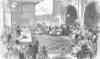
Precursors of the
Congress included voluntary associations with both
British and (English-educated, urban, male) Indian
members
|
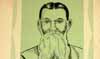 |
A set of drawings of most of
the presidents of the Indian National Congress |
|
|
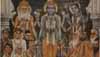 |
The gods of the Hindu
pantheon bless the leaders of the Independence Movement,
especially through the influence of *Gandhi*
|
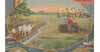 |
Agricultural development is
also blessed, liquor is depicted as a traditional
demon-witch, and untouchability is deplored |
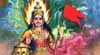 |
Bharat Mata, "Mother India,"
a new nationalist goddess of the Independence Movement
(*Manushi 142*) |
|
|
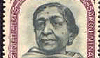 |
Sarojini Naidu, poet,
activist, and Congress leader, was also a kind of
symbolic mother figure |
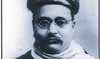 |
Gopal Krishna Gokhale, mentor
of both Gandhi and Jinnah |
 |
At Gandhi's insistence
Congress supported the Khilafat Movement, in alliance
with Maulana Mohamed Ali; *non-cooperation*
with the British became a Congress tactic
|
 |
Rabindranath Tagore, poet,
sage, and educator, who followed his own path |
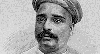 |
Starting with Bal Gangadhar
Tilak (1856-1920), an increasingly militant strain in
the Independence movement began to develop |
 |
Militants were often sent to
the Andaman Islands penal colony-- where in 1872 a
prisoner named Sher Ali assassinated the Viceroy, Lord
Mayo |
 |
The young Khudiram Bose,
hanged in 1908 for an attempted bomb assassination of a
British officer, was one of the first militant martyrs,
but far from the last |
 |
There were also martyrs to
the fight against communalism: patriots who died trying
to stop Hindu-Muslim riots |
 |
Netaji Subhash Chandra Bose,
founder of the Nazi-sponsored "Azad Hind Fauj" (Indian
National Army), was a hero to many Indians during World
War II
|
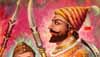 |
Shivaji was envisioned as a
warrior-comrade of Subhash Chandra Bose and the militant
Chandra Shekhar Azad; he was depicted as blessed by the
Goddess |
 |
Vinayak Damodar Savarkar
(1884-1966), inventor of "Hindutva," and some of his
allies
|
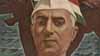 |
Nehru could be emblematically
superimposed on the map of India, with Gandhi hovering
over his right shoulder and Netaji over his left |
|
|