Telemedicine
 å
åWelcome to our Telemedicine Wiki. This page will serve as a forum for anyone interested in learning about or discussing telemedicine--its history, applications, potential, challenges, and future. Here's our team--we'll be the ones posting content here, but everyone should feel free to add comments if you see something that catches your eye:
- Yang Liu (Coach), [email protected]
- Dylan Chase, [email protected]
- Ethan Wagner (Cop), [email protected]
What is Telemedicine?
Anytime a new technology emerges, the excitement surrounding its potential is often accompanied by confusion, so it's helpful at the outset to get a sense of just what exactly it is (and perhaps just as importantly, what it is not). Telemedicine, as defined by the American Telemedicine Association (an industry group established in 1993) is:
"The use of medical information exchanged from one site to another via electronic communications to improve patients' health status. Closely associated with telemedicine is the term "telehealth," which is often used to encompass a broader definition of remote healthcare that does not always involve clinical services. Videoconferencing, transmission of still images...remote monitoring of vital signs, continuing medical education and nursing call centers are all considered part of telemedicine and telehealth."
Medicaid uses a slightly simpler definition:
"Telemedicine seeks to improve a patient's health by permitting two-way, real-time interactive communication between the patient and the physician or practitioner at the distant site."
There are three forms of telemedicine: store-and-forward, remote monitoring and interactive services. Store-and-foreword makes high quality medical service available to more patients, especially those who are spatially distant. Remote monitoring targets patients with chronic diseases including diabetes, asthma and heart diseases. Interactive services make the most fundamental health care service available for patients who live in remote locations.
As we'll soon see, however, under some applications of telemedicine, even these definitions can be in some cases too expansive (for example, some technologies don't require two-way communication between patient and physician) or in other cases too limited (as in the case of telesurgery, in which a surgeon can utilize robotics to remotely perform a procedure on a patient). It's also difficult to adhere to any single definition because of the rapid pace at which the field is evolving.
Thanks to vvtopkar at TimeToast
As a brief overview of the history of telemedicine, we can date its earliest practice back to smoke signals sent by neighboring villages to warn one another of health risks. In the modern era of telemedicine, however, as early as 1959 the Nebraska Psychiatric Institute was one of the first medical facilities in the world to use a closed circuit television link with the Norfolk Hospital, located 112 miles away. The link was used by doctors who consulted with each other on patient cases and also gave psychiatric consultations to patients on the other end of the link.


EJW
Why is Telemedicine Necessary?
To begin with a good way of understanding why telemedicine holds such enormous potential, take a look at this map:
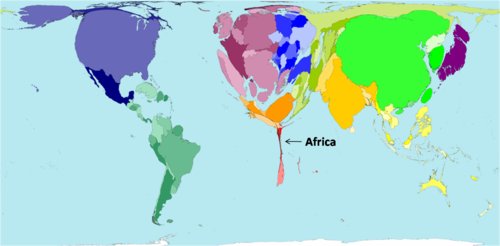
If it looks a little bit off, that's no accident. This map (courtesy of Weill Cornell Medical College) is a geographical representation scaled to show each country's size according to the ratio of physicians working to the total population. As you can see, some areas--the United States, Germany, Italy, India, China, Japan--look as though they "balloon" a little bit. Others--Bolivia, virtually all of Africa save for Egypt, and perhaps surprisingly, Australia--appear as a mere sliver. The people of Sub-Saharan Africa, in particular, are estimated to carry 25 percent of the world disease burden while being served by only 2 percent of the world's health-care force.
In other words, there are populations around the world that are woefully short of doctors--tragically, many of these people also suffer from some of the world's most deadly ailments and health problems. Even in developed countries, residents of rural areas often live far from the facilities and physicians with the expertise and equipment required for treatment. Training local doctors and dispatching medical missions are critically important approaches, but are difficult to scale because of cost and time. Telemedicine--the use of modern communication technology to provide clinical health care from remote distances--is an increasingly important part of the solution.
Here's a short video explaining how telemedicine can help save time and money for a patient while ensuring she has access to necessary health care:
EJW
What are some services that telemedicine can provide?
- Specialist referral services typically involves of a specialist assisting a general practitioner in rendering a diagnosis. This may involve a patient "seeing" a specialist over a live, remote consult or the transmission of diagnostic images and/or video along with patient data to a specialist for viewing later. Recent surveys have shown a rapid increase in the number of specialty and subspecialty areas that have successfully used telemedicine. Radiology continues to make the greatest use of telemedicine with thousands of images "read" by remote providers each year. Other major specialty areas include: dermatology, ophthalmology, mental health, cardiology and pathology. According to reports and studies, almost 50 different medical subspecialties have successfully used telemedicine.
- Patient consultations using telecommunications to provide medical data, which may include audio, still or live images, between a patient and a health professional for use in rendering a diagnosis and treatment plan. This might originate from a remote clinic to a physician's office using a direct transmission link or may include communicating over the Web.
- Remote patient monitoring uses devices to remotely collect and send data to a monitoring station for interpretation. Such "home telehealth" applications might include a specific vital sign, such as blood glucose or heart ECG or a variety of indicators for homebound patients. Such services can be used to supplement the use of visiting nurses.
- Medical education provides continuing medical education credits for health professionals and special medical education seminars for targeted groups in remote locations.
- Consumer medical and health information includes the use of the Internet for consumers to obtain specialized health information and on-line discussion groups to provide peer-to-peer support.
EJW
Delivery Mechanisms
- Networked programs link tertiary care hospitals and clinics with outlying clinics and community health centers in rural or suburban areas. The links may use dedicated high-speed lines or the Internet for telecommunication links between sites. Studies by the several agencies within the U.S. Department of Health and Human Services place the number of existing telemedicine networks in the United States at roughly 200. These programs involve close to 2,000 medical institutions throughout the country. Of these programs, it is estimated that about half (100) are actively providing patient care services on a daily basis. The others are only occasionally used for patient care and are primarily for administrative or educational use.
- Point-to-point connections using private networks are used by hospitals and clinics that deliver services directly or contract out specialty services to independent medical service providers at ambulatory care sites. Radiology, mental health and even intensive care services are being provided under contract using telemedicine to delivery the services.
- Primary or specialty care to the home connections involves connecting primary care providers, specialists and home health nurses with patients over single line phone-video systems for interactive clinical consultations.
- Home to monitoring center links are used for cardiac, pulmonary or fetal monitoring, home care and related services that provide care to patients in the home. Often normal phone lines are used to communicate directly between the patient and the center although some systems use the Internet.
- Web-based e-health patient service sites provide direct consumer outreach and services over the Internet. Under telemedicine, these include those sites that provide direct patient care.
EJW
Specializations within Telemedicine
- The World Health Organization (WHO) has focused on four specializations within telemedicine:
- Teleradiology - The electronic transmission of radiological images, such as x-rays, CTs, sonograms, and MRIs, for interpretation, consultation, and/or diagnostic purposes
The most common form of telemedicine, teleradiology has grown immensely since the late 90s as a cost effective and efficient means of meeting the high demand for 24/7 diagnostics. Too expensive and strenuous to have radiologists on call 24/7, many hospitals and other healthcare providers began outsourcing the work to firms via electronic networks. While efficient and cost effective, some radiologists consider the practice destructive to established practices and a threat to wages and jobs.
Examples of Teleradiology projects:
Connecting rural hospital to their more urban counterparts in East Africa: http://www.eastafricaaidproject.org/index.php?option=com_content&view=category&layout=blog&id=73&Itemid=64
Connecting secondary hospitals to the central teaching hospital in Durban: http://www.ncbi.nlm.nih.gov/pubmed/9539937
Connecting rural hospitals to the capital in Mali: http://www.iicd.org/about/publications/ikon-teleradiology-in-mali-project-evaluation
- Teledermatology - uses telecommunication technologies to exchange medical information concerning skin conditions and tumors of the skin for the purposes of diagnoses, consultation and treatment as well as continuous education
Two modes of teledermatology consultation exist:
1) The store and forward technique uses still digital images that are sent to and reviewed by a medical professional at a later time.
2) Real-time interactive consultations where patients and clinicians interact in real-time through an audio-video communication link
An excellent and thorough report on the limitations, present and future applications, and effectiveness of teledermatology: http://emedicine.medscape.com/article/1130654-overview#aw2aab6b6
A detailed presentation on use of teledermatology in New Zealand: http://www.dermnetnz.org/teledermatology/Teledermatology/index.html
Examples of Teledermatology projects:
Wireless Reach Egypt:
The African Teledermatology Project: http://www.panafrican-med-journal.com/content/article/3/16/full/ - Teleradiology - The electronic transmission of radiological images, such as x-rays, CTs, sonograms, and MRIs, for interpretation, consultation, and/or diagnostic purposes
- Telepathology - Pathology is the study of the nature of disease and its causes, processes, development, and consequences. Telepathology uses telecommunications technology to facilitate thetransfer of image-rich pathology data between remote locations for the purposes of diagnosis, education, and research.
Telepathology systems are divided into three major types:
1) Static image-based systems capture only a piece of the entire slide or field of information. They are the least expensive system and are usable in the widest range of settings
2) Virtual slide systems utilize an automated scanner that takes a visual image of the entire slide or field of information, which can then be forwarded to another location for diagnosis by a consultant.
3) Real-time systems, during a diagnosis, consultation, or training, a consultant actively operates a microscope remotely -- changing focus, illumination, magnification, and field of view at will.
Examples of Telepathology projects:
Telepathology in emerging countries pilot project between Italy and Egypt: http://www.diagnosticpathology.org/content/3/S1/S2
Establishing a telepathology facility in Pakistan: http://sites.nationalacademies.org/PGA/dsc/pakistan/PGA_053053
Using crowd sourced gaming to diagnose Malaria: (video) http://www.youtube.com/watch?v=TbdwcR68iQ8&feature=youtu.be
(article) http://newsroom.ucla.edu/portal/ucla/ucla-researchers-create-crowd-232803.aspx
- Telepsychology - is a mode of psychological service being provided over a technology-assisted environment, traditionally via telephone or web based methods. Common synonyms include e-psychology, e-counseling, web-counseling, telephone counseling or online counseling
A common misconception is that telepsychology is similar to or the same as a helpline. Unlike a helpline, clients provide personal details and payment and determine how the sessions are to be structured. The counselor can make appointments and transfer client information to another counselor when pertinent to the therapeutic dynamic. Information relating to the client can be effectively followed up and continuity of care maintained. Essentially the counselor provides services over the telephone and/or computer similarly to the level of service provided in face-to-face consultation.
Telepsychology is on the rise (American Psychological Association):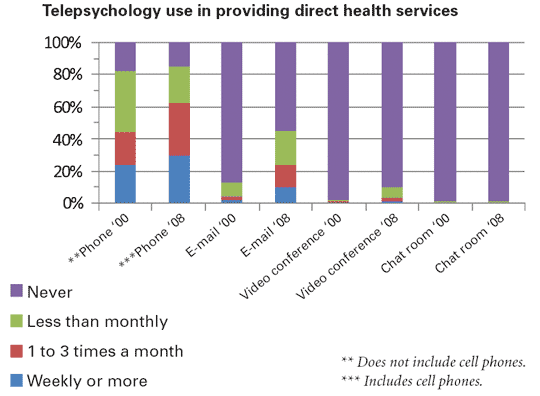
Examples of Telepsychology projects:
Texas A&M reaches rural patients via Telepsychology: http://www.fiercemobilehealthcare.com/story/tele-psychology-picks-steam-rural-areas/2011-03-31
University of Kentucky reaching children and families in rural Appalachia: http://p20.education.uky.edu/labs/telehealth-lab/
DPC
What are some of the most interesting applications for telemedicine today?
- The CellScope Project: Led by Dr. Daniel Fletcher, a team at UC-Berkeley has developed a compact optical microscope that be clipped on to any mobile phone with a camera to enable mobile microscopy. Optical microscopy is essential for diagnosing infectious diseases but the absence of the requisite equipment and personnel often serves as an obstacle to proper treatment. CellScope was designed to push the boundaries of telemedicine to incorporate on-site disease diagnosis by taking advantage of the proliferation of reliable wireless communications networks in the developing world to transmit patient data. Jeannette Nancy Chang, who works with the CellScope team, published a paper earlier this year describing an automated method of diagnosing tuberculosis (TB) by running the microscopic imagery obtained by CellScope through an algorithm. She writes, "Though TB garners relatively little attention in high-income countries today, it remains the second leading cause of death from infectious disease worldwide (second only to HIV/AIDS). In 2010 alone, 1.2-1.5 million deaths were attributed at least in part to TB. Low-income parts of the world see a disproportionately high fraction of TB-related fatalities, with approximately 85% of TB cases occurring in Asia and Africa." CellScope's developers believe that the product can "reduce technician training requirements and improve diagnostic consistency, further lowering the barriers to accurate and timely diagnosis of tuberculosis in the developing world." Here's a quick video from Dr. Fletcher explaining the project:
- Little Intelligent Communities (LINCOs): Beginning in 1998, a team at MIT developed the LINCOs project, which was primarily aimed at bringing communications technologies to poor, rural communities, particularly in Latin America. As part of its focus on using ICT to improve health outcomes, the team developed a low-cost (approximately $8,000) portable telemedcine kit consisting of a portable computer and several medical peripherals, including a digital stethoscope, an ECG recorder and a medical imaging system, all housed within a durable case. The kit was aimed at allowing a health practitioner in a remote area to capture patient data in the form of audio, video, and images in a asynchronous fashion and forward them over the Internet to a doctor for a diagnosis.
- Operation Village Health: Begun by the Center for Connected Health in Boston, OVH provides health services in two Cambodian villages using a few cameras and a handful of donated x-ray, ultrasound, and EKG machines. Doctors at Massachusetts General Hospital and Brigham and Women’s Hospital provide remote consultations for these patients at no charge. By using telemedicine, local doctors are able to learn from more experienced physicians across the globe--nurses in Cambodia provide a diagnosis and outline treatment strategies before e-mailing patient data to Boston doctors, who then revise these proposals as they see fit. With practice, local nurses are better able to recognize particular diseases and devise treatment options.
http://www.nytimes.com/2012/10/09/health/nantucket-hospital-uses-telemedicine-as-bridge-to-mainland.html?pagewanted=all
http://www.nantuckethospital.org/Programs/Telemedicine.htm
http://www.handsontelehealth.com/videos/interviews?start=6
http://blog.globalmed.com/2011/11/29/why-you-dont-want-to-use-skype-for-telemedicine/
www.worldclinic.com
http://www.nytimes.com/2010/01/07/health/07chen.html
http://community.advanceweb.com/blogs/nppa_2/archive/2011/11/22/skype-for-healthcare-is-it-safe.aspx
http://www.health.ny.gov/professionals/doctors/conduct/telemedicine.htm
http://www.med.nyu.edu/content?ChunkIID=13621
EJW
Barriers to Telemedicine
Herbert Rogove, David Macarthur, Bart Demaerschalk and Paul Vespa from the University of California - Los Angeles identified four types of barriers to telemedicine: cultural barriers, administrative barriers, technological barriers and regulatory barriers. They exist in both the developed and the developing world.
Cultural Barriers
There are many stakeholders in the channel of delivery of telemedicine: patients, medical expertise, physicians, businessmen and policy makers. They do not always favor telemedicine over traditional form of medical care. Their resistance has various reasons. These barriers originate in people's perceptions, and cannot change over night.
- Patients in general are worried about the quality of remote health care service. In China, patients have no confidence in telemedicine whatsoever due to its cultural background. Chinese medicine relies on four diagnostic procedures: observing, smelling, inquiring and feeling (the pulse). These are impossible for the doctor without a face-to-face contact. In UK, patients are equally suspicious. They simply do not believe the technologies have been sufficiently advanced for medical sciences. Besides the quality, patients are also worried about the diminishing inter-human relations with the doctor in the treatment process. Traditionally, in hospitals, patients get medical care as well as person’s care. The later is extremely significant if the condition of that patient is untreatable or uncontrollable. However, in telemedicine, human connections seem impossible to develop between patients and doctors.
- Medical expertise and physicians are worried about being replaced by ICT. In the United States, the sector of health care is expected to create the most job opportunities for the market in recession by the State Department by hiring 3.2 million people between 2008 and 2018. However, this turns out to be over-optimism. The number of job created, at the current rate, will be much less.
- Businessmen are divided facing telemedicine. Most businessmen in the industrialized welcome the idea since it brings them to a better market. Telemedicine service providers are more than willing to outsource their products to the developing world since their homeland is too small of a market for them. Even though there is hardly any institutional protection of their activities overseas, they are still willing to take the risk. However, the businessmen in the developing world are less enthusiastic about sharing their market with the foreign companies that are more mature and well developed. Most of their companies are still at the infant stage that it is impossible for them to compete with foreign firms such as the AmeriDoc. Under a market economy, they will not survive without government subsidization. The emerging industry is also concerned with technological protectionism.
- Policy makers are hesitant whether or not to sponsor telemedicine projects at all. The politicians are concerned with their fame, and would rather do nothing than doing the wrong thing. Right now, there are still too many uncertainties in remote health care services. They lack incentives to make the change since their fear the devastating negative outcome.
Technological Barriers
Technologies are never perfect. It looks at the usability of technologies, reliability and connectivity of the Internet, the accessibility to remote data and the availability of technical support. Problems yield include but do not limit to the three examples listed below. Such issues, although exist, can be easily solved through technological improvement.
- Dependance on Imperfect Communications Networks: Opportune Breast Cancer Screening and Diagnosis Program (OBCSDP), a pilot program initiated in rural Mexico to send mammograms to radiologists in cities via the Internet, recognized equipment breakdowns and impossibly slow Internet connections as major impediments. Adrian Pacheco, director of the Centro Nacional de Excelencia Tecnológia en Salud, explained to the HCGHR, “The biggest challenge is [Internet] connectivity. The diagnostic centers are ready and available to do more than 150 screenings every day and they do not reach even 50.” In China and India, similar situations are observed. Their telemedicine program targets rural population who lives distant to medical facilities. However, these are also the ones that have no access to well developed telecommunication networks.
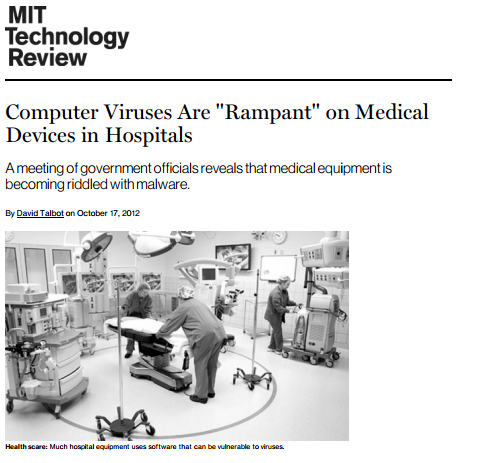
- Vulnerability to Computer Viruses and Malware: MIT Technology Review highlights an obvious vulnerability not only for telemedicine, but even for internal communications systems at hospitals and health care facilities--that with the advantages of communications technologies come the very real possibility of such networks malfunctioning, no small concern when proper treatment can be a matter of life or death.
- Maintaining Doctor-Patient Confidentiality: The speed of transmitting patient files via the internet is balanced by the potential threat to patient privacy that such forms of communication carry. Non-profits such as the Center for Connected Health are working toward solutions like making Skype, a videoconferencing tool, compliant with medical codes so that doctors can communicate over the Internet without the liability of breaching doctor-patient confidentiality. Furthermore, UK has developed a Data Protection Law, which also helps to address this concern.
Surprisingly, technology usability is not considered a significant issue by the developing world.
“Lack of familiarity with ICT did not appear to act as a major barrier to telemedicine, and cognitive factors may be more important in acceptability to patients and their satisfaction.”
-- Catalina López et al,Fundación Santa Fe de Bogotá
Administrative Barriers
Administrative barriers involve the management board of the hospital. It reflects the preferences of the leadership as well as that of the Chief Medical Officer. In reality, administrative barriers are also cultural barriers. They are more influential since the individuals considered here have greater power over the decision-making within the medical institution. Theoretically, this type of barrier is more relevant in the developed nations. In such regions, medical institutions are a significant part of the private sector. Government has little to none leverage in their decision making processes. However, this type of barrier is less relevant in the developing world. There, medical institutions are public entities owned by the government/ the public sector. National or local level officials are significant factoring influencing the development of telemedicine to their country/region.
Regulatory Barriers
Since telemedicine is a comparatively new form of health care, the corresponding regulations are still far from being well defined. Regulatory barriers focus on cross-country licensing, malpractice liability, confidentiality, and government/non-governmental reimbursement. Telemedicine is creating legal issues that no one can provide an answer to. With regards to this barrier, the developing world has little to learn from their pioneers.
"Who will be held responsible if telemedicine-assisted surgery fails due to failure in connectivity? What is the legal status of telemedicine-based diagnosis and treatment? Other legal issues involve conflicting national laws and information piracy, the dangers of prescription drugs that are banned in one country but not in another and quacks who offer medical advice and prescribe drugs over the internet.”
--Meena Rajput, Sharma University of Health Sciences
Rogove, Herbert, David Mcarthur, Bart M. Demaerschalk, and Paul M. Vespa. "Barriers to Telemedicine: Survey of Current Users in Acute Care Units." Telemedicine and E-Health 18.1 (2012): MARY ANN LIEBERT, INC.
YL
The China Case
In order to improve the efficiency of medicine, Yajiong Xue and Huigang Liang assess the current conditions and discovered significant cultural and regulatory barriers. They propose potential policy options based on three dimensions: the user dimension, system dimension and the environmental dimension.
Barriers Identified
- User Dimension:
- Low public acceptance rates.
- Physicians lack motivations to switch to telemedicine.
- Lack of telemedicine system maintenance team.
- System Dimension:
- Insufficient telecommunication infrastructure.
- Lack of health data standards.
- Environmental Dimension:
- Lack of regulations.
- Senior managers in hospitals usually have little IT knowledge and cannot fully understand the advantage.
Policies Proposed
- User Dimension:
- Creating policy to favor rural people so that they can enjoy low-cost telemedicine services.
- Funding research to show the efficacy and cost-effectiveness of telemedicine.
- Establishing incentive creation system to motivate telemedicine practices at local hospitals.
- System Dimension:
- Setting the development of technological infrastructure in rural areas as a priority of the government.
- Establishing a suite of national standards compatible with the international standards.
- Environmental Dimension
- Creating independent laws and regulations to control telemedicine practices.
- Allocating more resources to develop telemedicine programs in local hospitals
Xue, Yajiong, and Huigang Liang. "Result Filters." National Center for Biotechnology Information. U.S. National Library of Medicine.
YL
What's Next?
These are potential policy proposals for developing nations to improve their tele-medicine practices. They are supported empirically by international organizations or reports of consulting firms. However, these proposals tend to favor with more resources to begin with. Smaller & weaker nations definitely needs more attention from the international community.
- Develop more complete legal standards, policies and regulations: Lack of institutional structural is considered the biggest challenge to telemedicine today. The United States and UK are comparatively mature with telemedicine yet are still facing regulatory barriers. In the United States, the policies on government/ non-governmental reimbursement needs to be more complete. In the UK, laws constraining malpractice in telemedicine needs to be further clarified. In the developing world, the establishment of telemedicine law and regulations is necessary since remote health care is a relatively new term there. Besides, they also need to overcome technological and trade protectionism of the foreign corporations that provide technical assistance. Without this, local telemedicine service providers cannot survive.
“Awareness among patients and health administrators is essential to accept this emerging technology as a facilitator for quality healthcare delivery in remote areas. There is a need to address policy issues like standardization, legal, ethical and social factors besides developing revenue models and creating infrastructure for meeting the need of training manpower and carrying out research and development.”
-- International Telecommunication Union Mobile eHealth Solutions for Developing Countries
Study Group II 4th Study Period, 2010
- Utilizing all kinds of mobile devices: the United States and UK have been utilizing all kinds of mobile devices including mobile phones, tablets and personal computers. However, developing nations like China and India have not been doing so. Further, the telecommunication network is relatively underdeveloped. In the short run, they should encourage remote health care provided through mobile phones. Utilizing tablets and personal computers are not possible without long term strategies
YL