Ushahidi Review
HOME ADDITIONAL MAPPING PROJECTS RESOURCES BEST PRACTICES FOCUS AFRICA AREAS IN NEED<Back to Analysis

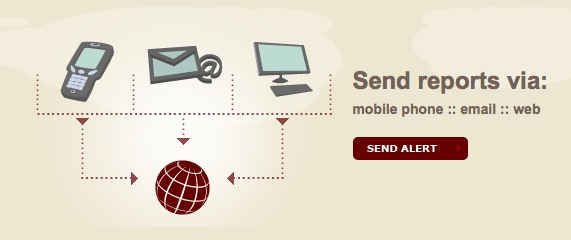
Ushahidi– Swahili for testimony— is a web-based platform that allows anyone to gather distributed data via SMS, email or web, and visualize it on a map or timeline. It was launched during the post-election violence in Kenya on January 9, 2008 (Ushahidi Legacy) to spread awareness about the violence devastating their country, and to empower citizens to report on or learn about the atrocities occurring in their regions. Their goal is to "create a platform that any person or organization can use to set up their own way to collect and visualize information."
At the heart of Ushahidi is the goal to empower individuals and groups to be both producers and consumers of information via web and mobile phone. It relies on crowd-sourcing information from citizens, along with various media outlets to populate maps with crisis information and reporting.
"Google Earth supposedly shows in great detail where the damage is being done on the ground. It occurs to me that it will be useful to keep a record of this, if one is thinking long-term. For the reconciliation process to occur at the local level the truth of what happened will first have to come out. Guys looking to do something – any techies out there willing to do a mashup of where the violence and destruction is occurring using Google Maps?" - Ory Okolloh, Founder of Ushahidi
HOW IT WORKS
Google Maps provides the technological platform for Ushahidi to crowdsource information and visually display incidents of crisis. The project employs the power of interactive media allowing users to report or document episodes of violence or conflict through mobile phone or Internet browser, by adding photos, video or written content, which can then be zoomed in on and viewed via Google Maps.
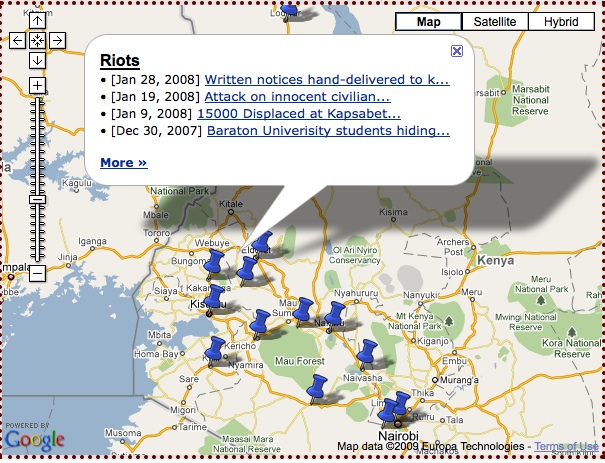
“An interactive map is a remarkably effective narrative tool for a transnational audience. Tragic violence calls for empathy and action, but it is difficult to feel a connection with a place one cannot imagine.” - Josh Goldstein
Clicking a thumbnail on the map, the viewer is able to read the report or video uploaded from a specific location. The maps include information in the form of text, photos, or video.
USERS
The Ushahidi Engine is a free and open source platform that enables anyone, anywhere in the world to participate in gathering crisis information. The technology has been specifically designed to create a user-friendly platform for citizen journalism. It is now available in open Beta for anyone to download on their servers at download.ushahidi.com.
Aggregated information is used by NGO’s, the press, and the general/global public to have the latest information during a crisis.
Ushahidi's first deployment in Kenya in January, 2008 attracted 45,000 users.
USHAHIDI DEPLOYMENTS
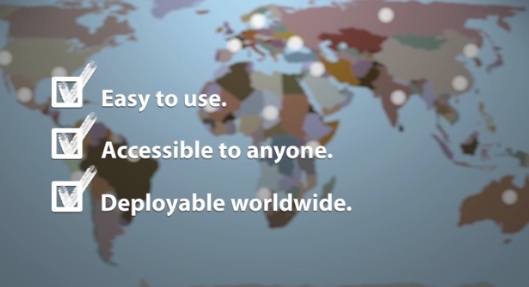
Ushahidi was the most successful digital civic campaign launched in Kenya in the wake of the elections. Its success has extended the projects reach to other nations, including South Africa, India and the DRC Congo.
- Alive in Afghanistan tracks elections and related events through SMS, email, and the web, inviting Afghan citizens to participate in society by reporting on their political process.
- Connection Geomap reports issues related to trafficking, creating a space to share critical information on a global scale.
- Swineflu.Ushahidi.com was a site set up by Ushahidi to track incidents of Swine Flu coming from unofficial and official sources.
- Wildlife Trackers maps sightings of wildlife in Kenya.
ANALYSIS
Using Google Maps for human rights awareness, Ushahidi has successfully provided an open-source platform that allows cooperation and the sharing of information among citizen users on a massive scale.
STRENGTHS
- Demand exists: Ushahidi's first deployment in Kenya attracted 45,000 users, demonstrating demand for a tool that allows citizens to communicate and share their stories.
- Open-source platform: Anyone in the world can participate.
- Crowd-sourcing citizen journalism
- User-friendly: Low level of technical skills required. Users can map incidents with mobile phone technology.
- Visualizing Crisis: Ushahidi's platform allows users to upload photos and video to the map, creating visual documentation of an event
- Empowering citizens: Ushahidi gives citizens the opportunities to have a political voice by sharing their experiences online
- Raising awareness: Ushahidi is open to all, allowing first-hand accounts of violence or fraud to reach those in the diaspora.
- Utility: Ushahidi reports can be used to inform NGO's, the press, human rights organizations, etc...
- Low Cost: Operation and participation costs are low (anyone form anywhere on the planet can participate with only a mobile phone signal).
- Privacy: Ushahidi allows for anonymity by removing user names and information from reports
WEAKNESSES
- Technology: Ushahidi is still operating in Beta and users still experience glitches. A development team is currently working on upgrading the technology to make the platform run as widely accessible and easy-to-use as possible.
- Access: Citizens most affected in crisis environments may not have access to technology to participate.
- Accountability: Because Ushahidi is open-source and anyone can participate, the accuracy of information is called into question. Some of Ushahidi's deployments have operators to verify accuracy of information.
- Impact difficult to measure
PARTNERSHIPS

Ushahidi collaborates with several international organizations for development, research, and pilot projects. Partner contributions include funding, pro bono legal assistance, and technology (local SMS integration). Below is a list of Ushahidi partnerships drawn from the website:
· Cisco Foundation: Funding for building the beta version and international testing.
· Covington & Burling: Pro bono legal assistance.
· FrontlineSMS: Local SMS integration.
· Hivos Foundation: Funding for staffing the hub in Nairobi and for multi-media and educational outreach.
· John S. and James L. Knight Foundation: Funding for in-depth testing and support in Kenya.
· Humanity United: Counsel and funding for the second iteration of Ushahidi.
· Macarthur Foundation: Funding for building the beta version.
· Omidyar Network: Funding for a physical hub in Kenya, for verification technology, and for scaling for impact.
· Open Society Institute: Funding for a technical strategy meeting in Orlando, Florida.
USHAHIDI IN THE NEWS:
The New York Times
Global Voices Online
Forbes Magazine
Guardian
TED Blog