Veteran Wikipedia Contributor & Key Architect of the Wikipedia Public Policy Initiative
Table of Contents
In an effort to better understand the inner workings of Wikipedia, I spoke with acclaimed Wikipedian Pete Forsyth.
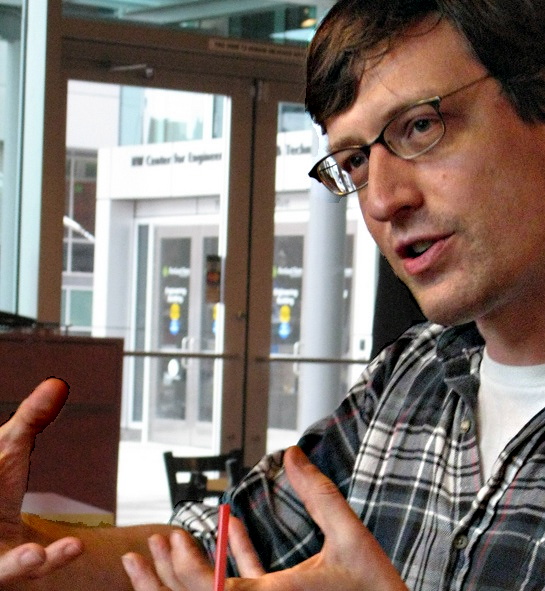
Pete Forsyth is a veteran Wikipedian who helped found WikiProject Oregon, a dynamic group of Wikipedians which coordinates collaborative projects and engages with local institutions. He was a key architect of the Wikimedia Foundation’s Wikipedia Public Policy Initiative, a broadly acclaimed outreach project designed to help the academic world engage with the Wikipedia production process. Pete’s projects have ranged from improving a single Wikipedia article to designing programs that engage Wikipedia volunteers. He has also spoken about Wikipedia to a variety of audiences, from Ivy League universities to community groups, and from Poland to California.
Download Full Interview (.mp3)
Pete Forsyth Interview.zip
No Video on Wikipedia?
While discussing the potential use of video in Wikipedia, Pete Forsyth focused on the practical limitations. "I think there are a few good reasons why it's not more a part of Wikipedia as of now and I would say that number one is technical - since Wikipedia only uses open source codecs and software, that the kinds of formats acceptable are just difficult to use, there's not a lot of software to work with and you sort of have to be a geek to be able to navigate the technical hurdles."He then went on to elaborate on the inherent bias of video, arguing that "with an encyclopedia where neutrality is really important, there's a lot of possibilities for problematic uses of video."
Language Communities
But despite his reluctance to include video, Forsyth added that "it's very important that local communities, that language communities, make their own determination about what the appropriate editorial policies are."Importance of Collaboration
Forsyth explained how the importance of collaboration is easier with text and perhaps hindered by video."It may be that for various cultural reasons it makes a lot more sense it have an emphasis on media than on text for Arabic Wikipedia, I do think there is an important related technical issue...one of the reasons Wikipedia has been so successful is that it is possible for people to work with each others' text."
"It's very easy to do the kind of quick collaboration where you can see the types of changes one person made, the software makes it very transparent when one person changes some text by removing some words... you can easily see that comparison of the text."
"I do think there's something more valuable about text where its possible for you to upload a paragraph and then add a sentence in the middle of it and for someone else to see which of the pieces I contributed versus what you contributed."
Sequencer Software & Commons
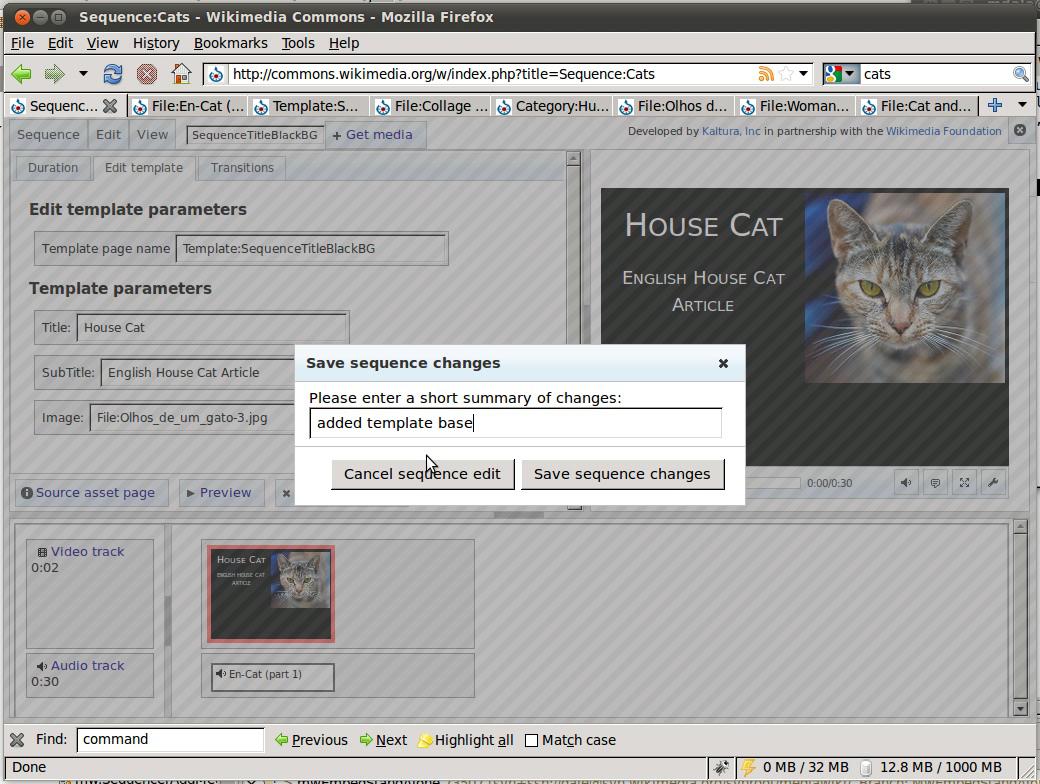
But new advances are emerging, specifically a "sequencer software on Commons that's under development."
How does it work?
"If there are several video and audio files and there are photos on Wikimedia commons and you want to put together sort of an edited piece, then its possible to define through the wiki software...say I want to play this one from the 37th second to the 45 second and then show this photograph for 10 seconds and then play this audio file over the photo to sort of construct a video out of block components from within the Wikimedia software. That's a sort of more wiki-like approach to video than you'd have when you just uploading entire videos."
Non Profit & Partnerships
When discussing potential partnerships with YouTube and other video platforms, Forsyth emphasized the importance of adhering to Wikipedia's value structure. "It's important to understand that the model that's brought Wikipedia about, the devotion to the non-profit, free software, multilingual approach, is really an important piece in why many of the technical issues exist. If you compare Wikipedia to Facebook, Facebook may seem more advanced in a number of different ways, but if you compare the number of languages that each is available in, Wikipedia is going to come out way on top. I think it's important that the decisions on Wikipedia are driven more by a value structure and a devotion to its mission than they are to market opportunities."Direct Experience
While discussing a model for funneling information from mobile phone users via SMS, Forsyth elaborated on what is gained through direct experience on Wikipedia. "I think it's important for people to have some direct experience with Wikipedia in order to be able to contribute meaningfully to it- so I'm a little more skeptical of the idea of people contributing who just aren't online much or at all.""The back and forth of the early stages of contribution are so important for someone to develop an understanding of what is meant by neutral tone, what kind of language is considered appropriate for Wikipedia and what isn't, how an article is typically structured - it's so important to have a fluid back and forth with other editors, to be able to develop an understanding of how Wikipedia works."
Forsyth then provided the caveat that if the goal was "to supplement their traditional internet access by adding a sentence here and there, a link here and there, a note here and there through SMS, that seems more promising to me. That would be a way to more fully engage of a demographic that may already be somewhat inclined to engage but might have some hurdles to continuity."
"I think it would be really different if it was sort of a tight community where that person whose doing the funneling is playing a significant editorial role and is providing some of that continual feedback for some of the people they're engaging with...it would feel that they were part of a process... that's the kind of thing I would like to see happening."
But Forsyth punctuated the importance of "a bit of transparency to the reader about how that text got generated, either on a technical level or through blogging style reporting...a bit of info communicated about how the article was generated, that the editor says this many people contributed to this article during these dates."
Important Enough
"On Wikipedia, it's often not just the facts but it's whether or not that is considered important enough to have in an article about that person." Sister Projects
"Wikinews, on a historical level was established to begin as a way to get around Wikipedia's prohibition on original research, that Wikinews was a separate site that did explicitly allow original research, that did explicitly allow people to go out and do interviews. And the idea was sort of that once a news story was published on Wikinews with a clear process around establishing authenticity and all those related things, that then you would have a reliable source that could be used for a Wikipedia article.""I think you'd probably encounter a much more friendly reception to a project that was designed around uploading a video to Commons and transcribing it on Wikisource and writing a news story on Wikinews and then incorporating that into a Wikipedia article, than you would with a project that was designed around uploading it to YouTube."
Advice
"I think the more that Wikipedians can look at organizations as potential partners and as opportunities for finding aligned interests, instead of looking at it from this defensive posture of being made to figure out how to do things our way, I think that will reap better results."To see the full interview, click here
Next
This research was done by Corey Boling, a graduate student at Columbia University. Email him at [email protected].
This is a page under The Use of Video a sub-topic of Wikimedia in the Arab World.
See also: