U8216 Microeconomics and Policy Analysis
Fall 2000
Group Project 6
As advisors to the new governor of the state of Guerrero, you
have been told that you have a fairly free hand in designing a
catastrophe policy. As
a representative of PRIDAN, a new party that stands for nothing,
the governor had campaigned on a campaign of nationalizing the
drug industry, privatizing the police, reclaiming Texas and
California, and reinstating Nahuatl as the official language.
Nothing about hurricanes, typhoons, or earthquakes.
But after the devastating hurricanes on the east coast this
year, the weak response of the federal government, and the
memories of disasters in 1997, she has decided that Guerrero needs
its own policy and asked you to recommend one.
“Of course,” she said, “if you decide after
everything that we don’t need to do anything, that’s okay too;
but we really need to consider the options seriously before
that.”
Among the options she has asked you to consider are:
1.
Do nothing. If
a hurricane happens, it happens.
It’s an act of God; so who’s the government of Guerrero
that it should interfere? In considering this policy, the governor has asked you to
think about whether it is credible: whether she could actually
resist all the pressure to respond after a disaster, and whether
she could get people to believe that she would resist pressure.
After all, the purpose of this policy is to dissuade people
from doing things that would be dangerous in the event of a
disaster, and if people don’t believe it will be carried out, it
won’t dissuade anyone.
2.
Do nothing but publicize the odds.
Let people who are contemplating moving to Acapulco know
precisely the dangers of what they are doing; if they persist in
doing so, that’s their problem.
Same for those living in Acapulco now.
3.
Continue the current policy: if people come and something
happens, the government tries (as best it can) to take care of
them. If they want to
buy insurance they can; but even if they don’t they will be
assisted after a disaster. If
you recommend something like this, the governor has indicated that
she wants to know how to finance it.
Should it be paid for only after it happens, or should the
overnment set aside money each year in a gradually increasing
disaster fund (which would still be inadequate if the next
hurricane struck, say, three years from now)?
Or should the government appropiriate and raise by taxation
each year enough money to handle a major disaster in that year?
What sort of taxes should be used to raise this money,
whenever it is raised?
4.
Continue the current policy, but purchase insurance against
the costs that would be incurred.
If this is your recommendation the governor will want to
know: how much insurance? What
sort of deductible (if any)?
How much to pay above an actuarially fair premium?
How to find the actuarially fair premium?
How to buy it? How
to pay for it?
5.
Continue the current policy, but sell Guerrero disaster
bonds directly on the world market.
What terms would these bonds be offered under?
6.
Continue the current policy, but enter into a mutual
assistance pact with Yucatan, Jalisco, Baja California, Florida,
Turkey, San Francisco, Kobe, Taiwan, Singapore, Scotland and
Bangladesh, or some subset thereof, all of whom have made
inquiries in the pas few months.
What would the terms of this mutual assistance pact look
like?
7.
Require everyone to purchase enough insurance to cover his
or her property, medical bills, and funeral expenses in the event
of a catastrophe. Prosecute
anyone who fails to do so.
8.
Require everyone to buy some minimum amount of insurance,
sort of like automobile insurance in New Jersey (the governor is
very fond of New Jersey). How
would you set this minimum?
9.
Sell Acapulco to the hotels and let them worry about
everything.
10.
Forbid new migration to Acapulco.
11.
Close Acapulco.
In considering any policy that involves an active Guerrero
role, the governor has indicated that she wants you to address two
other concerns:
·
What’s a disaster? How
do you draw the line between a thunderstorm, a hurricane, and a
hurricane that was mainly out at sea.
How do you draw the line between a heavy truck passing by,
a mild tremor, and an earthquake?
If the temperature in Acapulco stayed below freezing for a
month and 20 inches of snow fell, would that constitute a
disaster, even though people in Edmonton would describe that as a
mild winter? How
about a big fire in a hotel, or an outbreak of influence or
cholera? Was the peso
devaluation a disaster? Are
poor people in Guerrero living in a continuous state of disaster?
·
What should the goal of a disaster relief effort be?
Should it make everybody whole — and therefore help rich
people more than poor people? Should it restore a uniform x% of everyone’s losses
— and therefore still help rich more than poor?
How do you determine x?
How do you determine someone’s losses?
Or should the relieve effort get everyone back to a
guaranteed common level and therefore possibly give no help to
rich people who lost a lot (but still kept a lot) and a lot of
help to poor people who didn’t lose much at all?
If the common level is higher than the level some people
were at before the disaster, do you help people become better off
than they were before the disaster?
The governor would like you to make a presentation of
around 20 minutes to her cabinet and her.
Her experiences in New Jersey have made her pretty
sophisticated in microeconomics, although some cabinet members are
not. She’d prefer
that the presentation be in Nahuatl, but it’s okay for you to do
it in English, as long as you’re prepared to answer in Nahutal
any question addressed to you in Nahuatl.
|
| Members |
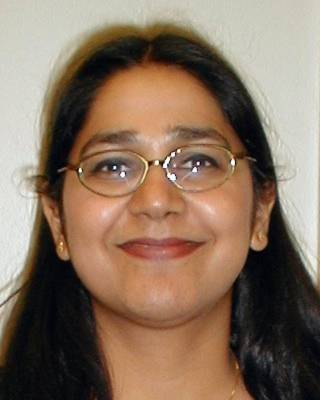
Divya Chaturvedi |
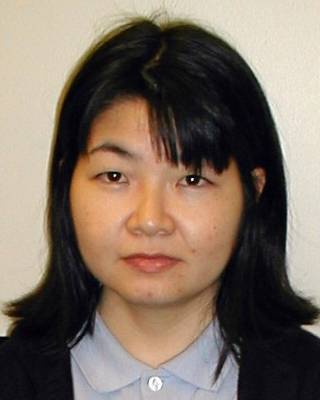
Miho Hirose |

Barbara Holtzmann |

Danyelle Peckerman |

Aiko Sakurai |
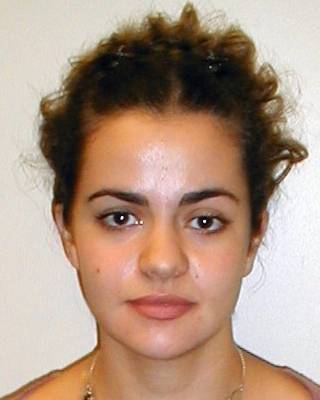
Carine Terpanjian |
|
