Banana Yoshimoto’s Kitchen
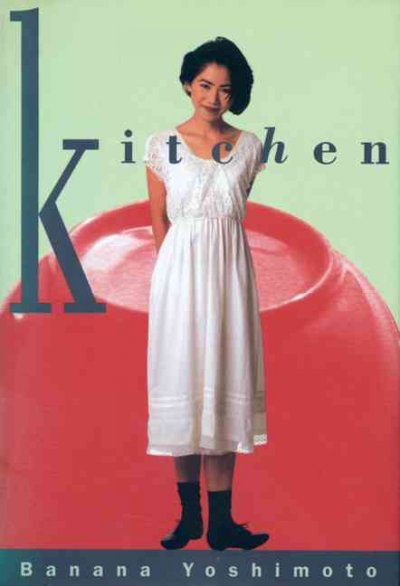
When Banana Yoshimoto was twenty-two, she published her novella, Moonlight Shadow, about a young woman whose lover passed away along with her brother in a car accident. The story went on to receive the Izumi Kyoka Prize in Literature, and then in the English language markets, became bundled together with her first proper novel, Kitchen, at the age of twenty-nine. Yoshimoto, of course, has since been a prodigious writer — but to come to success at the ripe old age of twenty-two in Japan, and then twenty-nine around the globe, can you imagine?
When I learned that she published Moonlight Shadow at twenty-two, I have to admit, I was more than jealous. It was something where you’re angry at someone else’s successes and victories. Jealousy with in a fourth dimension and an exceptionally green face. Jealous not only that she could have been picked up and published at such a young age, and go on to live her dream of being a novelist or whatever it was she waned to do (she studied literature in college) but also because her writing was so perceptive, so fresh, so unlike anything that came before, such a way of capturing the milieu of youth and showing the struggles so clearly. Perhaps it’s because I am young, but it’s because I’m young that I struggle to write stories others want to read.
And yet at an age not too far from mine, Yoshimoto was able to capture not only her feelings, but the feelings of her entire generation. She was able to show the world not only her emotions, but their own emotions, telling us what we felt, in a novel that is simultaneously light and airy yet heavy and serious, combining the written aesthetics of the pop-novel with the seriousness of themes typically reserved for literature. It’s a book that is both fresh and timeless, heavy yet easy to read.
I’ll admit that I’ve read this book at least four times since my senior year of high school, usually reading it about once a year in the wintertime. Every time I read Kitchen, I am just as moved to read about the death of Mikage’s grandmother and her adventures through culinary school and the somewhat saccharine (though still kind of unbelievable) reunion of her and her dear friend. And when I get to Moonlight Shadow, I am moved to see Satsuki come to closure in a strange liminal space in an even more unbelievable, yet still oddly realistic, way.
And I suppose I’ve read it so many times because it resonates. I want to write like her. I want to catch in her airy, light-hearted style, which skips many tedious descriptions where they’re not necessary and immerses itself directly in the experiences and feelings of the protagonists. Where Virginia Woolf captured emotion through describing every detail, every movement, every moment with painful (yet moving) accuracy, Yoshimoto somehow manages to do the same while doing the opposite. The endings, yes, are saccharine, unrealistic and self-assured. Yet every time I still feel that the characters grow, and the self-assurance is not from a miraculous change in circumstance, but because Yoshimoto’s characters are constantly growing and evolving, making strides in a way that makes me feel I’m growing along with them.