Virginia Woolf’s To the Lighthouse
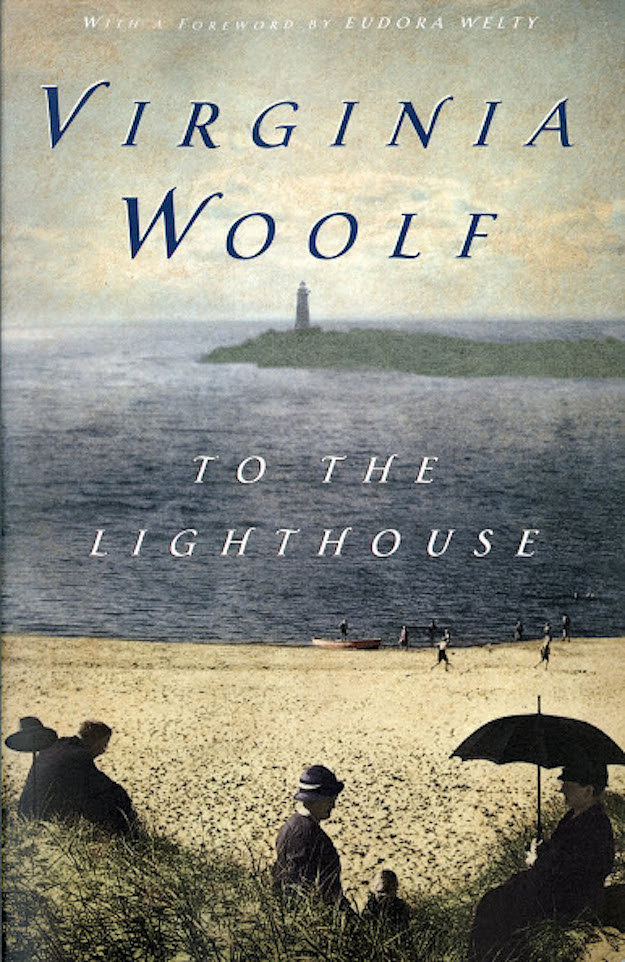
I remember reading To the Lighthouse for my freshman Lit seminar my first year of college. It had gone by so, so fast. I cried when I moved in and left home in August, traveling (for the first time) more than 150 miles away from home and everything I knew. And suddenly it was late April and there I was, in a dark dormitory room on a balmy spring day, reading this relatively brief little novel. Many of my classmates were already dreading it before they even began, lamenting that they would have to read what one person rated on Goodreads as a 2/5 “mediocre” book. I had no idea what to expect, I had never read Woolf, never heard of her outside of the title to the play Who’s Afraid of Virginia Woolf mentioned several times (though I also never had seen or read or knew anything about the play, only heard of it).
I remember reading it and being very confused yet very captivated by it all. There was a clarity about it. Though Woolf had hardly written anything that could ever be called particularly “clear,” there was still within the masses of details about the light hitting things and what the table was thought to be doing when no one was looking at it, or what comes after Q, or whether or not they’re going to the lighthouse, what happens when they finally do some two decades later.
What was clear to me was not the plot, but the details that make up a feeling that can only be described as anxiety, anxiety about the present, the past and the future, an anxiety characterized by the fin-de-siècle and the Great War and the uncertain times ahead. This anxiety however, was not characterized by anything certain or concrete, Woolf never was weary about the rise of fascism or communism or a preoccupation with developing the ‘Third Way’ of politics like we were here in America and Britain. No, instead, Woolf was preoccupied with the passage of time itself, something that began before she knew it even existed, and something that will continue much after she has left this earth. Indeed, we sit here living in a world that Woolf could hardly fathom, changing day by day, moment by moment. What is cutting edge today is old one year from now. At what moment in time did the world accelerate so quickly?
I will write some other time on the tremendous pace of technology and the rapidly-changing market that us millennials face. But I want to write more about why it was that Woolf struck a chord within me so perfectly. Because at that moment I came face to face, very immediately so, with the fact that time is beginning to speed up. I remember in high school a teacher telling us that time doesn’t slow down after high school. It gets faster and faster. And faster it has. Each semester goes by faster than the last. I feel like just a few months ago I began college, and here I sit, about seven weeks away from ending my third year here. In fifteen months (which is about the time it takes for a baby to recognize itself in a mirror) I will walk down a stage with a diploma and all my hard work will culminate in something. Not a job, not graduate school, not even the diploma itself necessarily. It will culminate in something abstract, vague and unconcrete, the same unconcreteness that Woolf was so preoccupied with almost a century ago.