Vampire Weekend’s Modern Vampires of the City
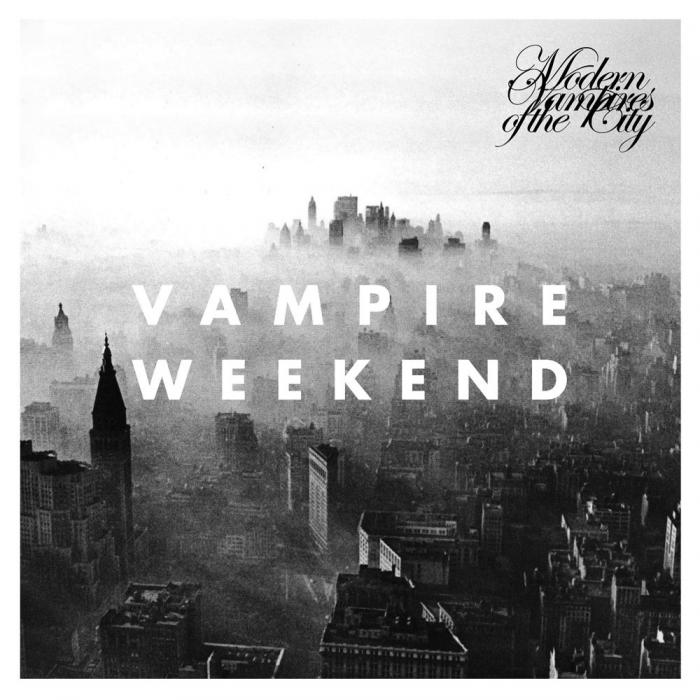
I remember being struck by Vampire Weekend’s first single from this album, “Step,” when it came out March 2013 on YouTube, two months before the album itself was released officially. I was drawn in by that familiar chord progression from Pachelbel’s Canon in D on harpsichord that opens the song, and stayed for Koenig’s vocals and charms.
I had also just been accepted into Columbia, and as a result, I also remember being struck by the lyric video, the obvious reference to Woody Allen’s Manhattan, and being mesmerized by the scenes of New York and the excitement that I hoped my life would provide as I moved off to New York City. But despite being named Modern Vampires of the City, it focuses less on New York than on being modern. In fact, the video is really just one of the very few connection that this album has to “the City,” with most of the album dedicated to understanding what it means to be “modern.”
I am thinking here of two songs in particular: “Step,” which deals with questions of nostalgia, and “Ya Hey,” which deals directly with questions of faith and capital-G God. Though neither will tell you so directly (unlike “Unbelievers”) the two present their themes in an almost sublime way, that they become inaccessible without further thought. At a first listen to “Step,” the lyrics seem more playful than anything: “Back, back, way back I used to front like Ankgor Wat/Mechanisburg, Anchorage and Dar es Salaam,” but as you unravel them they become more and more obvious as references to the past and a nostalgia for an era that no longer exists. And in “Ya Hey,” what sounds like random vocalizing is actually vocalizing meant to be “Ut deo,” Latin for “It’s up to god”.
The lyrics provide a place for rich analysis that can be done by someone with more time and more expertise in obscure, Victorian-era literature than myself. But I will say that I really enjoy being able to explore these issues with the band as they work through the lack of originality and authenticity in the modern world, or as they go through a crisis of faith.