Michigan: Is it Still the Promised Land for Iraqi Refugees?
Why would Iraqi refugees continue to move to Michigan when resettlement efforts are slowing and jobs are getting increasingly hard to find?
| Written byDanish Mehboob | Published on | Read time Approx. 6 minutes |
Framing the issue: Iraqi refugees continue to flock to Michigan despite lower job prospects
Despite Michigan offering limited job opportunities and restricting Iraqi refugee resettlement, Iraqi refugees still flock to the state in hope of finding their community and culture. In the last decade, over 29,000 refugees were resettled in Michigan and a little over 60 percent of them were Iraqis. Mohamad Soleiman, an Iraqi refugee living in upstate New York, says that he has wanted to move to Michigan for a long time, but it's risky. His job prospects are uncertain, especially with the state's economic decline for the last so many years.
However, when Soleiman visited Dearborn, Michigan he says it felt like home. A feeling that he has trouble finding in Albany, New York. "My family is in Michigan, of course I will want to move." Despite Albany's history of resettlement and significant Arab population, it's still a small Iraqi community compared to Michigan's, which is in the thousands in Dearborn alone. "It's likely that someone coming from Iraq will know someone in Michigan," says Joseph Kassab, an Iraqi American and executive director of the Chaldean Federation. According to him, Iraqis will always prefer to live together and they are doing well because of the community around them.
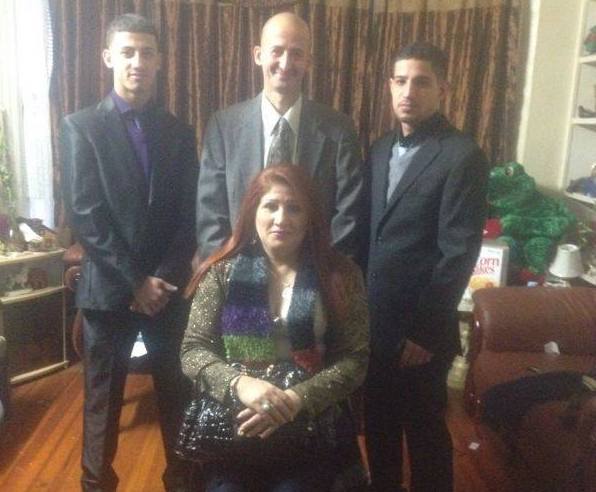
Image Source: Courtesy image from Mohamad Soleiman
Conditions leading to slowed resettlement of Iraqis
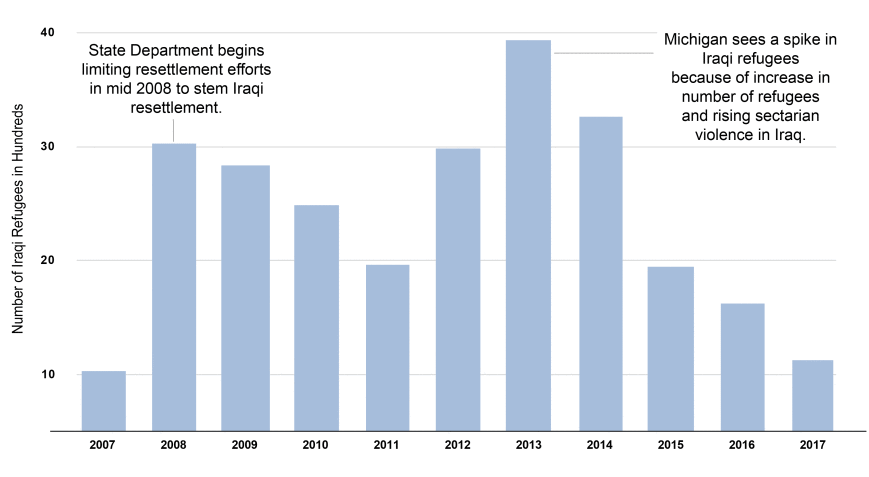
Resettlement in the U.S. showed a spike from the 2003 Iraq war. Michigan has resettled between 500 and 4,500 refugees annually, since the start of the war. The influx of Iraqis from that point onwards has led to their community becoming one of the largest resettled refugee populations in the U.S. especially Michigan. However, the State Department limited Michigan's resettlement efforts in June 2008 by only allowing refugees with immediate family to resettle in the area. The policy affected Soleiman when he first arrived in the U.S. in late 2008 because it took Michigan away from him as a resettlement possibility. He didn't have immediate family in the area then, but knew friends and distant relatives resettled there. The new policy came after resettlement agents complained about finding it increasingly difficult to place newly arriving refugees in jobs and housing within the first three months of resettlement. The already low employment rates coupled with the economic recession in 2008 made it an especially trying task for resettlement agents to assist incoming refugees.
The concentration of Iraqi refugees rises in areas near Dearborn and Sterling Heights in the South of Michigan.
Data Source: Migration Policy Institute Data Portal
Michigan has a history of resettlement that dates back more than a century. The first wave Arab migrants was made up of mostly Lebanese and Syrian Christians coming in the late 19th century to escape religious persecution. Soon Michigan was drawing large immigrant crowds from all over the world at the start of the 20th century because of its booming auto industry, especially the Ford Motor Company. However, by the time the auto industry declined shortly after World War II, the area around Detroit had already established its Arab American identity. It continued to draw Arabs from across the U.S. and the world, especially from the Lebanese Civil War of 1975. The influx of the Lebanese put Dearborn on the map as having the largest concentration of Arabs in the U.S. Mathew Jaber Stiffler, a researcher on Arab American history, says it's hard to gauge the size of the Arab population, including the Iraqis, in Michigan because of the way the U.S. Census has categorized them over the years. "The 2010 Census says that there are a few hundred thousand Arab Americans," said Stiffler. "But we know it's wrong because [in Detroit] alone there are a few hundred thousand."
Michigan Restricts Iraqi Resettlement Over the Decade
Data Source: U.S. State Department Data Portal and World Refugee Admissions Processing System
The state of the economy in Michigan
Detroit's population boom associated with the auto industry and rising immigrant population led to a need for grocery stores, which Arab Americans began to run according to Stiffler. Many of these legacy store owners are opening jobs to newly arriving refugees in Michigan.
Yet despite help from the community, the Department of Labor Statistics indicated that employment took a steep dive around 2007 till 2011. Employment dropped by about a tenth of the 800,000 people employed. This was around the same time Iraqi resettlement started slowing in Michigan, and had its steepest drop in 2007. According to Madiha Tariq, Deputy Director at Arab Community Center for Economic and Social Services, it's still difficult for newly arriving refugees to find employment, but prospects are improving. In 2013, the Community Center connected over 2000 people with jobs throughout metro Detroit. And the numbers have kept steady, according to Tariq. However, this is still not incentive enough for Soleiman to move to Dearborn and join his son there. "It took long to get my business. It will be difficult to move from here and continue."
Extremists forced Soleiman and his family to flee Iraq under threat of violence and leave their hair salon business behind in 2008. After leaving Iraq for New York, it took Soleiman years to start a new hair salon with his wife in Albany, New York.
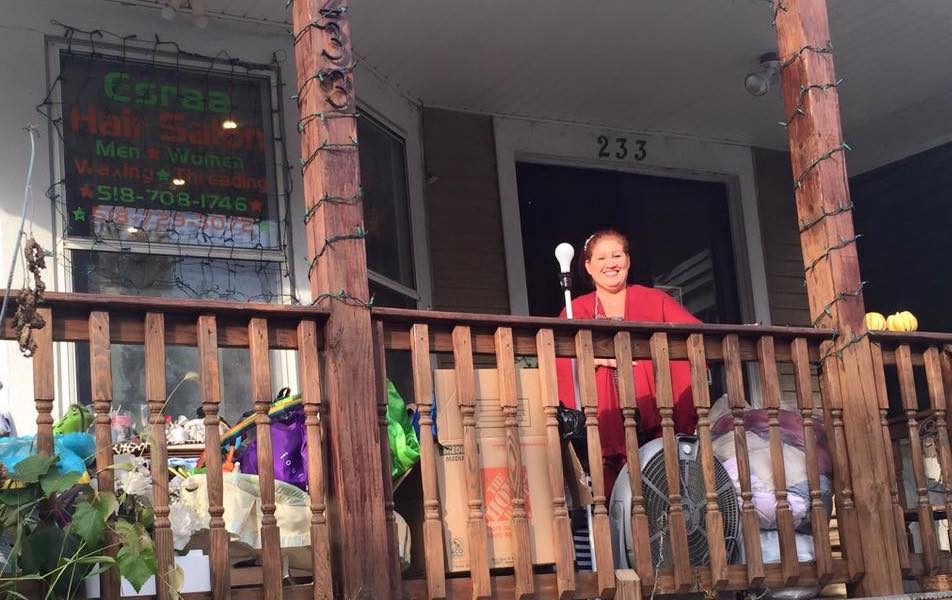
Image Source: Courtesy image from Ilham AlMahamid
Hardships
It doesn't help that Iraqis in great numbers are heading for states that have been hardest hit by the recession. Nearly half of Iraqi refugees arriving in the United States are moving to either Michigan or California, states with two of the three highest unemployment rates in the country. It's raises an issue of competition, which has amplified because of the 2008 recession that Detroit is still recovering from.
The newly arriving Iraqi refugees who first settle in other states become domestic secondary migrants after moving to Michigan within the first couple months of being in the U.S. This has become a trend, according to Ahmad Jaber, Director of the Arab American Association of New York, which caters to the second-largest Arab population in the U.S. Jaber keeps ties with the other large Arab associations in the U.S. too including those in Michigan.
Resettlement agencies are spread thin with resources and need support to sustain the influx of new arrivals in Michigan. A further complication is that these secondary migrants relinquish any financial assistance from the State Department after moving to Michigan. Mostly because the governmental supports do not follow them as they are specifically distributed to the resettlement agency of the refugee's original resettlement destination. And stipends are not the only form of assistance left behind, refugees moving to Michigan give up on consultations from resettlement agencies on housing and employment, and educational opportunities too like ESL training.
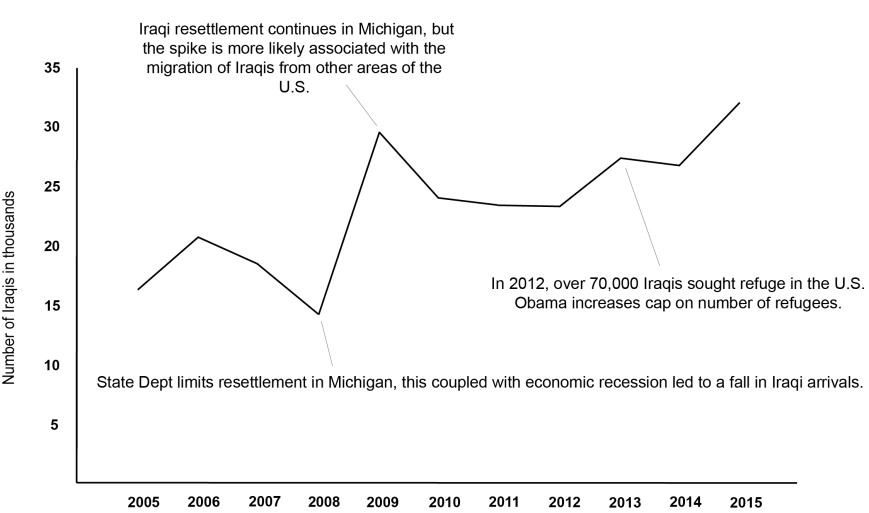
Iraqi Population in Michigan Trends Upward
Data Source: Census Bureau
How are the secondary migrants surviving?
However, resettlement conditions are starting to improve, including employment opportunities. There are various non-profit organizations trying to help the already large and growing Iraqi population like the Arab Community Center and the Chaldean Federation. These non-profits reach out to community members in the area to set up job fairs, donation drives, and even provide transport, which tends to be an issue in metro Detroit.
"Something the State Department doesn't know, and at least has overlooked, is the humanitarian side," says Kassab. "These people come to Detroit to be with their friends and relatives after a long separation. And I don't think we should be depriving them of this." Some seek it anyway.
Kassab insists that those coming to Michigan will have enough support from Michigan's community to survive. However, Chris George, Director of the resettlement agency in New Haven asks: "is it better for you to be with a community and poor services, or better services and no community? That's the issue."