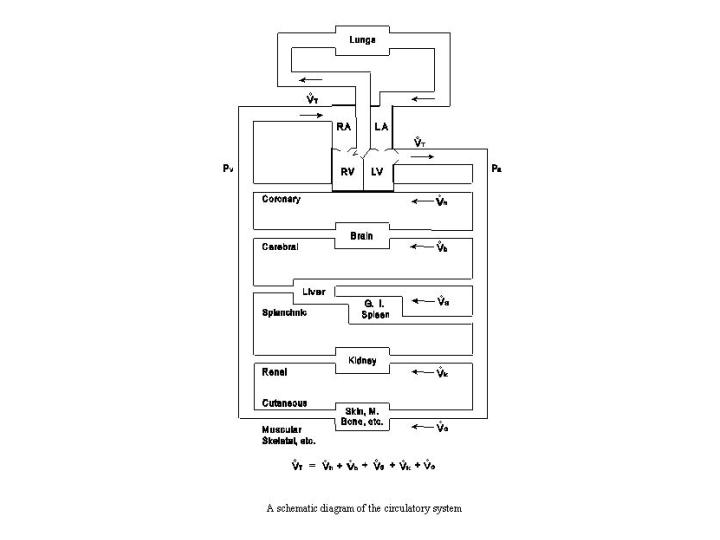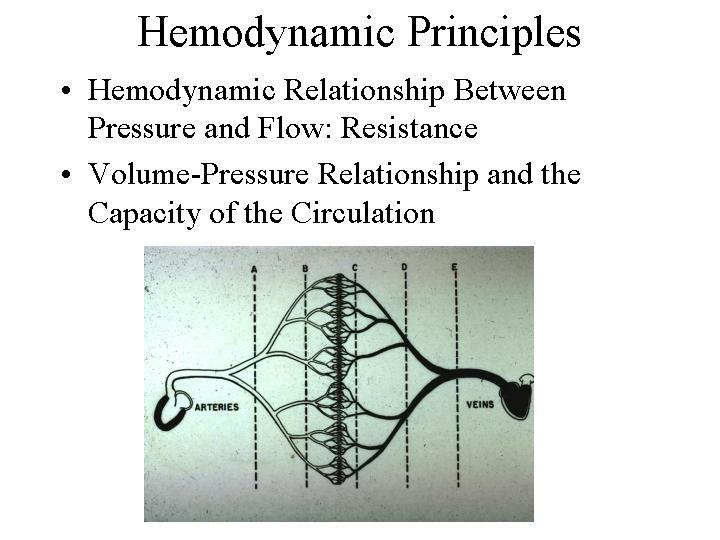
• Circulation in parallel
 
  • Circulation in series
 
  • Two important hemodynamic principles
 
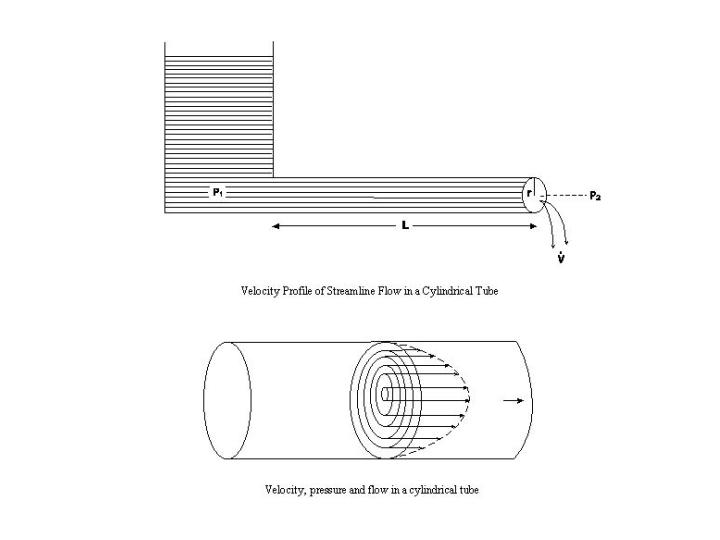
  • Poiseuille-Hagen Law: Flow = (P1-P2) πr4/8ηL
  • R = (P1-P2)/Flow = 8ηL/Nπr4
  • Pa-Pv = CO x TPR
  • Cardiac output = Heart rate x Stroke volume
  • Total peripheral resistance = Blood viscosity x Vascular resistance
 
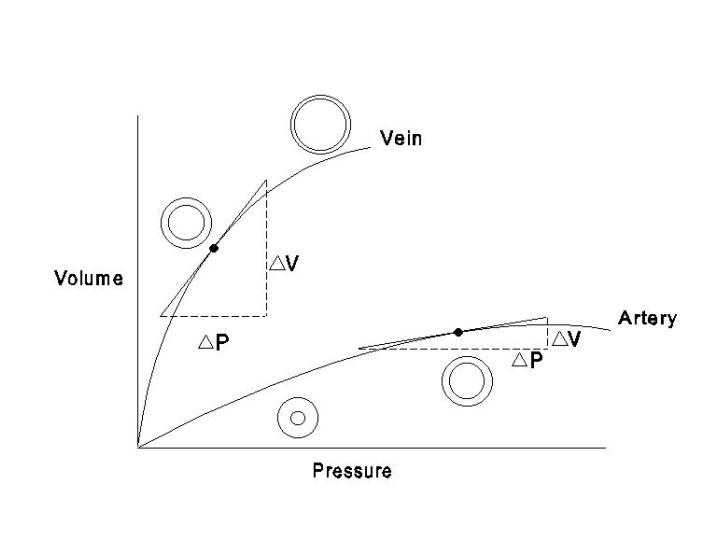
  • Capacity C = V/P.
  • Capacitance or Compliance Cd = ΔV/ΔP
  • Artery has low capacity and vein has high capacity.
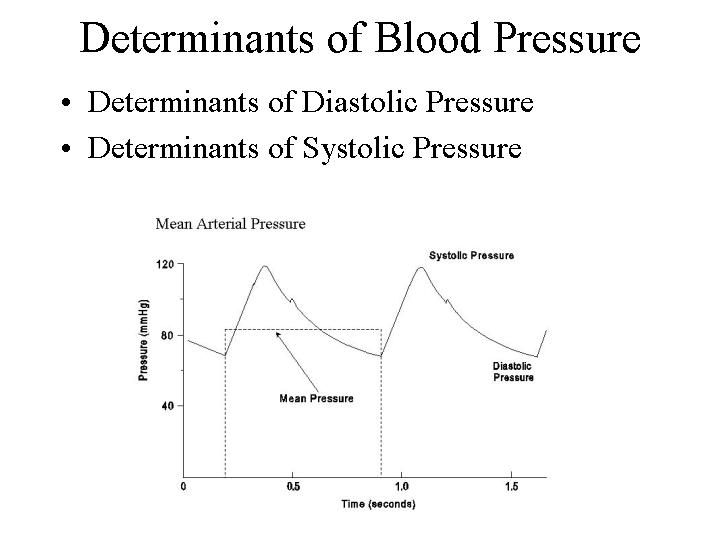
  • Arterial capacitance = Stroke volume/Pulse pressure
 
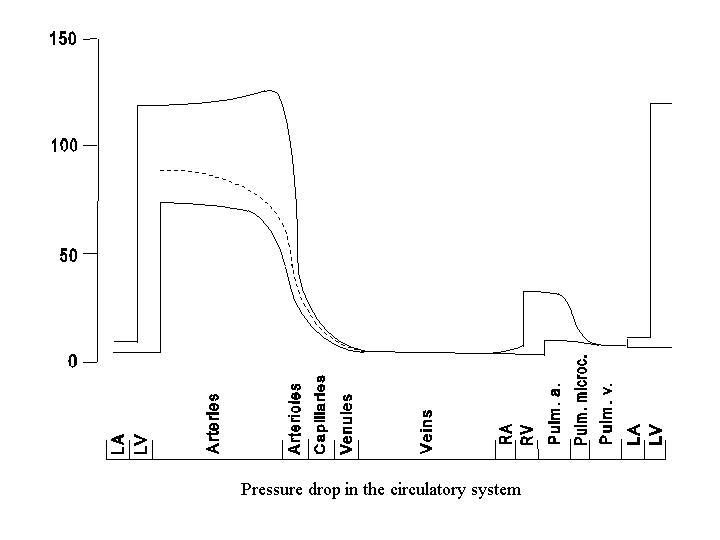
  • Diastolic pressure ~ Mean arterial pressure
  • Systolic pressure = Diastolic pressure + Pulse pressure
  • Pulse pressure = Stroke volume/Arterial capacitance
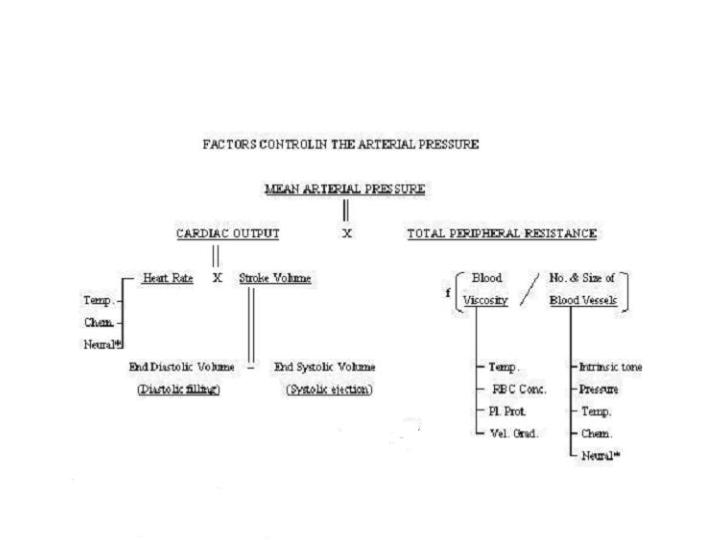
  • Mean arterial pressure = Cardiac output x Total peripheral resistance
  • Cardiac output = Heart rate x Stroke volume
  • Total peripheral resistance = Blood viscosity x Vascular resistance
 
  • Application of Poiseuille-Hagen Law in human circulation: Determinants of mean arterial pressure
 
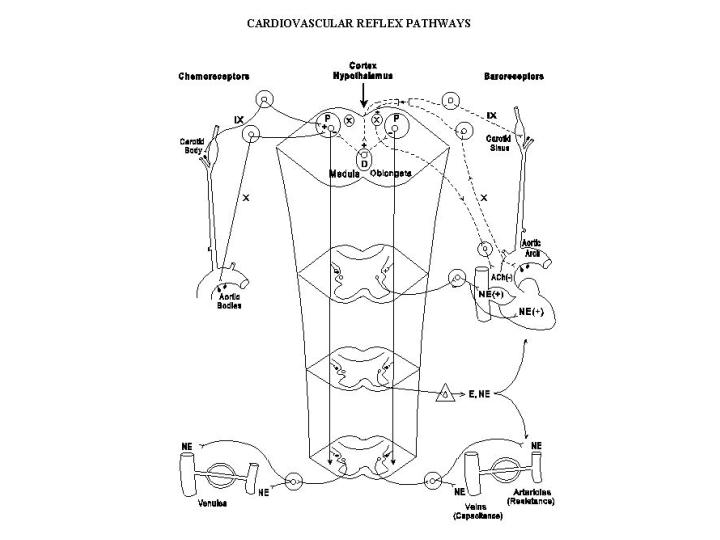
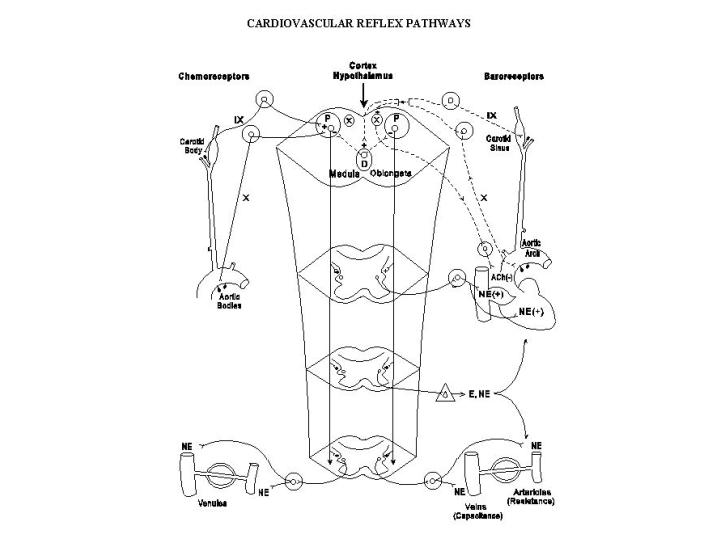
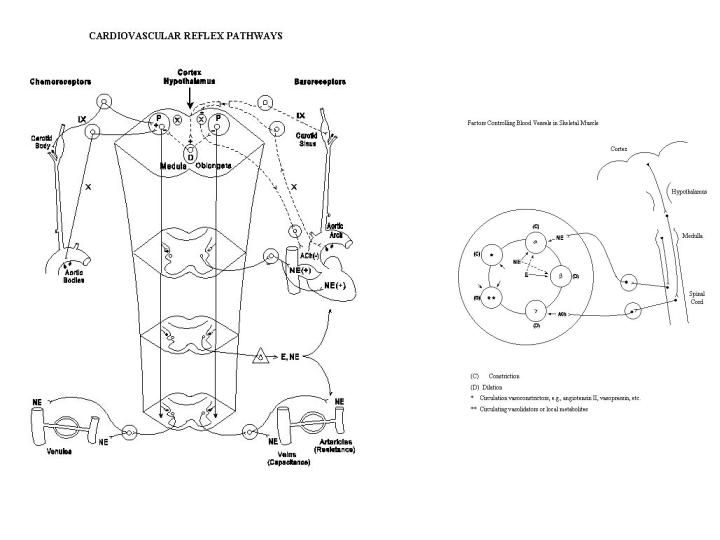
  • Control of blood pressure consists of efferent system, afferent system, and the integrating center in medulla
 
  • Pathways how the reflex control maintains the constancy of arterial blood pressure: an example of homeostatsis.
 
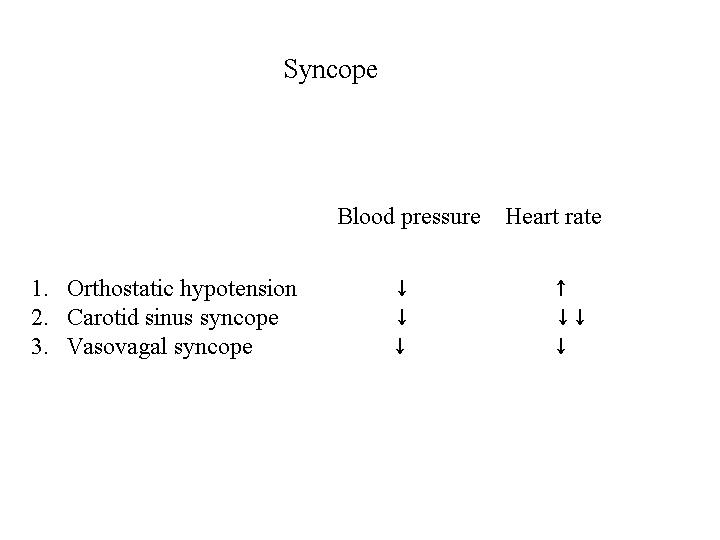
  • Etiology of syncope
 
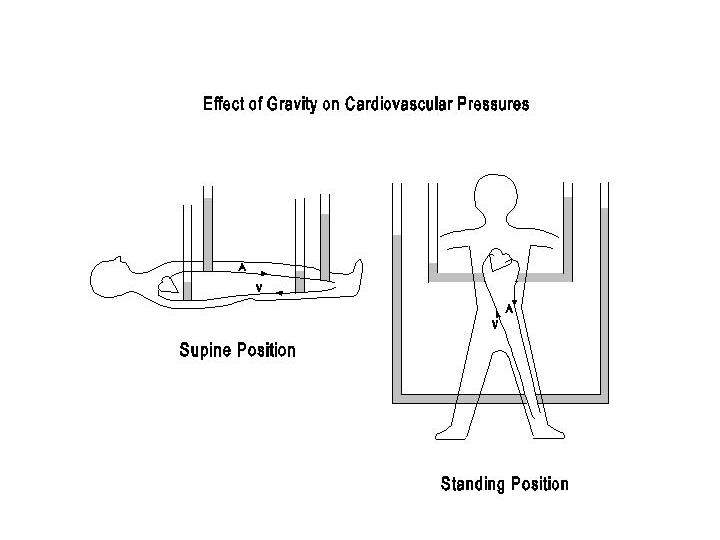
  • Orthostatic hypotension
  • Venous pooling decreases venous return, decreases stroke volume, decreases cardiac output, decreases mean arterial pressure, increases sympathetic activation, increases heart rate/increases cardiac contractility/venoconstrction/arteriolar constrction, increases blood pressure.
 
  • Carotid sinus syncope
  • Stimulation of sinus nerve activates parasympathetic nerves and inhibits sympathetic nerves.
 
  • Vasovagal syncope
  • Vasodilation from activating the sympathetic cholinergic fibers in blood vessels of skeletal muscle
  • Bradycardia from activating the vagal nerve