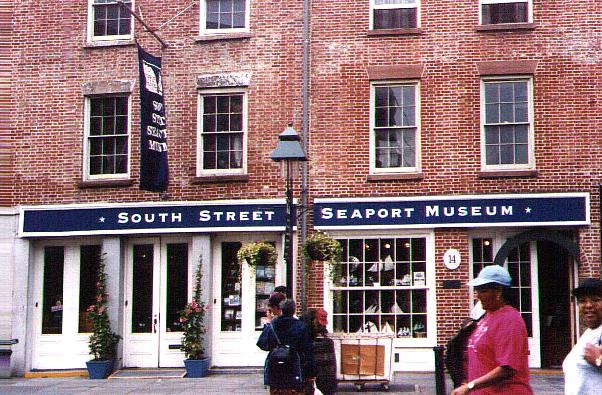
The Museum Gift Shop on Schermerhorn Row
|
The Museum Gift Shop on Schermerhorn Row |
Fulton Street was named for Robert Fulton, inventor of the steamboat. In 1812 his ferries began transporting passengers across the East River to Brooklyn Heights, which became a fashionable residential district. Before that, shopowners had lived within walking distance of their places of business. The seaport became a thriving business district and harbor. It attracted sailors, who frequented the bars and brothels in the area.
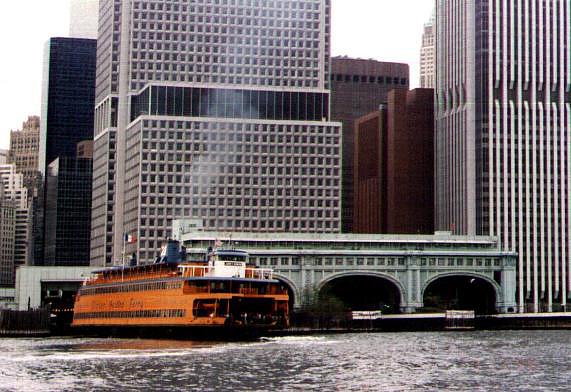 A descendant of Fulton's Ferry still makes its runs |
The "Hole in the Wall Club" featured female bouncers who bit off the earlobes of unruly customers.
The Fulton Fish Market was started in 1832 to provide wholesale fresh fish to stores and restaurants around the city. Now housed in a facility on Front Street built in 1907, it came under investigation by Mayor Giuliani in 1994.
A mysterious fire broke out on the second floor of the Market, destroying subpoenaed papers. The Mob was suspected of arson. I remember seeing a huge cloud of smoke from the fire from the 7th floor of a court building on Center Street where I was working at the time.
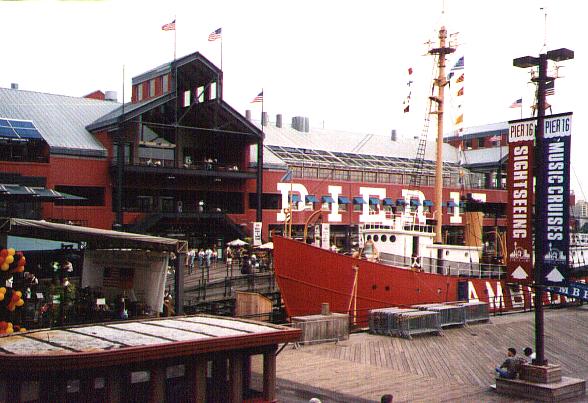 Pier 17 Mall |
The Museum in the Low Building featured an exhibit of paintings of the Famine Ships which carried starving Irish immigrants escaping the Great Potato Famine to New York City in the late 1840's. I had just returned from a two-week trip to Ireland the day before. I had learned that over a million people had died as a result of the famine between 1845-1850.
by Diane Raphael
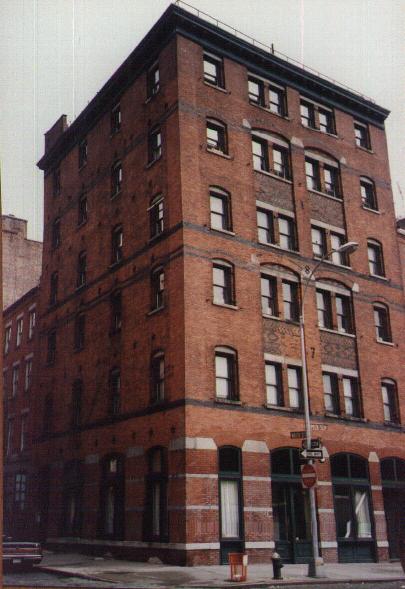 Building designed by Hunt with steel rods between floors for support
| 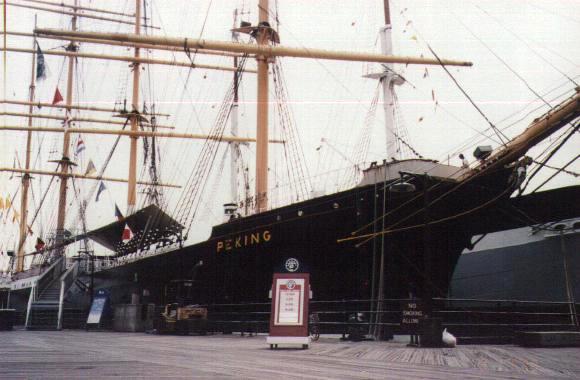 The iron-hulled barque Peking
| 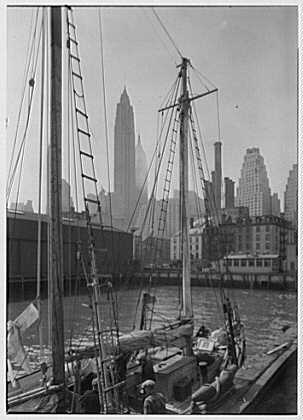 Pier at Fulton market c. 1993 |