|
|
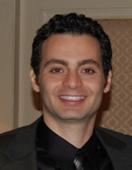
Dr. Sherief Reda
Brown University
Date: Dec. 3rd, 2:00pm
Location: CEPSR 414
|
Addressing the Thermal and Power Challenges of Tera-Scale Computing
Abstract:
Power and temperature are major physical challenges that need to be addressed in current and future computing systems.
In this talk three synergistic techniques will be presented to address these challenges, including:
(1) Thermal characterization techniques to identify the locations of temperature hot spots in real processors, and to use these locations to drive an optimal thermal sensor allocation technique.
(2) Dynamic thermal management techniques for multi-core processors where the performance of a real processor is optimally adapted depending on thermal slack measured by the thermal sensors during runtime.
(3) Post-silicon power modeling techniques where accurate spatial power estimates for various circuit blocks are computed using the measured thermal infrared emissions from the backside of the die.
In addition, the experimental techniques required for infrared imaging and power acquisition of real systems will be overviewed. Our current research on devising improved energy-proportional computing systems for data centers will be also overviewed.
Biography:
Sherief Reda is an assistant professor of Electrical Sciences and Computer Engineering at the School of Engineering, Brown University,
where he heads the SCALE laboratory (http://scale.engin.brown.edu). Professor Reda received his Ph.D. degree in computer engineering from UCSD in 2006.
His research interests include physical design and management of computing systems, variability modeling and yield improvement techniques for planar and 3-D
integrated circuits, and reconfigurable computing. He has received four best paper nominations and two best paper awards at DATE�02 and ISLPED�10 and a NSF CAREER award.
|
|
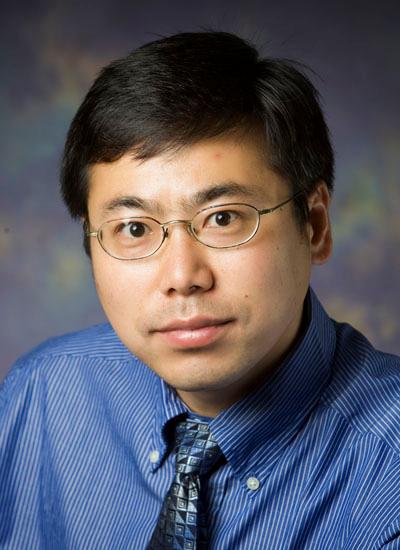
Dr. Yun Chiu
University of Texas at Dallas
Date: Nov. 12th, 02:00pm
Location: CEPSR 414
|
Robustness and Resiliency of Data Conversion
Abstract: As the performance and cost-per-function continue to excel for microelectronic devices,
the underlying economic driving force is rapidly adapting the fabrication technology to meet the critical
needs of the industry. Our past research has shown that with the leverage of system-level and digital techniques,
energy efficiency can be continually accelerated for data conversion circuits in scaled technology nodes.
While the approach is making significant progresses in marching the benchmark of CMOS ADC figure-of-merit (FoM),
a paradigm-shifting challenge has emerged in the nano-scale regime and beyond: analog robustness and resiliency,
in the headwind of exponentially growing process/device variability and degrading operation environment due to mixed-signal
integration. In this talk, I will identify a few architectural and circuit techniques to cope with the new challenges
in the data conversion area. The focus will be placed on redundant analog architectures and judicious application of digital
techniques for error correction. Some prototype results will be showcased during the talk.
Biography:
Yun Chiu received his Ph.D. degree in electrical engineering and computer sciences from the University of California at Berkeley. He worked as a Senior Staff Member at a start-up company in Fremont, California developing CMOS digital imaging products from 1997 to 1999. Dr. Chiu was an assistant professor in the ECE Department of the University of Illinois at Urbana-Champaign from 2005 to 2010. He is now with the Texas Analog Center of Excellence (TxACE) of the University of Texas at Dallas, where he is an associate professor of the EE Department and holds the TxACE Endowed Professorship of Electrical Engineering. Dr. Chiu received the Jack Kilby Award from the 2005 International Solid-State Circuits Conference, the 2009 ISSCC/DAC Student Design Contest Award, and the Agilent Foundation Award in 2009. He was an Associate Editor of the IEEE Transactions on Circuits and Systems II: Express Briefs, and has served on the technical program committees of the IEEE Custom Integrated Circuits Conference, Asian Solid-State Circuits Conference, etc. Dr. Chiu is an IEEE senior member and the author of the book Analysis and Design of Pipelined Analog-to-Digital Converters.
|
|
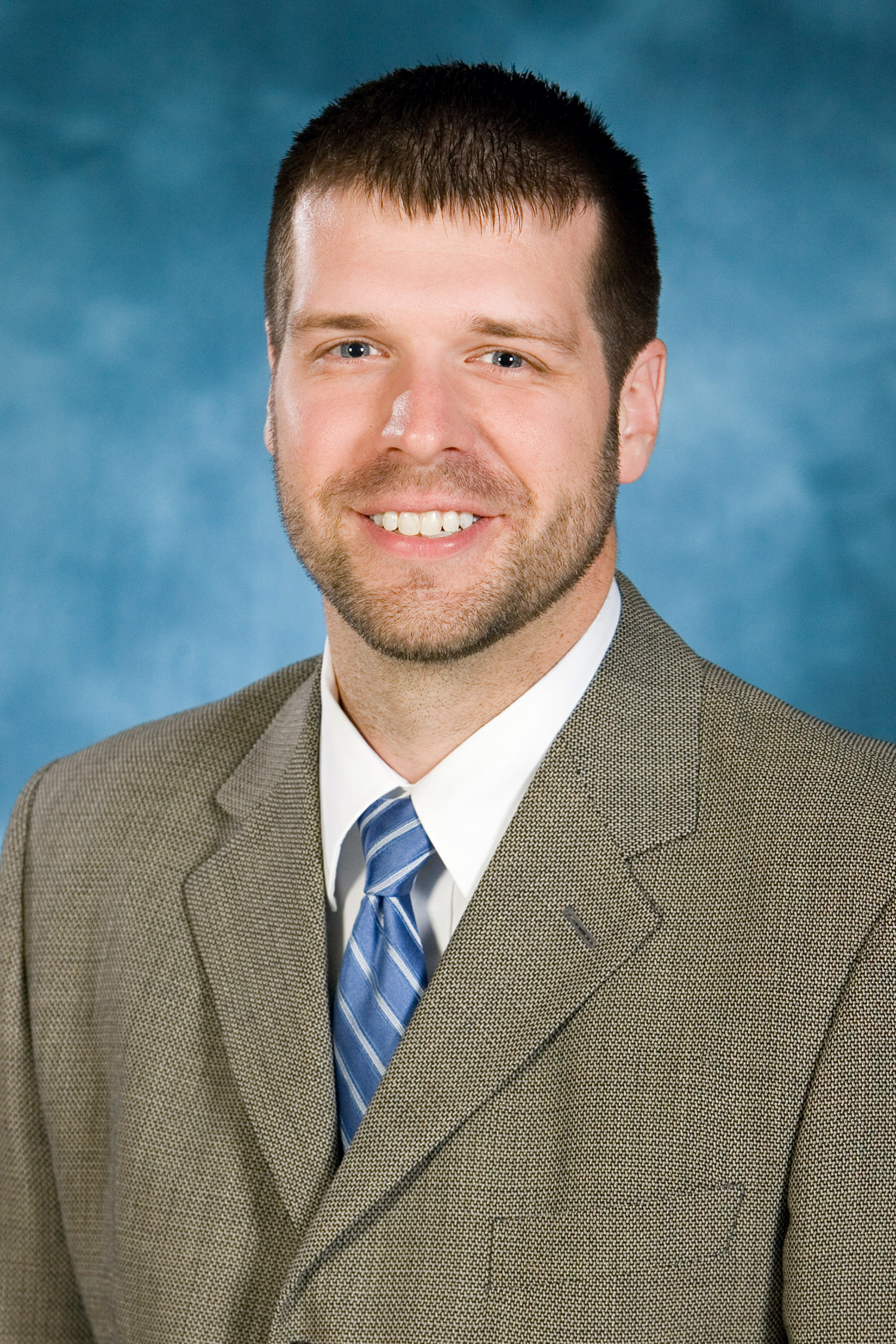
Dr. David Wentzloff
University of Michigan at Ann Arbor
Date: Oct. 15th, 03:00pm
Location: Interschool Lab
|
All-Digital RF Circuits Synthesized from Digital Standard Cell Libraries
Abstract: RF front-end circuits designed today for operation in the 1 to 10GHz range are almost exclusively fabricated in CMOS processes. This includes low-noise and power amplifiers, mixers, oscillators, A/D converters... all the components that allow radios to communicate wirelessly. Traditional design of these RF components relies on precise RF models, high-quality passives, and time-consuming custom layout for matching and controlled parasitics. The basic building blocks used to realize these RF components are, not surprisingly: transistors, resistors, inductors, and capacitors. CMOS logic has become so fast, it is now realistic to design logic using full-swing CMOS standard cell libraries that switch a >10GHz speeds. CMOS logic has become so small, we can now fit 1000's of gates in the area occupied by 1 inductor. As RF circuit designers, we can think about how to accomplish the same functionality of an RF front-end, but do so with a new set of basic building blocks: NAND, tri-state buffers, flip-flops, etc. This could allow us to describe RF circuits as a netlist of only logic gates, which in-turn enables fully automated layout with digital CAD tools. Benefits include reduced chip area, which will continue to shrink with process scaling. With smaller area also comes lower power. This talk will present several implementations of all-digital RF circuits synthesized from digital standard cell libraries. A UWB transmitter, time-to-digital converter, and PLL in 65nm CMOS will be presented, as well as an FM radio in an FPGA. The core tuning structures and the calibration technique will be described, which allows the circuits to be precisely regulated over process, voltage, and temperature variations.
Biography:
David D. Wentzloff received the B.S.E. degree in Electrical Engineering from the University of Michigan, Ann Arbor, in 1999, and the S.M. and Ph.D. degrees from the Massachusetts Institute of Technology, Cambridge, in 2002 and 2007, respectively. In the summer of 2004, he worked in the Portland Technology Development group at Intel in Hillsboro, OR. Since August, 2007 he has been with the University of Michigan, Ann Arbor, where he is currently an Assistant Professor of Electrical Engineering and Computer Science. He is the recipient of the 2002 MIT Masterworks Award, 2004 Analog Devices Distinguished Scholar Award, 2009 DARPA Young Faculty Award, and the 2009-2010 Eta Kappa Nu Professor of the Year Award. He has served on the technical program committee for ICUWB 2008-2010. He is a member of IEEE, IEEE Circuits and Systems Society, IEEE Microwave Theory and Techniques Society, IEEE Solid-State Circuits Society, and Tau Beta Pi.
|
|
|
|