IV. Results
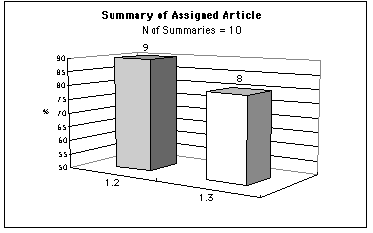
1.2: Demonstrate understanding of principal elements of the article.
1.3: Summarize the article.
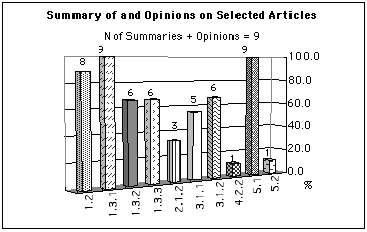
1.2: Demonstrate understanding of principal elements of the article.
1.3.1: Summarize the article.
1.3.2: Express opinions or individual perspectives.
1.3.3: Analyze, discuss, or support their opinions or individual perspectives.
2.1.2: Use appropriate style.
3.1.1: Discuss topics being studied in other disciplines.
3.1.2: Discuss and support opinions or individual perspectives on topics in other disciplines.
4.2.2: Analyze or discuss the relationship between Japanese culture and their own.
5.1: Use resources to prepare summaries and opinions.
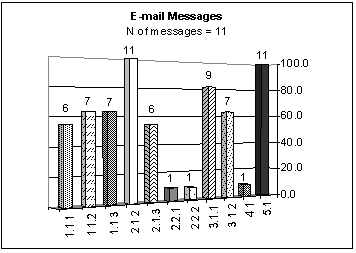
1.1.1: Discuss events and issues that are written in newspaper articles.
1.1.2: Share understanding of and reactions to the articles.
1.1.3: Exchange, support, or discuss opinions and individual perspectives.
2.1.2: Use appropriate style.
2.1.3: Use appropriate expressions.
2.2: Identify, discuss or analyze products.
3.1.1: Discuss topics being studied in other disciplines.
3.1.2: Discuss and support opinions or individual perspectives on topics in other disciplines.
4.1: Compare differences in nuance between Japanese and English.
5.1: Communicate with native speakers of Japanese.
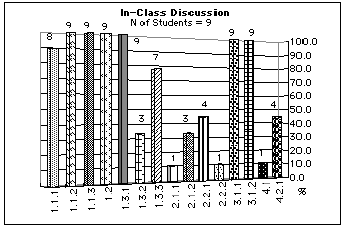
1.1.1: Discuss events and issues that are written in the newspaper article.
1.1.2: Share their understanding of and personal reactions to the article.
1.1.3: Exchange, support, and discuss opinions and individual perspectives on the article.
1.2: Demonstrate an understanding of the principal elements of the article.
1.3.1: Present a summary of the article of their choice to others.
1.3.2: Present a summary of group discussion to others.
1.3.3: Present pen pal's opinions to others.
2.1.1: Analyze and discuss perspectives reflected in the article.
2.1.2: Use appropriate verbal and non-verbal behavior.
2.2.1: Identify products.
2.2.2: Discuss and analyze products.
3.1.1: Discuss topics being studied in other disciplines.
3.1.2: Discuss and support opinions or individual perspectives on topics in other disciplines.
4.1: Compare the difference in nuance between Japanese and other languages.
4.2.1: Compare perspectives of Japanese culture reflected in the article to their own.
4.2.2: Analyze and discuss the relationship between Japanese culture and their own.
Summary of Interviews with 6 Focused Students
- Positive
-
- Can focus more on meaning by Reading Tutor instead of looking up unknown words with a dictionary
- Helps with comprehension; the summary HW forces me to pay more attention to the content
- Gives different perspectives than those of the U.S.
- Helps understand a society and culture and how they view what's happening in their society
- Gives more topics to discuss with Japanese people; not just learn how to use grammar
- Introduces me to future way of learning
- Can be more independent
- Exposure to more current topics
- Motivates to read more
- Next best thing to going to Japan; closest thing to going to Japan without actually going there
- Negative
-
- May not retain kanji longer than using a dictionary
- E-mail doesn't help speaking because it's writing
- Doesn't help learn Japanese culture because we're writing about our school, town, or state
- Listening to non-native speakers doesn't help with speaking