|
Language Barriers |
|
|
If a language barrier exists, obtain a translator to help you with your teaching.Family members and friends should not be used as translators of medical information. They may not translate information exactly as stated and may not be familiar with medical terminology. This also may breach patient privacy and confidentiality - the patient may not want the family member to know about their illness or treatment. Interpreters provide services on a volunteer
basis and therefore are not available at all times. Requests for interpreters
are dispatched on a first come first serve basis, and may be submitted
in advace of the patients arrival. Interpreters may provide translation
in person, or by phone. Be prepared to begin the interpreter process
within 10 minutes of the interpreter's arrival in the area. If more
time is needed, re-schedule the session for a time convenient for all
parties. |
|
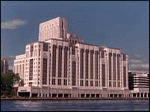 |
At the New York Weill Cornell Medical Center, a current list of interpreters is maintained by the Department of Volunteer Services. Call (212) 746-4396 for information. |
 |
At the Columbia Presbyterian Medical Center, contact the Interpreter Corps for assistance (extension 6-9607). At the Allen Pavilion, call Patient Relations at 932-4321. |
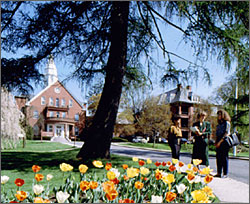 |
At the Westchester Division, obtain a list of translators from Human Resources at (914) 997-5704 or extension 241 |
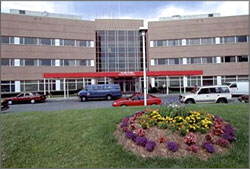 |
At the Allen Pavilion, call Patient Relations for interpreter services
|
|
Sign Language
Interpreting
|
|
|
During normal business hours (Monday through Friday, 9:00 am to 5:00 pm), the sign language interpreter serves both the Columbia Presbyterian and the New York Weill Cornell Medical Centers. During these hours the interpreter will coordinate requests to arrange for language interpreter services during off- hours.
After normal business hours the administrator on call at each center will coordinate any requests for sign language interpreting. At CPMC call the AOC at Beeper 2251. At NYWCMC, call the AOC at 746-0891. |
|


