
Is the use of false or misleading statements in advertisesing. As advertising has the potential to persuade people into commercial transactions that they might otherwise avoid, many governments around the world use regulations to control false, deceptive or misleading advertising. False advertising, in the most blatant of contexts, is illegal in most countries. However, advertisers still find ways to deceive consumers in ways that are not illegal.
Refers to essentially the same concept, that customers have the right to know what they are buying, and that all necessary information should be on the label.
Is the nation's consumer protection agency. The FTC's Bureau of Consumer Protection works For The Consumer to prevent fraud, deception, and unfair business practices in the marketplace. The Bureau:
Miracle products claim to cure serious conditions — often conditions that science has no cure for, like arthritis, diabetes, Alzheimer’s disease, multiple sclerosis, cancer, and HIV-AIDS. Some products even claim to be a “cure-all” for several diseases and a host of symptoms. Often, the ads claim the products come with money-back guarantees.
Unfortunately, these products, devices, and treatments often are unproven and useless, making promises they can’t fulfill. The reality is that phony miracle products can have dangerous interactions with medicines you’re already taking. They also might cause you to delay or stop medical treatment for your condition, even when proven treatments are available from your physician. And a money-back guarantee may be meaningless. It can indicate that a scammer is planning to take your money and close up shop.
Products that claim to do it all often do none of it. So even though you want to believe them, be skeptical, and avoid products that:
Always talk to your doctor, pharmacist, other healthcare professional, or public health organizations before you try any new treatment.
The Bait: Items not sold through traditional suppliers are "proven" to cure serious and even fatal health problems. The Catch: Claims for "miracle" products and treatments convince consumers that their health problems can be cured. But people with serious illnesses who put their hopes in these offers might delay getting the health care they need. The Safety Net: Consult a health care professional before buying any "cure-all" that claims to treat a wide range of ailments or offers quick cures and easy solutions to serious illnesses. Can you avoid getting caught by a scam artist working the web? Not always. But prudence pays. The FTC offers these tips to help you avoid getting caught by an offer that just may not click:
The FTC works to prevent fraudulent, deceptive and unfair business practices in the marketplace and to provide information to help consumers spot, stop and avoid them
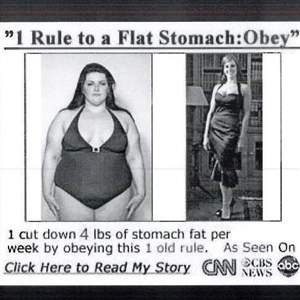
In September 2002, the FTC staff issued a report on weight-loss advertising that concluded that, despite vigorous FTC law enforcement and consumer education efforts, fraudulent and misleading weight-loss advertising was widespread and on the rise. Following up on that report, in an effort to identify alternative approaches to curbing weight-loss fraud, the FTC held a public workshop on deception in weight-loss product advertising on November 19, 2002. The goal of the workshop was to explore new approaches to stop false weight-loss advertising. Participants in the workshop included, among others, scientists with expertise in the study and treatment of overweight individuals and obesity, weight-loss industry members, and media representatives. The workshop consisted of three panels. The first panel considered whether certain weight-loss claims, such as claims that promote substantial weight loss without reducing caloric intake or increasing exercise, are feasible. The second panel considered ways to improve industry self-regulation of weight-loss advertising. The final panel focused on the feasibility and challenges of ad screening.
The centerpiece of the FTC campaign is educational guidance to the media that identifies seven common weight-loss claims made for products available over-the-counter, including nonprescription drugs, dietary supplements, creams, wraps, devices, and patches that are scientifically infeasible at the current time. These claims include:
When a commercial comes on, ask yourself these questions.
 |
 |
 |
 |