LESSON 4 - Hybrid energy - hybrid-electric vehicles
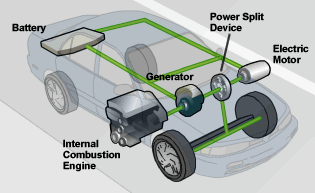
Hybrid-electric vehicles (HEVs) combine the benefits of gasoline engines and electric motors and can be configured to obtain different objectives,
such as improved fuel economy, increased power, or additional auxiliary power for electronic devices and power tools.
Some of the advanced technologies typically used by hybrids include:
Regenerative Braking: The electric motor applies resistance to the drivetrain causing the wheels to slow down.
In return, the energy from the wheels turns the motor, which functions as a generator, converting energy normally wasted during coasting
and braking into electricity, which is stored in a battery until needed by the electric motor.
Electric Motor Drive/Assist:The electric motor provides additional power to assist the engine in accelerating, passing, or hill climbing.
This allows a smaller, more efficient engine to be used.
In some vehicles, the motor alone provides power for low-speed driving conditions where internal combustion engines are least efficient.
History – Hybrid electric vehicles
In 1900, while employed at Lohner Coach Factory, Ferdinand Porsche developed the Mixte,[2][24] a 4WD series-hybrid version of "System Lohner-Porsche" electric carriage previously appeared in
1900 Paris World Fair. The Mixte included a pair of generators driven by 2.5-hp Daimler IC engines to extend operating range and it could travel nearly 40 miles on battery alone and it was presented in the Paris Auto Show in 1901.
It had a top speed of 50 km/h and a power of 5.22 kW during 20 minutes.
The hybrid was a commercial failure, proving to be too slow for its price, and too difficult to service.
Its maximum speed was 25 miles per hour (40 km/h), but it was licensed by the Motor Transport Office, taxed by the German Revenue Department and patented by the German Reichs-Patent Amt.
The car battery was re-charged by the motor when the car went downhill.
Additional power to charge the battery was provided by a cylinder of compressed air which was re-charged by small air pumps activated by vibrations of the chassis and the brakes and by igniting oxyhydrogen gas.