Nobel Prizes in the Ivy League
Well, I am learning R so I thought it a good idea to do something vaguely challenging in order to learn some new skills and become more proficient with RStudio (the program I'm working with to write in R). This analysis looks at when each university got its Nobel prizes and compares them to the others.
Methodology
This analysis examines when Ivy League schools received the Nobel prizes attributed to them and to answer the question of whether their Nobel "productivity" has changed in recent years.
The first step in this analysis was to find a database of every Nobel prize attributed to each university. I used wikipedia for this. Link: https://en.wikipedia.org/wiki/List_of_Nobel_laureates_by_university_affiliation
All data was cleaned up in R. Data was sorted by how each Nobel prize was associated with the university, either as a graduate, a long-time professor, or in some other association.
Figures
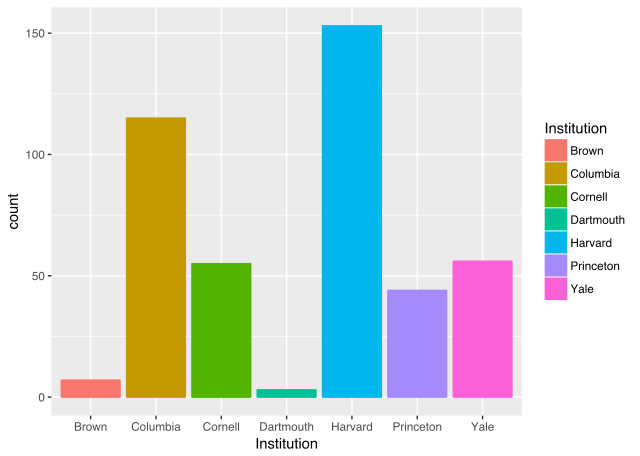
Our first analysis was a simple count of Nobel prizes by University.
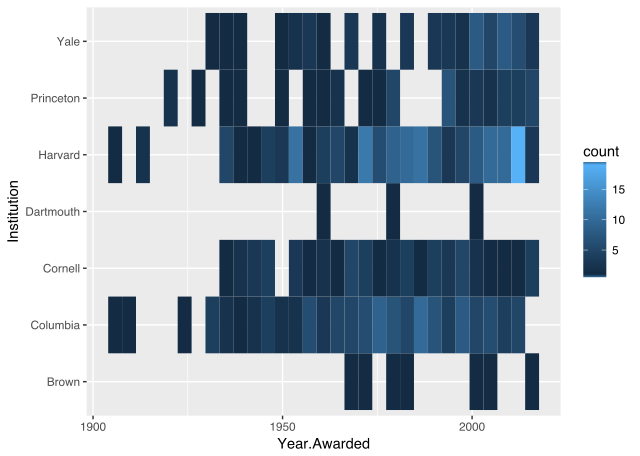
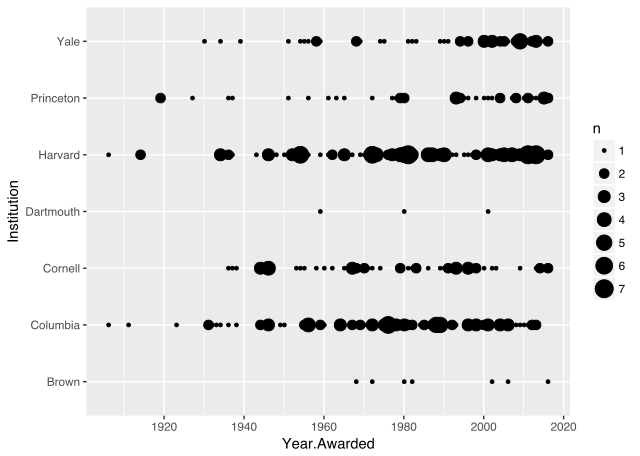
 Then we create a heat map by year to see when each university was the most productive. I included two styles of heat map.
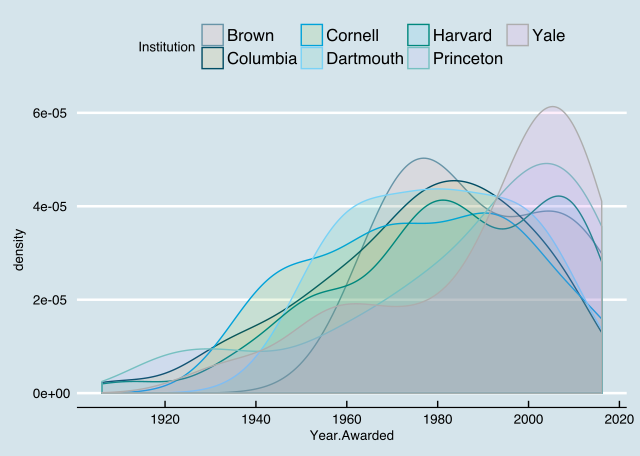
 Our final analysis is a density plot, similar to a heat plot in that its goal is to identify when a school was most productive relative to its productivity over time.
Conclusions
From this simple analysis we see that Columbia's productivity was maximized in the 70s/80s and has since declined.
Authors and Contributors
@raagagrawal is a student at Columbia University.
Support or Contact
Having trouble with Pages? Check out our documentation or contact support and we’ll help you sort it out.