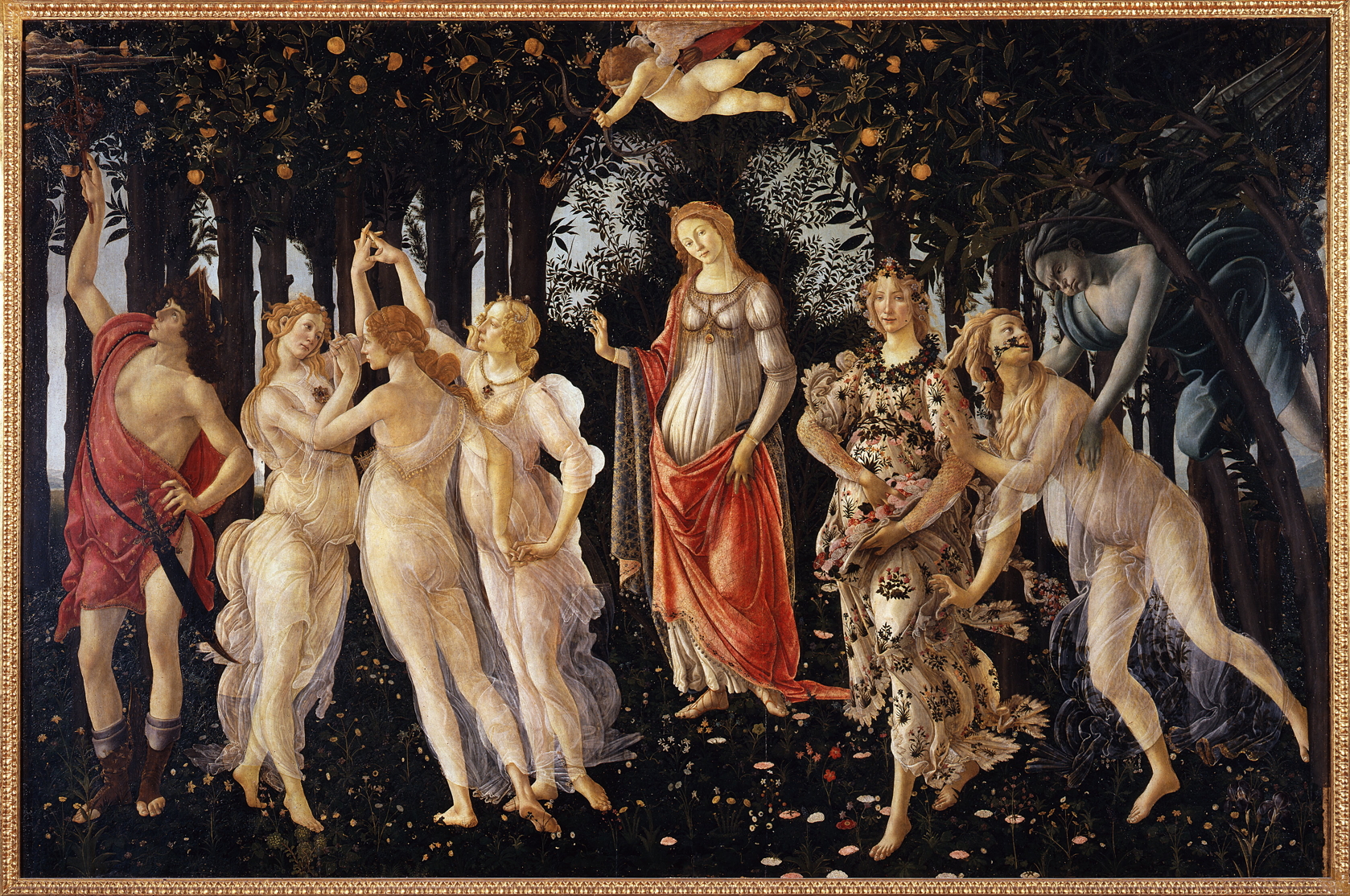
Girls in Crotona Park, despites its short length and seeming aestheticism, manages to pack in significant and charged references--not subtle allusions but explicit references. Firstly, Crotona park: a distinctly New York setting, nothing Jewish about it--Margolin writes as a individual, a poet, not as a member of a social class, a political movement, or religion. Secondly, Botticelli: a pagan reference but also a proud assertion of cultural literacy. These wordly non-Jewish motifs are the signatures of the Yiddish literary groups Di Yunge and Di Inzikhistn, with which Margolin was associated but also strayed from.
She is commonly discussed in the context of "imagism" and here she almost ironically takes this to the extreme. Professor Barbara Mann describes these "visual poetics" as the "wide sphere of ideas, in which a specifically Jewish self is posited in terms of the tension between image and text, as an amalgam of competing contradictory cultural forces." Though this poem does not exude any Jewishness in its translation, the Yiddish is Jewish to its core--as the Inzikhistn argue, anything written in Yiddish is intrinsically Jewish.
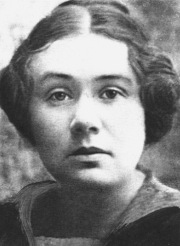
Ana Margolin was born in Brisk, White Russian, in 1887. She began publishing stories and poems in New York City around 1906, the year she first visited. Only in 1914 did Ana Margolin settle permanently in NYC. She adopted the pen name Ana Margolin in 1920, previously publishing under her real name, Rosa Lebensboym, as well as other pseudonyms.
Professor Ruth Wisse describes her voice, for which she needed little experimentation to develop, as "original, bold and disturbing" and "confessional, tough, and precise." In 1923, unimpressed with the quality exhibited in the Yiddish literary journals, she published her own anthology, including only one other woman, Celia Dropkin. She died in 1952, after spending her last twenty years withdrawn and isolated in her home.
