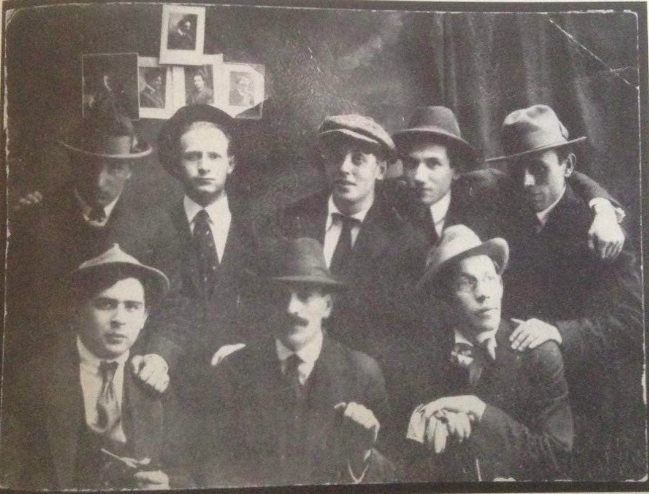
As a member of Di Yunge, Rolnik pursued the group's goal of finding beauty in the mundane, the everyday (see his use of "װאָכעדיק", vokhedik—where vokh literally means week and the suffix dik makes it adjectival, hence weekday-ish, not Shabbes-dik, everyday). In this poem he renders the poet an everyman—earthly and perhaps even boring, banal—and yet, he simultaneously imbues the everyday with a poetic charm and warmth.
Many of the Yunge toyed with this idea in different ways, often poeticizing the mundane and making it lofty. Here Rolnik manages to preserve the humbleness of the poet while exhibiting their subtle beauty.
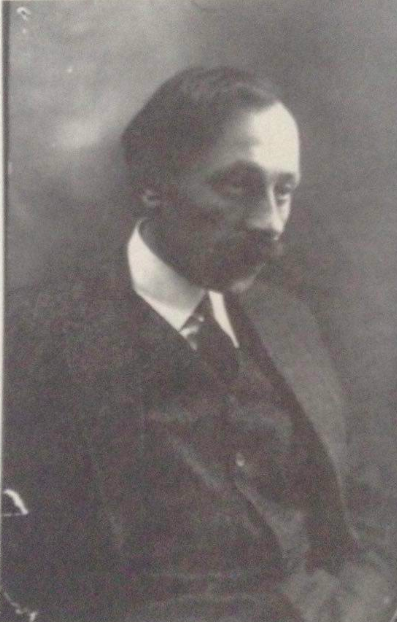
It is difficult to compose even a short biography of Joseph (Yoysef) Rolnik, for even during his lifetime Rolnik complained of receiving only the smallest ration of attention. Though he was an established member of Di Yunge, publications felt comfortable rejecting his submissions (but in 1915 Mani Leib and Reuven Iceland devoted an issue of the monthly journal Literatur un Lebn, or Literature and Life, to him). The succeeding literary group, Di Inzikhistn, mention him in their grandiose manifesto only to say that he and his compatriots “are all good and good in their time.”
Rolnik was born in Belarus, in a village near Minsk, in 1879. His heder education took place at home with a tutor, surrounded by fields and his father’s watermill. He later attended the Mir Yeshiva. From 1895 to 1898 he lived in Minsk where he began writing poetry in Russian, Hebrew and Yiddish. I. L. Peretz encouraged him in his literary pursuits after receiving a few of his poems. In 1899, he spent two years in America and returned to settle permanently in 1906. He published his memoirs in 1954, a year before his death—only now (2016) have they finally been translated to English.
