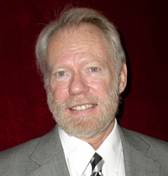
ROBERT LEGVOLD
Robert Legvold is Marshall D. Shulman Professor Emeritus in the Department of Political Science at Columbia University, where he specialized in the international relations of the post-Soviet states. He was Director of The Harriman Institute, Columbia University, from 1986 to 1992. Prior to coming to Columbia in 1984, he served for six years as Senior Fellow and Director of the Soviet Studies Project at the Council on Foreign Relations in New York. For most of the preceding decade, he was on the faculty of the Department of Political Science at Tufts University. He received his Ph.D. from the Fletcher School of Law and Diplomacy in 1967. 2008-2010 he was project director for “Rethinking U.S. Policy toward Russia” at the American Academy of Arts and Sciences. From 2010-2012 he was director of the “Euro-Atlantic Security Initiative” sponsored by the Carnegie Endowment for International Peace and co-chaired by Sam Nunn, Wolfgang Ischinger, and Igor Ivanov. He is currently the director of the national project, “Meeting the Challenge of the New Nuclear Era,” of the American Academy of Arts and Sciences.
Dr. Legvold's areas of particular interest are the foreign policies of Russia, Ukraine, and the other new states of the former Soviet Union, U.S. relations with the post-Soviet states, and the impact of the post-Soviet region on the international politics of Asia and Europe. His most recent book is Return to Cold War (Polity, 2016). Other books are a collaborative volume, Russian Foreign Policy in the Twenty-first Century and the Shadow of the Past (Columbia University Press, 2007); with Timothy Colton and Timothy Frye, The Policy World Meets Academia: Designing U.S. Policy toward Russia (The American Academy of Arts and Sciences, 2010); with Bruno Coppieters, Statehood and Security: Georgia after the Rose Revolution (The MIT Press, 2005), with Celeste Wallander, Swords and Sustenance: The Economics of National Security in Belarus and Ukraine (The MIT Press, 2004); Thinking Strategically: The Major Powers, Kazakhstan and the Central Asian Nexus (The MIT Press, 2002), with Sherman Garnett, Belarus at the Crossroads (The Carnegie Endowment, 1999), and with Alexei Arbatov and Karl Kaiser, Russian Security and the Euro-Atlantic Region (M.E. Sharpe, 1999). With Timothy Colton, he co-edited After the Soviet Union: From Empire to Nations (Norton, 1992).
His most recent essays are, “Managing the New Cold War,” Foreign Affairs (July-August 2014); “Reconciling Limitations on Non-Strategic Nuclear Weapons, Conventional Arms Control, and Missile Defense Cooperation,” in Reducing Nuclear Risks in Europe, Steve Andreasen and Isabelle Williams, eds. (NTI, 2011); "Encountering Globalization Russian Style," in Elana Rowe and Julie Wilhelmsen, eds., Russia's Encounter with Globalization (Palgrave-Macmillan, 2011); "Meeting the Russia Challenge in the Obama Era," in Vinod K. Aggarwal and Kristi Govella, eds., Responding to a Resurgent Russia: Russian Policy and Responses from the EU and U.S. (Springer, 2011); "Include Russia: How to Move toward a Common Security Space," in A New European Order? Brussels Forum Paper Series (March 2010); “The Russia File: How to Move toward a Strategic Partnership,” Foreign Affairs, July-August 2009; “Russian Foreign Policy: Familiar Hopes, Unfamiliar Challenges,” in Hiski Haukkala, ed., Russia Lost or Found (Edita, 2009); “Corruption, the Criminalize State, and Post-Soviet Transitions,” in Robert I. Rotberg, ed., Corruption, Global Security and World Order (The Brookings Institution, 2009); “The Role of Multilateralism in Russian Foreign Policy,” in Elana Wilson Rowe and Stina Torjesen, eds., The Multilateral Dimension in Russian Foreign Policy (Routledge, 2008); “U.S.-Russian Relations: An American Perspective,” Russia in Global Affairs, October-December 2006; “Clinton’s Foreign Policy and the Revolution in the East, in Todd G. Shields, et. al., eds., The Clinton Riddle, 2004; “All the Way: Crafting a U.S.-Russian Alliance,” The National Interest, Winter 2002-2003; and “Russia’s Unformed Foreign Policy,” ForeignAffairs, September-October 2001.
Legvold is a member of
various advisory boards, including those of the Committee on International
Security Studies of the American Academy of Arts and Sciences, the Watson
Institute for International Studies at Brown University, the Program Board of “Centers for
Advanced Study and Education” (Russia), and the Foundation for
International Peace and Democracy, led by Mikhail Gorbachev. He is a
fellow of the American Academy of Arts and
Sciences and a foreign member of the Russian Academy of Social Sciences.