In a political rally prior to his election in Minnesota, President Donald Trump spoke about the negative impact of the Somali refugee community in Minnesota. He said that there was a "disaster taking place in Minnesota."
Despite this rhetoric on a national scale, within the community, Somali refugees have made their inroads into local and state level politics in Minnesota. On November 8,2016, Ilhan Omar was elected as the house representative for District 60-B.
The Somali Community in Minnesota
According to Arrive Ministries, Minnesota has the largest number of Somalis in the America.
Since the early 90’s Somali refugees have been resettled in Minnesota. Now, this population is making its mark in the political sphere of the state- from community activist to local and state wide representation.
David Schultz, professor of political science at Hamline University in Minnesota noted that it was a combination of the size, “geographic compactness” and demographics of the Somali community that helps in their political integration.
Starting four years ago with the previous city council elections in Minneapolis, the Somali community as well as the broader African community in the state, is starting to “politically come of age.”
The size of the Somali community settled in Minnesota can be recognized as one of the main reasons why they have been able to politically integrate in the state.
Schultz however identified the “relative compactness of where the Somali population is living” as significant in making this integration possible. The Somali community in Minnesota, particularly in the city of Minneapolis is not geographically dispersed around the whole city, rather it is concentrated in certain areas.
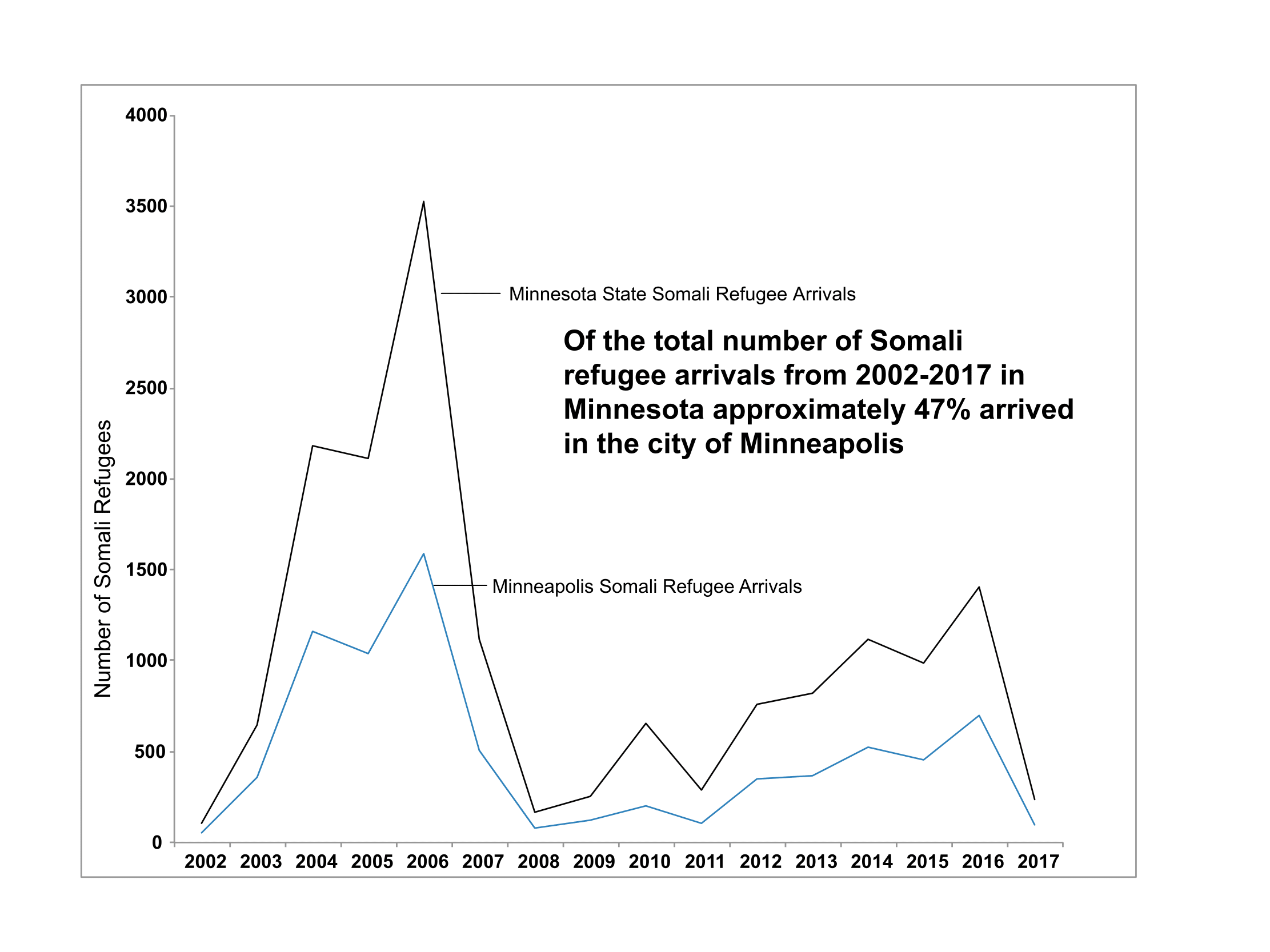
Minneapolis Consistently Sees Largest Arrivals of Somali Refugees in Minnesota
Approximately 47% of total refugee arrivals from 2002-2017 were arriving in the city, Minneapolis.
Data Source: Department of State, Refugee and Migration Office of Admissions
“I think that what we’re really starting to see now you know with Omar’s election you know and other people at this point is really, how starting first in Minneapolis and eventually we’re going to see across several other cities in Minnesota,” Schultz explained adding, “how the Somali and a lot of the other African population is now going to start to be able to make an influence.”
The city of Minneapolis falls within Hennepin County. It was here that Ilhan Omar won the house seat for District 60-B.
And within the city of Minneapolis for Ward 6, Abdi Warsame was elected as city councilman. In 2015, refugee arrivals were largely concentrated within five counties.
This was the case for both refugees arriving to the US (primary refugees) and refugees who had been resettled in the country and were now migrating to Minnesota (secondary refugees).
In 2015, At The County Level Refugee Movements Emphasize Geographical Concentration
Concentration of Refugee Arrivals
Data Source:Minnesota Department of Health, Primary and Secondary Refugee Arrival per county 2015
Ilhan Omar: A State Level Victory Celebrated Nationally
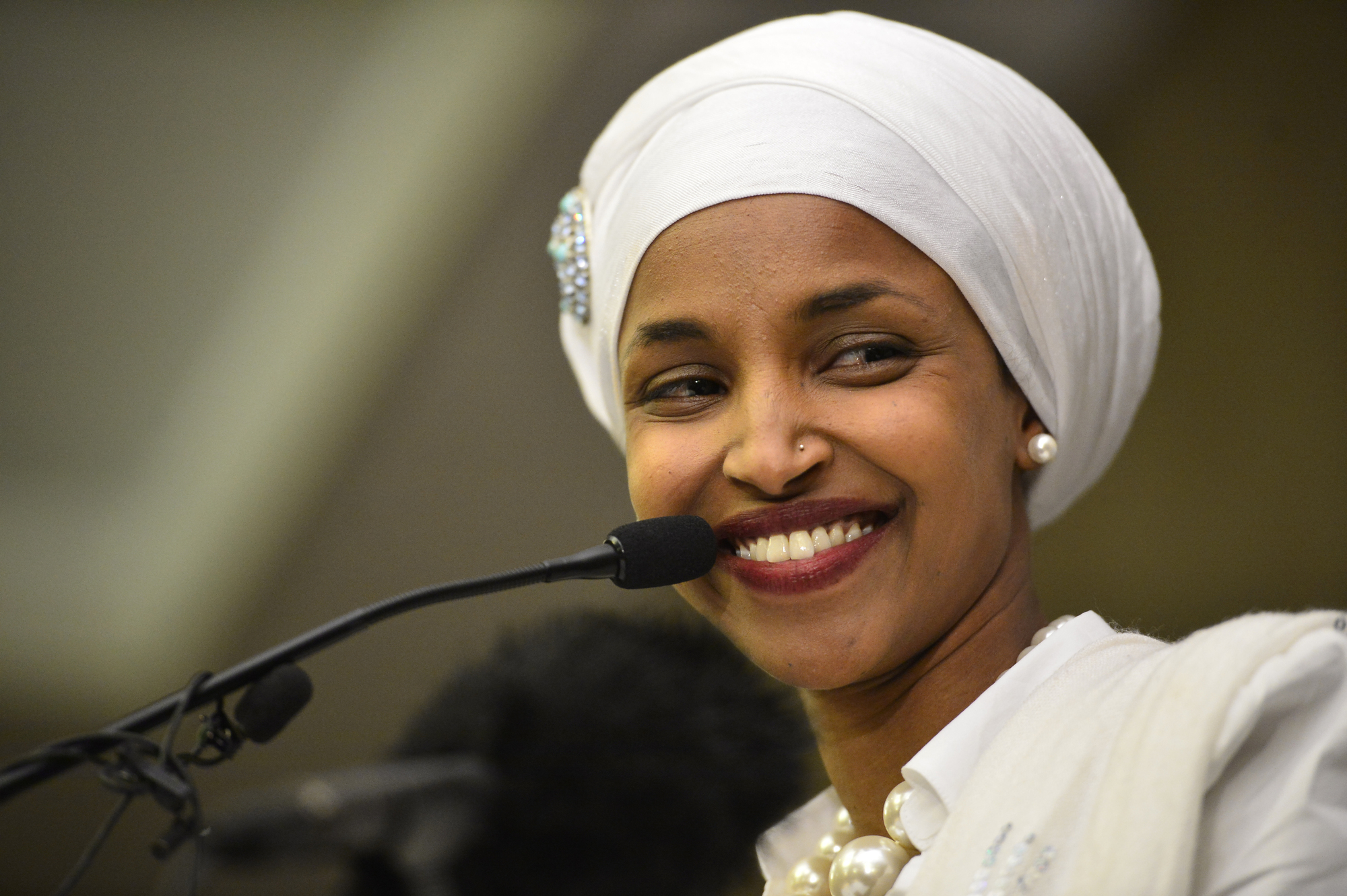
House Representative Ilhan Omar
Image Source: Creative Commons
“This is someone who looks like me, who was from Somalia like me,” said Maymuna Sahal, a 22-year-old from Minnesota, “Someone who understands our lives.”
Sahal is a resident of a different district in Minnesota, but when she saw a video on Facebook about Ilhan Omar’s election campaign, she wanted to get involved.
In 2007, along with her mother and twelve siblings, Sahal moved to the US. She was born in Barawee, a city in Somalia. Following the war in Somalia, in 2001, Sahal moved with her family to Kenya where they lived. Here in Kenya, they were put in touch with her elder sister who they had lost years ago and had moved to the United States. Sahal’s sister was able to arrange for the family to come to America as well.
Since then Sahal has lived in Minnesota. When Sahal first moved to the U.S. she did not speak any English.
Today, for Sahal, Omar is someone she can personally relate to.
“If it was someone from a different background they can speak to you,” she said, “but they can’t claim they have lived it and know what has worked and what hasn’t.”
Omar represents the voice of people like her.
Schultz identified the third reason for the political success of Somali American’s as the relatively young age of the population.
“The young ones who’ve been socialized more in the United States, I think have started to acquire the social capital and now the resources to be able to get involved,” he said.
During Omar’s election campaign, Sahal became an active member of her campaign. She recalls the election where she was out since seven in the morning until early the next morning when the results were announced. Sahal had gone knocking on the doors of voters to encourage them to vote for Ilhan Omar. She also created a Facebook group for young voters who supported Ilhan Omar.
The morning after Omar won, she drove Sahal home and personally thanked her mother for the support Sahal had provided during the election campaign.
Schultz believed that Ilhan Omar can be seen as a role model not just for the Somali community but can be seen as an important role model for an entire generation of immigrants who are becoming politically integrated into mainstream Minneapolis politics.
Despite her popularity, Ilhan Omar was not the ideal candidate for all in the Somali community in Minnesota.
Roda Griffin, a graduate student at the Columbia Journalism School grew up in Minnesota. To her, while Omar doesn’t represent the voice of the community.
Symbolically she feels it is a great thing as it may empower Somali girls to see that this is an option for them.
“Does it help to have a person, who looks like me to have a seat?” Griffin questioned.
In her opinion, Omar doesn’t represent the concerns of the community within Minnesota. She believed that the issues that matter most to the community are the radicalization of young boys, use of drugs and addiction in the community as well as the gentrification of parts of Minnesota, where the community is settled. For Griffin, it is community activists who are the forefront of this work raising issues that actually matter to the community.
In Minnesota, Somali Involvement Starts at the Community Level
Schultz also identified economic stability and establishment of Somalis as business owners as a way that they can start transforming this success into political capital.
At the community level, some activists are also getting involved to campaign for issues that concern them.
“We have been getting symbols and tokenism,” said Ladan Yusuf, one such community activist about the nature of politicians who has started a campaign, ‘Defend Glendale Town Homes’.
This is a campaign to protest the Glendale Town Homes from demolition or privatization by the Minneapolis Public Housing Authority.
As a community activist and voter for Omar’s district, she doesn’t believe that Omar is a voice for her community.
“We want women of color, Muslims, Somalis that look like us to get into office, no one disputes that,” Yusuf said, “but we also want someone who will act and will fight for the community.”
She found that in the Cedar Riverside area, opposing candidate Mohamud Nur, who is also a Somali American was popular.
Abdi Warsame: Local Representation from Within Minneapolis
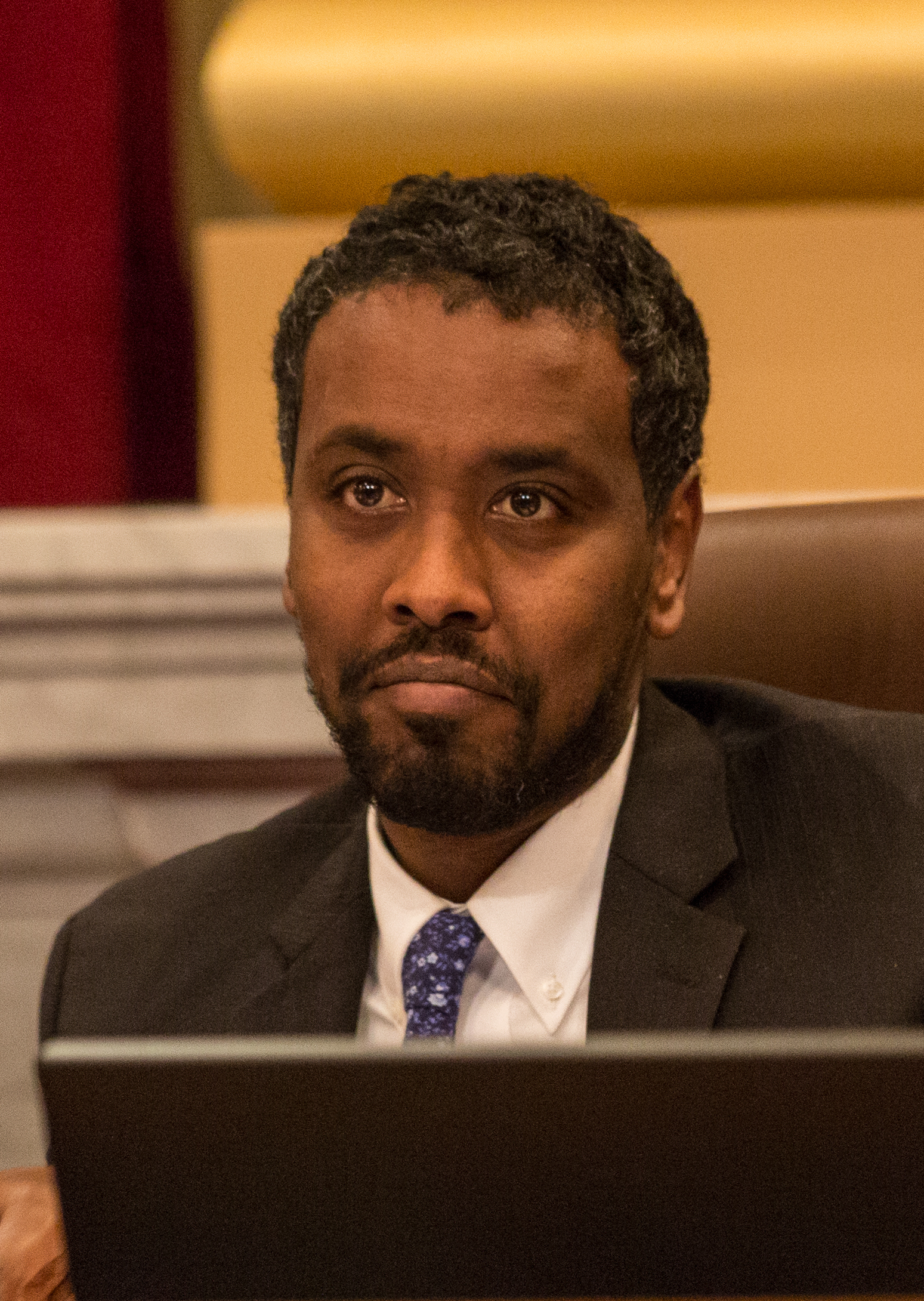
Councilmen Abdi Warsame
Image Source:Creative Commons:WikiMedia
Mohamud Nur is now running against City Councilmen Abdi Warsame of Ward 6 in Minneapolis.
In 2013, Warsame was elected for this position.
Warsame moved to the United Kingdom in 1988 as a refugee along with his family. In 2006, after getting married Warsame moved to the United States.
“You know I represent a ward that is very dynamic and very diverse, the most diverse in the State of Minnesota,” he said, “Somali’s make up 40% but 60% are not Somali’s.”
Now as an elected official in Minnesota, as someone who grew up in the West despite his skin color and race, Warsame believes he can act as an ambassador between the Somali community and the broader community that he represents.
Warsame has found that despite the rhetoric on the national scale, in Minnesota people are aware of the positive contributions of the refugee communities to the state. He believes that the challenges refugees in Minnesota are facing now are similar to challenges that previous newcomers would have experienced as well.
“We’re just going through that experience and the way that we counter that is to show the positive contribution of our communities here,” said Warsame adding, “we’re the engines of the dynamism of the city of Minneapolis.”