|
CSPA
Columbia University
Mail Code 5711
New York, NY 10027-6902
Phone: (212) 854-9400
Fax: (212) 854-9401
[email protected]

CSPA is affiliated with the Graduate School of Journalism at Columbia University in the City of New York.
|
Skip to navigation
Student Press Review
Subway journey
In a world of tunnels below the streets
By David Weinstein
Editor's note: Originally published: Friday, September 5, 2003
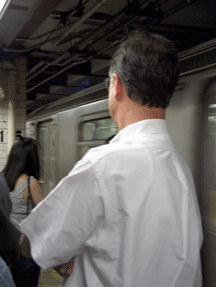 Workshop instructor Joe LeBlanc waits for the number "9" train with members of Group Seven. Summer Workshop students and instructors used the City´s subways for travel to Times Square.
Photo : Aliza Sokolow
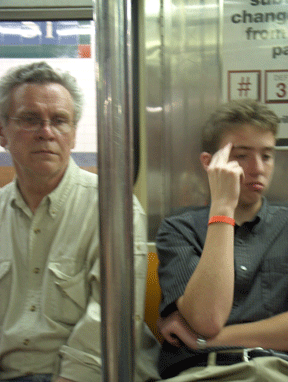 A Summer Workshop student shares a subway seat with a New York commuter, both on their way to Times Square. Workshop students wore orange wristbands to identify them as part of the event.
Photo : Aliza Sokolow
Through the tunnels under New York City shoots a gleaming silver snake.
The screeching noise of brakes on metal warns travelers that they have not managed to escape the city by walking down the concrete stairs that connect the street above to the station below.
The subway system is a new world in itself.
New York newcomers can be overwhelmed by the intricacy of it all. No mole dug these tunnels.
Another striking characteristic of the system is the abundance of noise. Hundreds of voices blend with the sound of the subway cars and echo off the blue and white tiles of the station walls.
Subway cars streak by. The number 9 is illuminated in neon red on the back of the last car in the chain. The car flashes by, disappearing into the dark tunnel, and the number is gone.
The inside of a subway car is a cocoon of diversity.
A homeless man comes into the car, hoping for donations.
"I served this country, but you can not see that," he announces. "You can see that I am homeless."
Later, a man wearing an Orlando Magic jersey rushes through the connecting door and hurries up the aisle. The door clicks shut behind him.
Outside, the tunnel is pitch black, with occasional flashes of electric light.
The motion of the subway cars is deceptive. The cars start to move, lulling passengers into a false sense of security before stopping abruptly-throwing people forward.
Upon disembarking, travelers encounter shops along the way back up to the city streets. The path is alive with flashing neon words and big, bold letters, some from the windows of these shops and some from large advertisement signs that plaster the walls.
"It's the city that never sleeps," says a Dunkin' Donuts ad. "You'll need some energy."
After the store and the signs, a long, sloping corridor comes into view. A row of fluorescent lights on the ceiling serves as a guide through this passageway.
For those who keep their eyes to the floor, a trickle of water from the pipes, similar to the cave stream in Jules Verne's A Journey to the Center of the Earth, leads onward.
Leaving the station, newcomers are shocked to see the sheer dominance of the New York buildings, dominance that they had been able to forget for a few minutes during their subway ride.
Almost as if they are punishing the passengers for this lapse in memory, the skyscrapers seem to bend diagonally into each other, forming triangles and blocking out the view of the sky above.
Both the subway below and the buildings above appear to be sculptures carved in concrete-an impressive sight.
As the walk through the city progresses, a red-lettered news ticker flows by, a siren sounds somewhere and the flashing lights and glaring letters join the sounds and sights of the subway to convey a single message: Welcome to New York City.
David Weinstein edits the HaMôdiya at M.J. Berman Hebrew Academy in Rockville, Md.
|
Prevents layout breakage if no content
|