 Mehmet Dosemeci
INTERACT Postdoctoral Fellow 2011-2012
Mehmet Dosemeci received his PH.D. in History from Columbia
University in 2009. Before joining ICLS
as an Interact Fellow, he spent a year as a Max Weber Fellow at the European
University Institute in Florence, Italy.
His overall work engages with the intellectual and cultural history of
Turkish-European relations in the twentieth century. His current book project, Joining Europe: Civilization and Nationalism in
Turkish-EEC Relations, examines how Turkey’s half-century long membership bid into the
European Union transformed Turkey’s understanding of itself and its place
within the world. Going beyond the
diplomatic and political accounts of Turkish-EU relations, it traces
the existential grip that the European project held over the
Turkish social-imaginary.
As a visiting assistant professor at Bowdoin College and Columbia University,
Mehmet has taught courses on a variety of topics including European
intellectual history, global social movements, and the national imagination. He is currently teaching:
CPLS V3690: Radical
Democracy: From the Jacobins to Tahrir Square3
pts.
M. Dosemeci. TuTh 2:40pm-3:55pm. 516 Hamilton.
This course examines the global history of radical democracy from the French
Revolution to the present. Our task is to trace the various attempts to
practice democracy that lie outside of the liberal representative model.
Spanning the political spectrum, we will investigate everything from democratic
armies and factories, anarchist pirate utopias, to claims by many Germans that
Nazi Germany "felt more democratic" than its predecessor the Weimar
Republic. What sense are we to make of these exceptions to liberal representative
democracy? We will ask what these radical ways of organizing and instituting
society offer us and question why and how the liberal model has come to
hegemonize our conception of democracy today
Ph.d. History, Columbia University (2009)
B.A. History, UC Berkeley (2001)
B.A. Economics, UC Berkeley (2001)
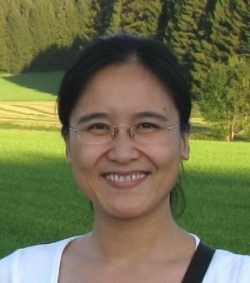 Chunjie Zhang
INTERACT Postdoctoral Fellow 2010-2011
Chunjie Zhang
earned her Ph.D. from Duke University in 2010. The core trajectory of
her intellectual pursuits has been exploring global perspectives in the
study of literature, culture, and their historical and social context.
Engaging with contemporary postcolonial theory, her current book
project, Views from the Other Side: Colonial Culture and Anti-Colonial Sentiment in Germany around 1800,
explores representations of non-European cultures in German discourse
around 1800. Looking at a broad range of texts from Georg Forster's
travel narrative to August von Kotzebue's popular dramas to Johann
Gottfried Herder's philosophy of history, she acknowledges both
Eurocentrism and anticolonial critique in the German discourse and
stresses the impact of cultural otherness on the architecture of German
thought through sentimentalism in the global eighteenth century.
Currently, she is also working on transnational melodramas and the
German Tibet expedition of 1938-1939.
For more information please visit Chunjie Zhang's website.
Spring 2011, Dr. Zhang will be teaching CPLS V3947: Translational Melodrama, Tuesdays 11am-12:50pm.
Our common understanding of melodrama refers to a set of
subgenres that remain close to the heart and hearth and feature a heightened
emotionalism and moral contrast. This melodramatic, or excessive, narrative and
imagination has also been a prevalent mode dealing with intercultural clashes
and historical conflict. This course explores melodramatic imaginations in
literature, film, and drama mainly at three historical and geopolitical
moments: the eighteenth century, the interwar period, and the present global
era. The goal of this course is to investigate the history and imagination of
global interrelations through melodramatic representation and inquiry in
Chinese, European, and American literature and culture. In the end, we aim to
develop a critical understanding of race, gender, immigration, and border
thinking in our globalized world. Course materials range from Chinese Ming
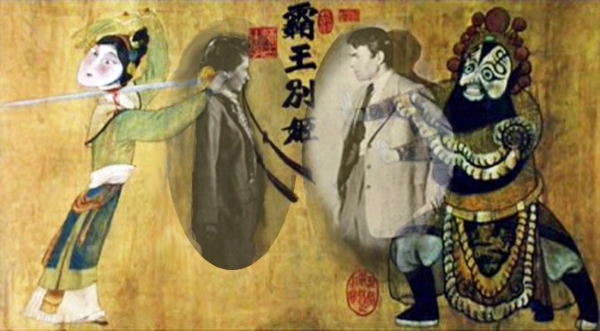
drama in the 16th century to present-day popular film Farewell, my Concubine, from Friedrich Schiller's theory of drama
to Puccini's Madame Butterfly, from
Turkish-German film Head On to
Chinese American novel American Knees.[Link to registrar listing]

 |


