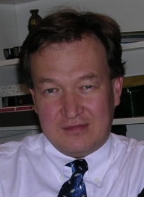
 Speaker: Prof. Dmitri Kharzeev, Brookhaven National Laboratory
Speaker: Prof. Dmitri Kharzeev, Brookhaven National Laboratory
Title: "Mirror symmetry in super-dense matter"
Abstract:
I will discuss the fate of parity invariance (mirror symmetry) in hot
and dense quark-gluon matter. While parity is globally conserved in
Quantum ChromoDynamics,
the interplay of topology and external magnetic field can induce local
parity-odd effects. In particular, the local imbalance between left- and
right-handed fermions in the presence of magnetic field induces the
spatial separation of positive and negative electric charges ("the
Chiral Magnetic Effect").
In heavy ion collisions, this effect can be detected through the
separation of positive and negative hadrons with respect to the reaction
plane.
There is a recent evidence for charge separation from the experiments
at Relativistic Heavy Ion Collider. The effect has intriguing
implications for the cosmology of the Early Universe, and has analogs in
condensed matter physics (quantum wires and graphene), and in
astrophysics (particle acceleration in cosmic strings).
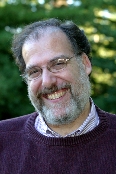 Speaker: Prof. Steven Kahn, Stanford University
Title: "The Large Synoptic Survey Telescope (LSST)"
Abstract:
The Large Synoptic Survey Telescope is a large-aperture, wide-field, ground-based telescope designed to survey over half of the sky in six optical colors every few nights. As such, it will enable a wide array of diverse scientific investigations, ranging from studies of small moving bodies in the solar system to constraints on the structure and evolution of the universe as a whole. A National Academy of Sciences panel charged with prioritizing future programs in astronomy and astrophysics recently ranked LSST has the highest priority large ground-based project for the next decade.
I will provide a brief overview of the design of LSST and then run through a "tour" of some of the most exciting science that is expected to come from this facility. Included will be topics in solar system science, stellar evolution, the structure of the Milky Way, galaxy formation, active galactic nuclei, the nature of the transient sky, and fundamental cosmology.
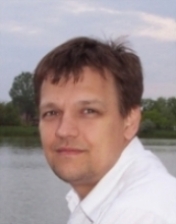 Speaker: Prof. Szabolcs Marka, Columbia University
Title: "Gravitational Waves, Neutrinos and Photons:Comprehensive MultiMessenger Astronomy in the Making"
Abstract:
Gravitational waves, ripples in the curvature of spacetime, carry information about the nature of gravity and fascinating astronomical phenomena never before observed by humanity, such as colliding black holes or consumed neutron stars. The LIGO-GEO600-Virgo interferometric gravitational-wave detector network has been successfully constructed and operated at or exceeding its initial sensitivity target. Searches for gravitational-wave signals at the sub-attometer level have already provided meaningful constraints on the population and characteristics of sources, in particular on the astrophysics of events which can also be observed through other messengers, such as gamma-rays, X-rays, radio, optical, and/or neutrinos. The simultaneous observation of neutrino or electromagnetic emission could be a crucial aspect for the first direct detections of gravitational waves, expected at the tens-of-zeptometers sensitivity level within a few years. Information on the progenitor, such as trigger time, direction and expected frequency range, can enhance our ability to identify gravitational-wave signatures with amplitudes close to the noise floor of the detector. Combining gravitational waves with electromagnetic and neutrino observations furthers the possibilities in extracting scientific insight that has been hidden from us before. I will discuss and interpret the results and successes from transient searches that have been completed with the LIGO-GEO600-Virgo network. I will give insight on the ways the multimessenger effort is currently being extended to include additional astrophysical events and messengers. I will also describe the status, some of the exciting science goals, and outlook for second and third generation interferometric gravitational-wave detectors.
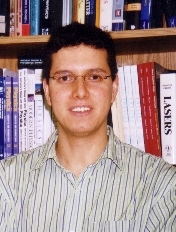 Speaker: Prof. Eduardo Ponton, Columbia University
Title: "Electroweak Symmetry Breaking: The Start of a New Era?"
Abstract:
The Standard Model of Particle Physics has been tested to exquisite precision over the past three decades. Nevertheless, the nature of the physics responsible for the breaking of the electroweak symmetry remains unknown. This most basic issue is expected to be fully or partially uncovered during the LHC era. It is also possible that "the physics of the TeV scale" carries answers to other fundamental questions, such as the origin of the observed flavor structure, the identity of dark matter, or the origin of the baryon asymmetry of the universe. Furthermore, theoretical research has determined that, in spite of the impressive quantitative tests (at the quantum level) of the basic standard model framework, there can be radical departures at the TeV scale, such as the existence of additional spatial dimensions that can be observable at the LHC. I will review how our present knowledge has led us to suspect that the EW scale may provide important clues regarding even smaller scales, and exemplify the possibilities for physics beyond the standard model in the energy regime we are currently exploring in collider experiments.
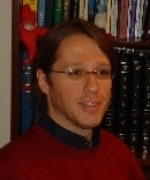 Speaker: Prof. Gustaaf Brooijmans, Columbia University
Title: "After the Standard Model"
Abstract:
From a particle physics point of view, the past thirty years can
rightfully be considered as the golden age of the standard model. Both
the theoretical and experimental knowledge of the structure of the
strong and electroweak interactions have reached impressive levels of
precision, and the agreement between experimental results and
theoretical predictions is stunning.
The standard model doesn't tell us anything about the nature of the
particles whose interactions it describes, however. We hope that data
taken at the LHC now and in the future will allow us to develop some
understanding of the origin of particle properties. According to some
models we will learn about particle masses through the discovery of the
Higgs boson, while others, for example, suggest that dynamics in
additional spatial dimensions might be the source of specific
properties. This colloquium will review some key aspects of our current
knowledge and how it was acquired, followed by a discussion of new
experimental approaches needed at the LHC.
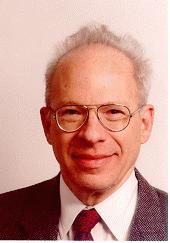 Speaker: Prof. Richard Garwin, Thomas J. Watson Research Center, IBM Research Division
Title: "Science (and technology) to tame a wild deep-sea oil well"
Abstract:
In the Gulf of Mexico, the BP well Macondo-252, suffered a disaster in April 2010 and spewed 5 million barrels of oil into the Gulf. It could have been much worse. I describe the approaches to collecting the flow and eventually to stopping it in the difficult environment of a deep well that enters the seabed a mile below the sea surface, in the hurricane-prone Gulf of Mexico.
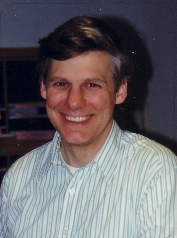 Speaker: Prof. Brian Cole, Columbia University
Abstract:
On November 6, 2010 the Large Hadron Collider (LHC) started colliding
lead nuclei at a nucleon-nucleon center of mass energy of 2.76 TeV.
Such collisions are expected to create strongly interacting matter at
temperatures in excess of 500 MeV ($> 1012$
degrees K) -- the highest temperatures ever created in the laboratory.
At such high temperatures, strongly interacting matter is predicted to
be in a novel state called a strongly interacting quark-gluon plasma
(sQGP), in which quarks and gluons normally "confined" within the
volume of a proton become "deconfined" over a much larger nuclear
volume. The ATLAS detector at the LHC was constructed primarily to
study high-energy proton-proton collisions. It turns out however to be
also an ideal instrument for studying sQGP properties in nuclear
collisions because its highly segmented calorimeters provide excellent
detection and measurement of "jets" of particles in very complex high
multiplicity environments. On November 26, 2010 ATLAS reported the
first observation of large imbalances in transverse momenta of pairs of
"jets" produced in the lead collisions. Unlike in proton-proton
collisions, pairs of back to back jets in nuclear collisions are found
to be highly momentum unbalanced in the plane transverse to the
incoming beams. The observation suggests that the hot sQGP created in
the lead-lead collision can change significantly the energy of one or
both jet partons before they fragment into jets of pions, kaons and
other particles. Such "quenching" of quarks and gluons was
theoretically predicted nearly two decades ago. Results from the
Relativistic Heavy Ion Collider have indirectly demonstrated jet
quenching through the suppressed yield of high-energy fragments of
jets. If the jet quenching interpretation is ultimately confirmed, the
recent ATLAS measurements would represent its first direct observation
via full calorimetric jet reconstruction.