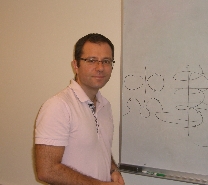
 Speaker: Dimitrios Giannios, Princeton University
Speaker: Dimitrios Giannios, Princeton University
Title: “Relativistic Astrophysical Jets”
Abstract:
Collimated, relativistic outflows have been observed or inferred to
originate from supermassive black holes in the centers of galaxies,
solar-mass compact objects in binaries and gamma-ray bursts. A
theoretical paradigm envisions that these come from rotating objects
(neutron stars, black-hole ergospheres, or accretion disks) threaded by
strong magnetic fields. The magnetic fields extract rotational energy
from the compact objects launching jet flows. Despite recent progress in
the field, we still lack a coherent connection between the jet dynamics
and the electromagnetic radiation emitted by these sources. The guiding
theme that I propose for such a connection is the dissipation of
magnetic energy in the jet. This key process connects aspects of
acceleration of jets and radiation mechanisms and may help to explain
very puzzling observations of these objects. The last part of the talk
deals with a novel type of transient jets from galactic centers that, I
argue, are likely to come from tidal disruption of stars by a
supermassive black hole.
 Speaker: Dr. Peter Steinberg BNL
Title: "Studying hot, dense QCD matter with the ATLAS experiment at the LHC"
Abstract:
Heavy ion physics has entered a very exciting period, where experiments are now taking data at two high energy collider facilities: the Relativistic Heavy Ion Collider (RHIC) at Brookhaven National Laboratory, and the Large Hadron Collider (LHC) at CERN. Results from gold-gold collisions at RHIC have shown that collisions of heavy nuclei at ultra-relativistic energies create an evanescent drop of a nearly-perfect fluid with an energy density at least 60 times more dense than a proton, and reaching temperatures of several trillion Kelvin. Even more striking, this matter is found to lead to a strong energy loss of quarks and gluons that traverse it, observed in the phenomenon of "jet quenching", although the precise mechanism of this is not yet understood. To extend these studies to even higher temperatures and densities, a broad program of measurements using lead-lead collisions is underway at the LHC. This talk will primarily describe measurements performed using up to 9 µb-1 of lead-lead collision data at a nucleon-nucleon center-of-mass energy of 2.76 GeV, collected by the ATLAS Detector during November and December 2010. Results on inclusive charged particle multiplicities and elliptic flow are used to study the global features of the collisions as a function of centrality, pseudorapidity and transverse momentum. Higher order Fourier coefficients will also be shown to assess the importance of more complicated event-wise geometric fluctuations. The study of the microscopic properties of the system will be addressed with high momentum probes. Measurements of muons provide access to W and Z bosons, which are potentially sensitive to modifications of the nuclear PDFs, as well as heavy flavor. Charged particle spectra, particularly at high pT, are sensitive to the overall suppression of jets and their modified fragmentation. Finally, jet rates, asymmetries and fragmentation properties offer a more direct look at the physics of jet quenching than has been available previously.
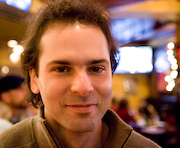 Speaker: Prof. Alberto Nicolis, Columbia University
Title: "Effective field theories for fluids and superfluids"
Abstract:
I will present a novel field theoretical framework that captures the long-distance and low frequency dynamics of hydrodynamical systems. The approach is that of effective field theories, whose building blocks are the infrared degrees of freedom and symmetries. Possible applications include questions in condensed matter physics, heavy-ion collisions, astrophysics and cosmology, and quantum hydrodynamics. Moreover, this formulation naturally invites (and answers) new questions in classical hydrodynamics.
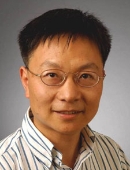 Speaker: Jianwei Qiu, Brookhaven National Laboratory
Title: "Exploring the fundamental properties of matter with an electron-ion collider"
Abstract:
The proton and neutron, known as nucleon, are the basic building blocks of all nuclear elements that are responsible for our lives and the world of visible matter in the universe, while the proton and neutron themselves are not elementary and are made of quarks and gluons of Quantum Chromodynamics (QCD). One of the most challenging questions in physics for the past several decades and the future is to understand how quarks and gluons form nucleons and nuclei, and to describe their properties in terms of the dynamics of QCD. Like the atom, the elementary bound state of Quantum Electrodynamics, the nucleon is an elementary bound state of QCD. Unlike the atom, whose mass is almost entirely concentrated in a tiny nucleus, the nucleon mass seems to be dominated by energy of gluons zooming around relativistically. In this talk, I will demonstrate that an energetic electron-ion collider with a good luminosity and beam polarization is an ideal machine to scan the internal quark and gluon structure of nucleons and nuclei at a sub femtometer (even at an attometer) scale, and it is a much needed machine to explore the role of gluons in determining the nucleon and nuclear properties.
 Speaker: Dr. Daniel Sigg, Caltech/LIGO-LHO
Title: "Squeezed Light Techniques for Gravitational Wave Detection"
Abstract:
Several kilometer long interferometers have been built over the past
decade to search for gravitational waves of astrophysical origins. For
the next generation detectors intra-cavity powers of several 100 kW are
envisioned. The injection of squeezed light, a specially prepared
quantum state, has the potential to further increase the sensitivity of
these detectors. The technology behind squeezed light production has
taken impressive steps forward in recent years. As a result a series of
experiments is underway to prove the effectiveness of squeezed light and
to make quantum technology a valid upgrade path for gravitational wave
detectors.
 Speaker: Stephane Munier, École Polytechnique
Title: "Branching random walks with selection: from Darwinian evolution to particle physics"
Abstract:
Branching random walks appear in various fields of science, including biology, physics and computer science. For biologists, they may model the time evolution of a population. An interesting question to address is then, for example, to estimate the number of generations one has to go back in the past to find the most recent common ancestor of a given set of individuals. More surprisingly maybe, branching random walks were recognized to appear in the context of particle physics, in the way how quantum fluctuations build up in the wave function of a fast hadron. One of the problems to solve in that context is to compute the density of these fluctuations at a given energy, since the latter is directly related to cross sections measured in high-energy experiments. The main focus of this talk will be to present a qualitative understanding of the properties of the branching random walks which are subject to some Darwinian selection mechanism, and to show how quantitative answers to the above questions can be derived in a simple way.
 Speaker: Konstantin Batygin, Caltech
Title: "Orbits and Interiors of Extrasolar Planets"
Abstract:
Long-term orbital evolution of multi-planet systems under tidal
dissipation often converges onto a dynamical fixed point. Such
stationary states are characterized by apsidal alignment among the
orbits and lack of secular variations in the orbital eccentricities.
Quantitatively, the nature of the fixed point is dictated by mutual
interactions among the planets as well as non-Keplerian effects such as
general relativity and gravitational quadrupole fields created by the
inner-most planet's tidal and rotational distortions. As a result, the
nature of the dynamical attractor, onto which the system settles,
encapsulates independent information about the planetary mass and its
degree of central concentration. Consequently, in the first half of the
talk, I will show how a precise characterization of a planetary systems'
orbital state can either resolve the sin(i) degeneracy inherent to
non-transiting bodies, or yield meaningful constraints on the interior
structure of a transiting giant planet.
In the second half of the talk, I will address the long-standing issue
of physics behind close-in giant planet radius anomalies, by presenting a
novel magnetohydrodynamic mechanism responsible for inflation. The
mechanism largely relies on the electro-magnetic interactions between
fast atmospheric flows and the planetary magnetic field in a thermally
ionized atmosphere, to induce electrical currents that flow throughout
the planet. The resulting Ohmic dissipation acts to maintain the
interior entropies, and by extension the radii of hot Jupiters at an
enhanced level. Using self-consistent calculations of thermal evolution
of hot Jupiters under Ohmic dissipation, we show a clear tendency
towards inflated radii for effective temperatures that give rise to
significant ionization of K and Na in the atmosphere, a trend fully
consistent with the observational data. I will conclude by discussing
the possibility of Ohmic evaporation of planets.
 Speaker: Massimo Robberto, Space Telescope Institute
Title: "Understanding Star Formation with the Hubble Space Telescope"
Abstract:
The 21 years old Hubble Space Telescope has reached an unprecedented level of performance and can be regarded as the most productive observatory in history. All fields of Astronomy have been deeply affected by HST discoveries. In my talk i will illustrate some of the progresses we have made in understanding star formation, both within our Galaxy and in the nearby Magellanic Clouds. I will present recent findings on the stellar initial mass function, the structure and evolution of circumstellar disks, mass accretion and mass outflow phenomena, including new unpublished results from the Treasury Program on the Orion Nebula I am leading.
To view the archived presentation click here.
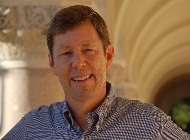 Speaker: Randy Hulet, Rice University
Title: "Tuning in to Ultra-Cold Atoms"
Abstract:
Ultra-cold atoms are remarkable for their capacity to explore physics
that may not be revealed in any other way. The key to this versatility
is the ability to tune their parameters, including interaction strength
and dimensionality, and to control their environment using tailored
optical potentials, such as optical lattices or disordered speckle. I
will illustrate the Feshbach resonance, which provides tunable
interactions, with several examples including the BCS-BEC crossover in a
Fermi gas of 6Li atoms, and the Efimov effect, matter-wave solitons,
and the effects of disorder using Bose-Einstein condensates of 7Li.
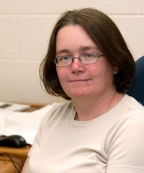 Speaker: Dr. Julie McEnery, NASA Goddard Space Flight Center
Title: "Bright Future for Fermi: Open Questions for Gamma-Ray Observations"
Abstract: TBA
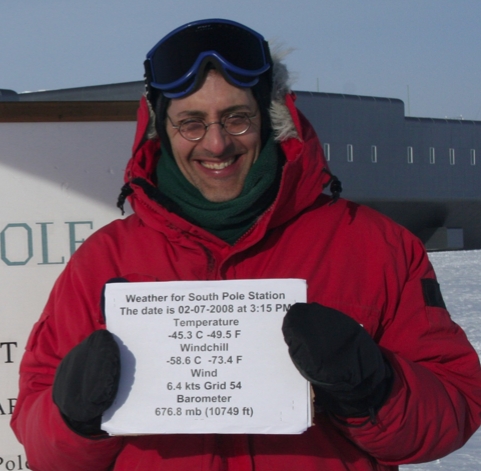
Title: "IceCube's Neutrino Microscope"
Abstract:
IceCube is the world's largest neutrino detector. Buried deeply under the ice at the South Pole, IceCube is a sparsely instrumented Cherenkov light detector with about 5,000 sensors interspersed in a volume of roughly one cubic kilometer. It was designed to have optimal sensitivity to neutrinos with energies in the TeV to PeV range that can produce kilometer-scale event signatures, and has begun to place model-challenging limits on high energy neutrino production by astrophysical sources like gamma-ray bursts (GRBs).
In this talk, however, we will focus on IceCube's new-found ability to detect neutrinos at energies approaching 10 GeV, considerably lower than anticipated in its original design, with event signatures extending "only" to the 50-meter scale. This has been accomplished by the addition of the "DeepCore" in-fill sub-array, added to IceCube in the last two years of its seven-year deployment period. DeepCore gives IceCube sensitivity to dark matter and atmospheric neutrino oscillations in previously unexplored and intrinsically very interesting regions of parameter space. We will describe recent results from DeepCore, discuss measurements in progress, and highlight motivations and ideas for further extending the energy reach of Cherenkov detectors in the ice to the few-GeV scale and perhaps even to the sub-GeV realm.
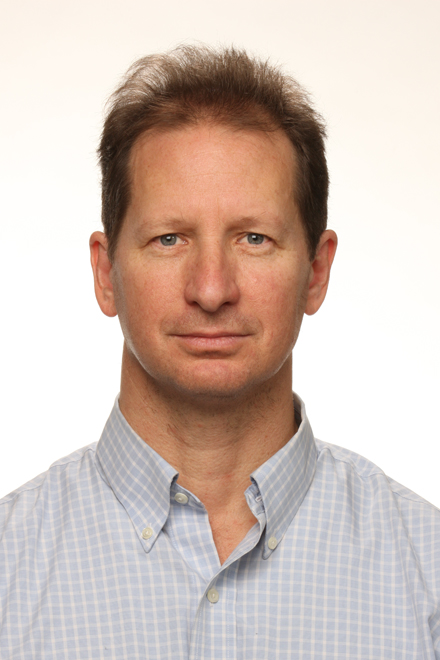 Speaker: Prof. Adam Bernstein, Livermore National Laboratory
Title: "Neutrino Science and Applications"
Abstract:
50 years of fundamental antineutrino detection experiments at nuclear reactors have laid the groundwork for a new discipline - Applied Antineutrino Physics. Using well known detection methods, our Lawrence Livermore and Sandia National Laboratories collaboration has successfully demonstrated the utility of antineutrino detectors for cooperative monitoring of the operational status, power, and fissile content of reactors, non-intrusively and in real time. These capabilities are relevant for global nonproliferation and nuclear materials control regimes, especially IAEA reactor safeguards. In the past few years, we have begun to explore new methods of antineutrino detection, which may allow the detector footprint to shrink by a factor often, or, in the longer term, increase the standoff detection capability for small reactors out to hundreds of kilometers. I will describe our current and proposed activities in these regards, and point to the many connections of this work to fundamental neutrino science and particle astrophysics.
Speaker: Canceled
Title: Canceled
Abstract: Canceled
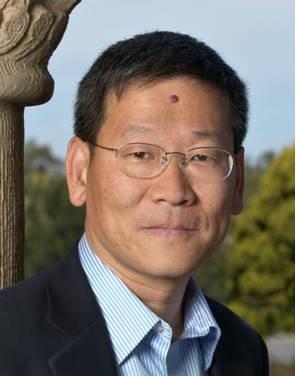 Speaker: Zhi-Xun Shen, Stanford University
Title: "Bridging the Gap in High Temperature Superconductor"
Abstract:
It is now over 100 years since superconductivity was discovered and it took 45 years before a complete theory was formulated by Bardeen-Cooper-Schrieffer. Once understood, the impact has been felt far behind superconductivity itself, and superconductivity became a prime example of emerging properties in quantum system. High-Tc superconductivity in cuprate oxides was discovered 25 years ago and it remains a major unsolved physics problem today. The challenge of the cuprate research is symbolized by its complex phase diagram consists of intertwined states with extreme and unconventional properties in addition to unconventional superconductivity – such as Mott Hubbard insulating state, the peculiar pseudogap state, and so-called strange metal state. None of them are understood by conventional theory, thus compounding the difficulty to understand high-Tc superconductivity itself as these states are different manifestations of the same underlying physical system, making an integrated understanding a necessity.
Angle-resolved photoemission spectroscopy (ARPES) has emerged as a leading experimental tool to address this problem. Over the last two decades, substantial progress towards understanding the cuprate problem has been made in concert with breathtaking progresses in ARPES technique. In this talk, I will use ARPES derived energy gap as a bridge to link the relationship between the different parts of the phase diagram, with focus on the complex relationship between pseudogap state and superconductivity. The result points to a trisected superconducting dome with interweaving states. In particular, our data is consistent with the presence of a quantum critical point, accompanied by strong dynamic competition between superconductivity and pseudogap state nearby. Such phase competition will likely emerge as a key signature of high-Tc physics, and suggests a revised phase diagram for cuprates that reconciles two conflicting versions currently used in the field.