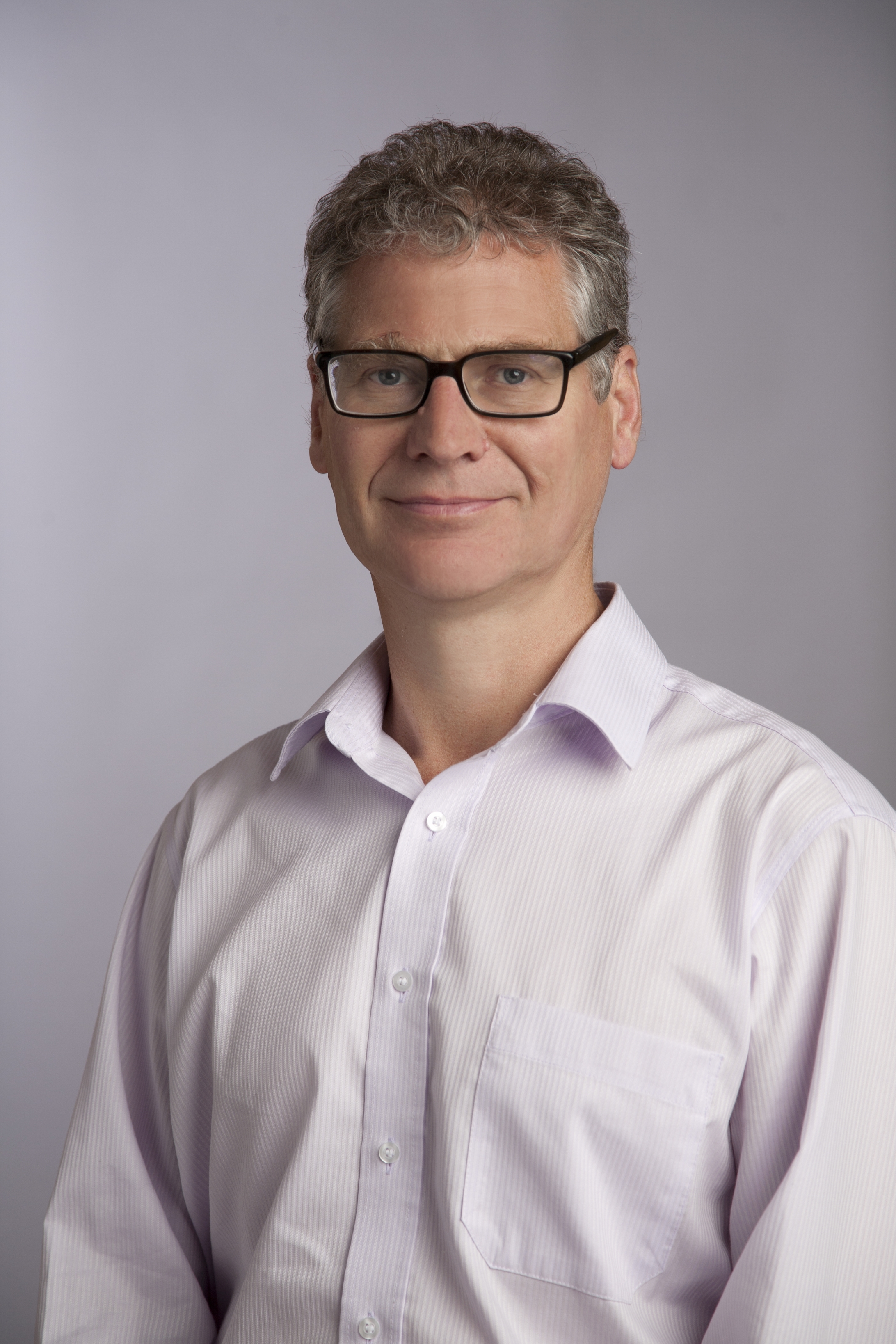
 Speaker: Richard Seager, Columbia University
Speaker: Richard Seager, Columbia University
Title: "Mechanisms of persistent North American droughts, past, present and future"
Abstract:
Drought are amongst the most expensive and disruptive natural disasters to occur in North America. The causes of persistent, multiyear droughts will be examined using observations, climate model simulations and tree ring records of past climate. Persistent droughts in western North America are closely linked to naturally occurring variations in tropical sea surface temperatures with the Pacific playing the leading role and the Atlantic a supporting role. The atmospheric dynamics that link tropical ocean temperatures to drought-inducing circulation anomalies over North America will be explained. However, unlike for other droughts, the severity and location of the 1930s Dust Bowl cannot be explained solely in terms of ocean temperature variations. Model simulations will be used to make the case that poor farming practices, crop failure and dust storms intensified an ocean-induced drought and shifted its location northward. Tree ring records will be presented to show the existence of a series of multidecadal megadroughts in the West during the Medieval period and mechanisms for the occurrence of megadroughts discussed. Further, climate change induced by rising greenhouse gases is now causing southwestern North America to transition to a more arid climate as part of a general drying and poleward expansion of the subtropics. The dynamics of this transition to increasing aridity will be discussed and contrasted with the mechanisms of naturally-occuring drought. Implications for regional water resources will also be considered.
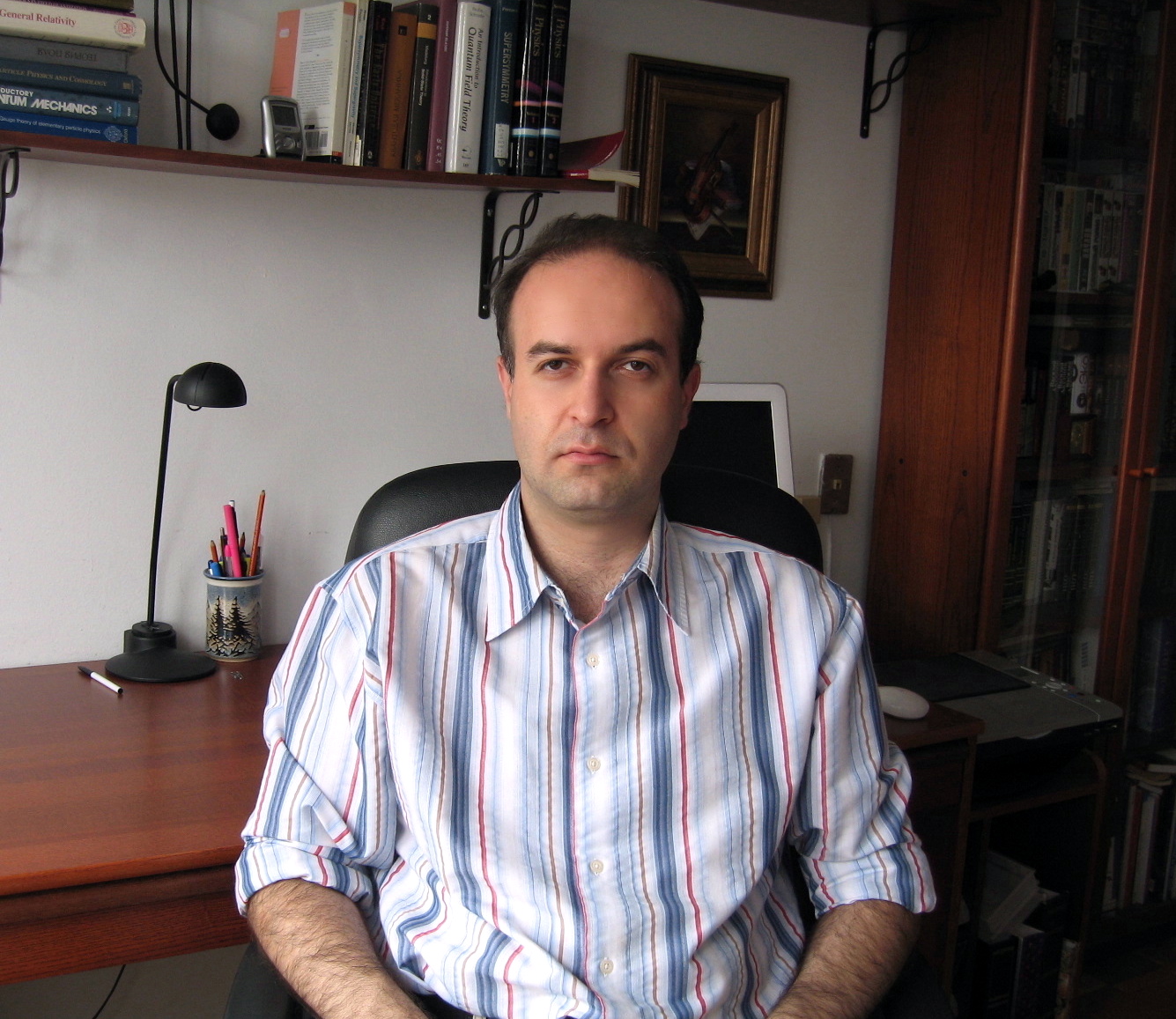 Speaker: Gregory Gabadadze, New York University
Title: "Massive Gravity versus Cosmological Constant"
Abstract:
I will briefly review -- in physics and historic context -- what appears to be one of the most persistent enigmas in fundamental physics, called the Cosmological Constant Problem. I will argue that a recently formulated extension of General Gelativity to a massive theory has right ingredients to begin to address the problem.
 Speaker: Young Lee, Massachusetts Institute of Technology
Title: "Spin liquids: the holy grail of quantum magnetism"
Abstract:
I will describe recent experimental progress in the quest to study novel
ground states in quantum magnets. New states of matter may be produced
if quantum effects and frustration conspire to prevent the ground state
from achieving classical order. The famous quantum spin liquid state has
been theoretically proposed decades ago and has only recently been
experimentally realized. These spin liquids are believed to feature
long-range quantum entanglement and support exotic excitations. A recent
breakthrough in crystal growth has led to the discovery of spin liquid
physics in a material based on the frustrated kagomé lattice. Inelastic
neutron scattering measurements reveal that the spin excitations are
fractionalized, a remarkable first.
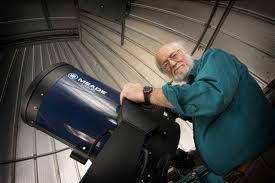 Speaker: Jim Lattimer, State University of New York at Stony Brook
Title: “Have We Converged on an Understanding of the Neutron Star Equation of State?”
Abstract:
Observations of neutron stars in optical, X-ray and radio radiation are leading to interesting constraints on their internal properties and the equation of state of extremely dense matter. The discovery of a nearly 2 solar mass pulsar restricts the properties of quark matter if it is to exist in any form in neutron stars. Radius limits have been set from X-ray observations of photospheric radius expansion bursters and from quiescent low-mass X-ray binaries in globular clusters. Measurements of surface temperatures from isolated, cooling neutron stars also constrain their internal properties, including superfluidity. Simultaneously, various nuclear experiments and theoretical studies of pure neutron matter have tightly constrained the symmetry properties of matter near the nuclear saturation density. Remarkably, the astrophysical and nuclear constraints are highly compatible, implying for the first time that the most important properties of dense matter are now reasonably known.
 Speaker: Jerry Ostriker, Columbia University
Title: "On the Formation of Massive Galaxies"
Abstract:
Looking backwards we have been able to reconstruct from the detailed structure of our own Galaxy and from the fossil evidence derived from the study of nearby galaxies a plausible history of how galaxies formed over the last several billion years. In addition, now that we have a quite definite cosmological model, providing us with a quantitative picture of how perturbations grew from very low amplitude Gaussian fluctuations, we can perform the forward modeling of representative pieces of the universe using standard physical processes to see how well we match our local knowledge and the time-reversed modeling based on the fossil evidence. Finally, we can employ large ground and space based telescopes to use the universe as a time-machine – directly observing the past history of our light-cone. While none of these approaches can give us at the present time results accurate to more than roughly the 5% -> 10% level, a coherent and plausible picture is emerging. Massive galaxies form in two phases. In the first phase, which peaks at redshift z = 6 and ends by redshift z = 2, cold gas streams in, making stars in a small (<1kpc) region, but as the stellar mass approaches 1011 Msolar, a hot bubble forms which suppresses further inflow of cold gas. But from redshift z = 3 to the present time, small stellar satellite systems are accreted at typically 10kpc from the center and the size of the total system grows by about a factor of three as the mass doubles. This added, accreted component is mainly comprised of old and low metallicity stars. Energy release from gravitational infall in various forms will terminate star-formation even in the absence of feedback from SN or MBHs. This physical picture seems naturally to lead to the mass, size, scale and epoch of galaxy formation and, increasingly, to a first understanding of the detailed internal structure of these systems.
 Speaker: Jens Dilling, TRIUMF
Title: "Understanding the universe, one rare isotope at a time"
Abstract:Many questions in understanding the universe remain at the centre of forefront research; such as how and where the chemical elements in the universe are created? the life and death of stars, or the nature of stability (why are some atoms stable and some decay ?), what is the nature of neutrinos? These questions are intimately related to our fundamental understanding of the atomic nucleus. Recent progress in theory as well as experimental techniques and access to rare isotopes are key in getting closer to answering these questions.
At present, one of the premier facilities for rare isotopes is the ISAC
complex at TRIUMF, Vancouver, Canada. The isotopes are produced, often
only in minuscule quantities, and with half-lives as short as few
milliseconds, hence the name rare. To overcome the research obstacles of
rare isotopes and extract information about the atoms and their
fundamental interactions dedicated instruments are required. We have
developed very sensitive and fast methods using ion trap techniques at
TITAN (TRIUMF’s Ion Trap of Atomic and Nuclear science). Ion traps
(Nobel prize in 1989 to Paul & Dehmelt) can be employed to measure
atomic masses, using one single ion in as short as a 1/100 of a second
with 10 parts per billion precision, breaking a world-record for
precision mass spectroscopy. We were able to do this using a unique
combination of traps, including a Paul trap, an electron beam ion trap
(to generate highly charged ions), and a set of Penning traps. From the
atomic mass, the binding energy of the constituents can be extracted,
which entails all effective forces in the nucleus. One example is to
probe into the world of so-called nuclear halos. Teetering on the edge
of stability, the properties of halo nuclei have long been recognized as
the most stringent test parameters of our understanding of the strong
force. Nuclear halos are an exotic form of nuclear matter that continues
to defy the considerable scientific efforts focused upon them around
the world. In this talk I will report on theses measurements and how
they relate to answering the big questions, what we have learned, and
where we stand.
 Speaker: ZX Shen, Stanford University
Title: "Bridging the Gap in High Temperature Superconductor"
Abstract:
t is now over 100 years since superconductivity was discovered and it
took 45 years before a complete theory was formulated by
Bardeen-Cooper-Schrieffer. Once understood, the impact has been felt far
behind superconductivity itself, and superconductivity became a prime
example of emerging properties in quantum system. High-Tc
superconductivity in cuprate oxides was discovered 25 years ago and it
remains a major unsolved physics problem today. The challenge of the
cuprate research is symbolized by its complex phase diagram consists of
intertwined states with extreme and unconventional properties in
addition to unconventional superconductivity – such as Mott Hubbard
insulating state, the peculiar pseudogap state with an anisotropic gap
above Tc, and the so-called strange metal state. None of them are
understood by conventional theory, thus compounding the difficulty to
understand high-Tc superconductivity itself as these states are
different manifestations of the same underlying physical system, making
an integrated understanding a necessity.
Angle-resolved photoemission spectroscopy (ARPES) has emerged as a
leading experimental tool to address this problem. Over the last two
decades, substantial progress towards understanding the cuprate problem
has been made in concert with breathtaking progresses in ARPES
technique. In this talk, I will use ARPES derived energy gap as a
bridge to link the relationship between the different parts of the phase
diagram, with focus on the complex relationship between pseudogap state
and superconductivity. In addition to exhibiting a different doping
and temperature dependence from superconductivity, the pseudogap also
has a momentum structure implying a distinct electronic symmetry. This
pseudogap is entangled with superconductivity, resulting in two or more
phenomenologically-distinct superconducting ground states in the cuprate
phase diagram, with quantum phase transitions inside the
superconducting dome. Detailed temperature dependence across the
pseudogap temperature and Tc reinforces the picture of two intertwined,
dynamically competing states, providing an explanation for many
seemingly contradicting experiments.
 Speaker: Stephen J. Blundell, University of Oxford
Title: "Magnetic engineering with molecular bricks"
Abstract:
Though biology is built using molecules, most materials studied in condensed matter physics are atomic crystals. When even elemental silicon has numerous complications, physicists prefer to avoid chemical complexity. In this talk, I will stress that many interesting magnetic and superconducting materials can be constructed using molecular components to build up novel and unusual architectures. This approach provides an exciting opportunity for exploring the physics of magnetism. Gaining control of the building blocks of magnetic materials and thereby achieving particular characteristics will make possible the design and growth of bespoke magnetic devices. While progress in the synthesis of molecular materials, and especially coordination polymers, represents a significant step towards this goal, the ability to tune the magnetic interactions within a particular framework remains in its infancy but promising advances are being made, including the production of single molecule magnets and a variety of extended structures. We have recently found a chemical method which achieves dimensionality selection via preferential inhibition of the magnetic exchange in an S = 1/2 antiferromagnet along one crystal direction, switching the system from being quasi-two- to quasi-one-dimensional while effectively maintaining the nearest-neighbour coupling strength [1]. We have also demonstrated that single molecule magnets can be used to store quantum information and have devised a strategy for extending the spin coherence time by chemical adjustment [2]. Very recently we have found that introduction of a molecular spacer layer can produce a greater than fourfold enhancement in the superconducting transition temperature of iron selenide [3]. The experimental techniques used in this work include ESR, muSR and high magnetic fields, but the aim is to show that despite some chemical complexity, molecular systems offer the prospect for some rich and comprehensible physics.
References:
[1] P. A. Goddard, J. L. Manson, J. Singleton, I. Franke, T. Lancaster,
A. J. Steele, S. J. Blundell, C. Baines, F. L. Pratt, R. D. McDonald, O.
E. Ayala-Valenzuela, J. F. Corbey, H. I. Southerland, P. Sengupta, and
J. A. Schlueter, Phys. Rev. Lett. 108, 077208 (2012);
[2] C. J. Wedge, G. A. Timco, E. T. Spielberg, R. E. George, F. Tuna, S.
Rigby, E. J. L. McInnes, R. E. P. Winpenny, S. J. Blundell, and A.
Ardavan, Phys. Rev. Lett. 108, 107204 (2012);
[3] M. Burrard-Lucas, D. G. Free, S. J. Sedlmaier, J. D. Wright, S. J.
Cassidy, Y. Hara, A. J. Corkett, T. Lancaster, P. J. Baker, S. J.
Blundell, S. J. Clarke, Nature Materials 12, 15 (2013).
 Speaker: Sheldon Stone, Syracuse University
Title: "In Pursuit of New Physics with LHCb"
Abstract:
I will discuss the implications on beyond the Standard Model physics
from studies of heavy quark decays from LHCb and other experiments.
Included will be measurements of the flavor specific semileptonic
asymmetries from neutral B meson decays, other CP violating asymmetries,
searches for rare B decays into mu+ mu-, tau- nu, D tau- nu, K mu+ mu-
etc..., Majorana neutrinos, and searches for dark sector particles.
Future experiments will also be mentioned.
Speaker: Kendrick Smith, Princeton University
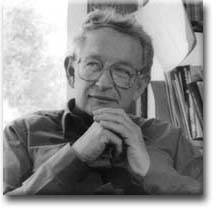 Speaker: Philip Anderson, Princeton University
Title: "The Discovery of the Anderson-Higgs Mechanism"
Abstract:
Landau introduced the idea of the ground state of a condensed matter
system as a “vacuum” and of the elementary excitations as
“quasiparticles” moving in this vacuum. He and Tisza noted that
spontaneous orderings such as magnetism could be thought of as
spontaneous symmetry-breaking of this vacuum, and based theories of
phase transitions on this idea. In studying antiferromagnetism, I
realized that symmetry-breaking could also have dynamical consequences,
and suggested for condensed matter what later came to be known as
Goldstone’s theorem.
With the appearance of the BCS theory of superconductivity and Nambu’s
transcription of it into a theory of the interaction mass of hadrons,
interest grew in broken symmetry in the real vacuum. At the same time,
there was concern about gauge invariance of BCS; and papers by Nambu,
Bogoliubov and Shirkov, and PWA in 1958 addressed that issue by studying
the collective excitation spectrum; but only PWA correctly included the
electromagnetic interaction and found an empty energy gap: Goldstone’s
theorem fails! When I learned in 1962 that Goldstone’s theorem was an
obstacle to serious theories, I tried as best I could to explain the
physics in quasirelativistic terms, hence my 1963 paper. It can be seen
as successfully predicting heavy gauge bosons, and PWA 1958 even
contains a brief remark on a Higgs; Littlewood and Varma claim to have
found such an object in the ‘90’s. At least two of the three “Higgs”
groups were quite familiar with either the ’63 or ’58 paper. As for me, I
was too aware of the zero-point energy problem and busy doing other
things.
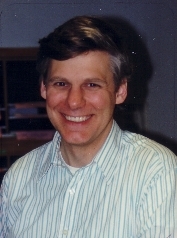 Speaker: Brian Cole, Columbia University
Title: "The first one femtometer/c"
Abstract:
Ultra-relativistic nucleus-nucleus collisions at the Relativistic Heavy Ion Collider (RHIC) and the Large Hadron Collider (LHC) create a unique state of matter called quark gluon plasma (QGP) that exists only at temperatures in excess of 10¹² degrees Kelvin. The quark gluon plasma is observed to be the most ideal fluid ever created in the laboratory. That result admits a number of parallels between the evolution of the quark gluon plasma in heavy ion collisions and the evolution of the early universe -- thus, the choice of the title of this colloquium in analogy with Steven Weiberg's famous book "The first three minutes". In particular, recent measurements by ATLAS probe the evolution of quantum fluctuations in the initial state of lead-lead collisions through rapid thermalization and subsequent hydrodynamic evolution of the plasma. Similar to the way quantum fluctuations in the early universe are imprinted onto the cosmic microwave background, the quantum fluctuations in the initial state of nuclear collisions are imprinted on the angular distribution of final-state particles. Results and implications of measurements of the analog of the CMB power spectrum in lead-lead collisions will be presented and discussed. In addition, early results of measurements in proton-nucleus collisions that directly probe the physics of the initial state and the first fm/c in lead-lead collisions will be presented.
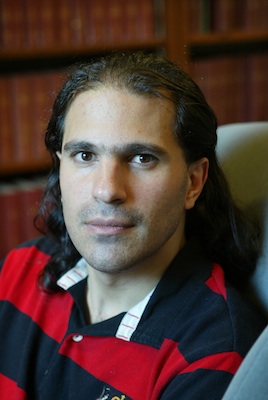 Speaker: Nima Arkani-Hamed, Institute for Advanced Study
Title: "Fundamental Physics and the LHC: A Progress Report"
Abstract:
Last July's discovery of a ``Higgs-like" particle at the Large Hadron
Collider was a triumph for both experiment and theory in fundamental
physics. But the Higgs also introduces major conceptual paradoxes that
strongly suggest we are missing essential new physical principles.
Chief amongst these is the severe ``naturalness" or ``fine-tuning"
problem, which arises in trying to answer a simple question: why is
there a macroscopic universe? It has long been thought that this mystery
would be solved by new symmetries or dynamics at the distance scales
probed by the LHC. If so, what should we make of the absence of obvious
signs of new physics at the LHC so far? Are entirely different kinds of
explanations possible? And what should we be looking for from the LHC
when it restarts in 2015? In this talk, I will summarize this excitingly
confusing state of affairs, and discuss what we can hope to learn by
2020.
*Please continue visiting the Department of Physics web site for seminar updates.