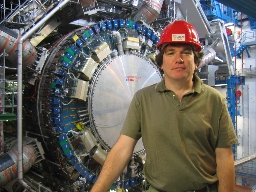
 Speaker:John Parsons, Columbia University
Speaker:John Parsons, Columbia University
Title: "The Higgs Boson: Latest News from the Large Hadron Collider"
Abstract:
The existence of the Higgs boson is predicted by the Standard Model of particle physics, as a consequence of its explanation of the origin of mass. However, for the past almost 50 years, experimental searches for the Higgs boson have come up empty, and the issue of its existence has emerged as one of the most pressing questions in physics. This past July 4, experiments at the CERN Large Hadron Collider announced the discovery of a new subatomic particle, one which seems to closely resemble predictions for the Higgs boson. This breakthrough will be described, updated with more recent results, and discussed in the context of its implications for the next steps in our quest to understand the fundamental principles underlying the nature of the universe.
 Speaker: James Hone, Columbia University
Title: "Graphene: Mechanics, NEMS, and 2D Heterostructures"
Abstract:
This talk will review our work with graphene and related 2D materials
over the past four years. This work has centered on three areas:
measurements of mechanical properties; implementation and applications
of graphene nano-electromechanical devices (NEMS); and creation of
heterostructures of graphene with hexagonal boron nitride (h-BN).
Mechanics: our measurements have showed that graphene is the strongest
known material, with a breaking strength that can reflect the intrinsic
material strength rather than being limited by defects. As such, it
provides an opportunity to study materials properties at ultrahigh
tensile strain, much in the way that diamond anvil cells are used to
study properties at ultrahigh compressive strain. On a fundamental
level, these experiments can be used to validate first-principles
electronic structure calculations in regimes that were previously
inaccessible.
NEMS: I will briefly describe our implementation of high-speed
electronic readout of graphene NEMS and studies of their basic
properties. I will then focus on our recent studies of graphene NEMS in
the quantum Hall regime. In this regime, the mechanical motion is
strongly coupled to the electronic state of the system, and we find
large frequency shifts that can be used to directly read out the
chemical potential and compressibility of the system. We further use
this novel mechanism to quantify the many-body exchange interaction of
broken-symmetry QH states. This new mechanism may prove to be a useful
tool for magnetic studies across low-dimensional materials and in
sensing applications.
Heterostructures: We have developed techniques for manipulation of such
atomically thin flakes, that allow us to combine 2D materials to make
entirely new types of heterostructures. We have used these techniques
to study the properties of graphene on h-BN, which acts as an
ultralow-disorder insulating substrate. I will review the basic
behavior of graphene on h-BN, implications for practical devices, and
then discuss recent results on more exotic effects and devices.
 Speaker: Allen Goldman, University of Minnesota
Title: "Electrostatic Doping in High Temperature Superconductors"
Abstract:
Field effect transistor configurations have been employed as electrostatic alternatives to chemical doping of novel materials. In principle they provide exquisite control of important material properties, such as magnetism and superconductivity. A recent innovation has been to replace the gate insulator, which is usually a high-dielectric constant material, with an ionic liquid. Ionic liquids are molten salts at room temperature. When used as gate dielectrics, they can facilitate extraordinarily large charge transfers because of the formation of electronic double layers, which are in effect capacitors with nanometer scale spacings. These configurations have been used in a limited way to find new superconductors, and to explore in a detailed manner the complex phase diagrams and quantum critical behavior, of known superconductors such as the cuprates. In addition to surveying accomplishments using this technique, recent work on the properties of ultrathin films of YBa2Cu3O7−x and La2CuO4+x will be reviewed. The possibility of using electrostatic gating employing ionic liquids, as an alternative to chemical doping in the search for new superconductors, will be assessed.
* Supported in part by the NSF under grants NSF/DMR-0709584, 0854752,
and 1209578, and performed in collaboration with Xiang Leng, Javier
Garcia-Barriocanal, Joseph Kinney and Boyi Yang.
 Speaker: Seamus Davis, Cornell University, Brookhaven, and University of St Andrews
Title: "Emergent States of Complex Electronic Matter: From Motivation to Discovery & Exploration"
Abstract:
Many unprecedented states of electronic matter are predicted or known to occur in complex and correlated materials. Explorations of existing exotic states and searches for novel ones are going on worldwide. I will attempt a unified overview of emergent electronic matter research, touching on systems including Heavy Fermions, Quantum Critical States, Topological Superconductors, Quantum Spin Liquids, Magnetic Monopole Liquids, Nematic Electronic Fluids, Electronic Liquid Crystals and High-Tc Superconductors.
As an example we focus on the high-Tc superconductivity found in
cuprates. Here the enigmatic ‘pseudogap’ phase emerges when electrons
are removed from the parent antiferromagnetic Mott insulator. Why the
‘pseudogap’ phase exists, and its relationship to the superconductivity,
are key questions. Within this phase, we discovered intra-unit-cell
rotational symmetry breaking, nematicity, in Bi2Sr2CaCu2O8 (Nature 466,
347 (2010)) and Ca2-xNaxCuO2Cl2 (Nature Physics 8, 534 (2012)). These
effects coexist with the more well known incommensurate density
modulations (Science 266, 455 (2002), Science 315, 1380 (2007)). Most
recently we identified a coupling between these two apparently distinct
broken-symmetry states (Science 333, 426 (2011)), and can now report the
evolution of this dual broken-symmetry through the phase diagram (K.
Fujita et al (2012)). Our preliminary conclusions are that the broken
symmetry ‘pseudogap’ phenomena are intimately related to the long
discounted fact that cuprate ‘hole doping’ removes electrons from the
oxygen and not the copper atoms..
 Speaker: Justin Khoury, University of Pennsylvania
Title: "Symmetries of the Very Early Universe"
Abstract:
Our universe enjoys a lot of symmetries. On the largest scales, the universe is homogeneous and isotropic, consistent with a spatially-flat Friedmann-Robertson-Walker space-time. The density inhomogeneities in the early universe, which later give rise to galaxies and the large scale structure, are the simplest imaginable: their statistics are approximately scale invariant and well-described by a gaussian random field. In this talk, I will describe three broad classes of early universe theories that can account for these observations: single-field inflation, multi-field inflation and the recently-proposed pseudo-conformal universe. I will show that each class is associated with distinct symmetries, which imply subtle constraints on the form of the primordial density correlation functions. These constraints will be tested by ongoing and forthcoming observations of non-Gaussianities in the cosmic microwave background and the large scale structure.
 Speaker: Gregory Gabadadze, New York University
Title: "Massive Gravity versus Cosmological Constant"
Abstract:
I will briefly review -- in physics and historic context -- what appears to be one of the most persistent enigmas in fundamental physics, called the Cosmological Constant Problem. I will argue that a recently formulated extension of General Gelativity to a massive theory has right ingredients to begin to address the problem.
 Speaker: Mike Shaevitz, Columbia University
Title: "Neutrinos: What’s New and Where Are We Going"
Abstract:
Two recent results from neutrino oscillation experiments are shaping the future course of the field. First, measurements of the “little mixing angle” O13 have shown that the mixing among all three types of neutrinos is fairly large. This opens up a new era for exploring the key unknowns of neutrino oscillations including determining the mass ordering of the neutrinos and whether oscillations exhibit CP violation. CP violation in the neutrino sector is a key ingredient in “Leptogenesis” models that use such violations in the early universe to obtain the observed matter-antimatter asymmetry. Second, there is mounting evidence that there may be new types of neutrinos that have no standard model interactions, sometimes referred to as “sterile” neutrinos. Establishing the existence of sterile neutrinos would be a major result for particle physics and is one of the experimental challenges for the future program. This talk will describe the current experiments and measurements associated with neutrino mixing and sterile neutrinos and then show how these results are guiding the field towards an exciting new experimental program to make definitive measurements.
 Speaker: Mark Raizen, The University of Texas at Austin
Title: "Maxwell, Einstein, and Their Impossible Demons"
Abstract:
In 1871, James Clerk Maxwell proposed a thought experiment, and in 1907,
Albert Einstein made a prediction. Both men concluded that the
experimental realizations would be impossible. In this talk I will
describe our recent work that relates to this history, and show how it
has enabled new methods for controlling matter with light.
 Speaker: John Harris, Yale
Title: "Recreating the Primordial Quark-Gluon Plasma at the LHC"
Abstract:
Ultra-relativistic collisions of heavy ions at the Large Hadron Collider
(LHC) and the Relativistic Heavy Ion Collider (RHIC) create an
extremely hot system at temperatures (T) expected only within the first
microseconds after the Big Bang. At these temperatures (T ∼ 2 x 10¹² K),
a few hundred thousand times hotter than the sun’s core, the known
“elementary” particles cannot exist and matter “melts” to form a “soup”
of quarks and gluons, called the quark-gluon plasma (QGP). The soup
flows easily, with extremely low viscosity, suggesting a nearly perfect
hot liquid of quarks and gluons. Furthermore, the liquid is dense,
highly interacting and opaque to energetic probes (fast quarks or
gluons). RHIC has been in operation for twelve years and has established
an impressive set of findings. Recent results from heavy ion collisions
at the LHC extend the study of the QGP to higher temperatures and
harder probes, such as jets (energetic clusters of particles), particles with extremely large transverse momenta, and those containing heavy quarks. I will present a motivation
for physics in the field, an overview and interpretation of the new LHC
results, and discuss them in relation to established RHIC results.
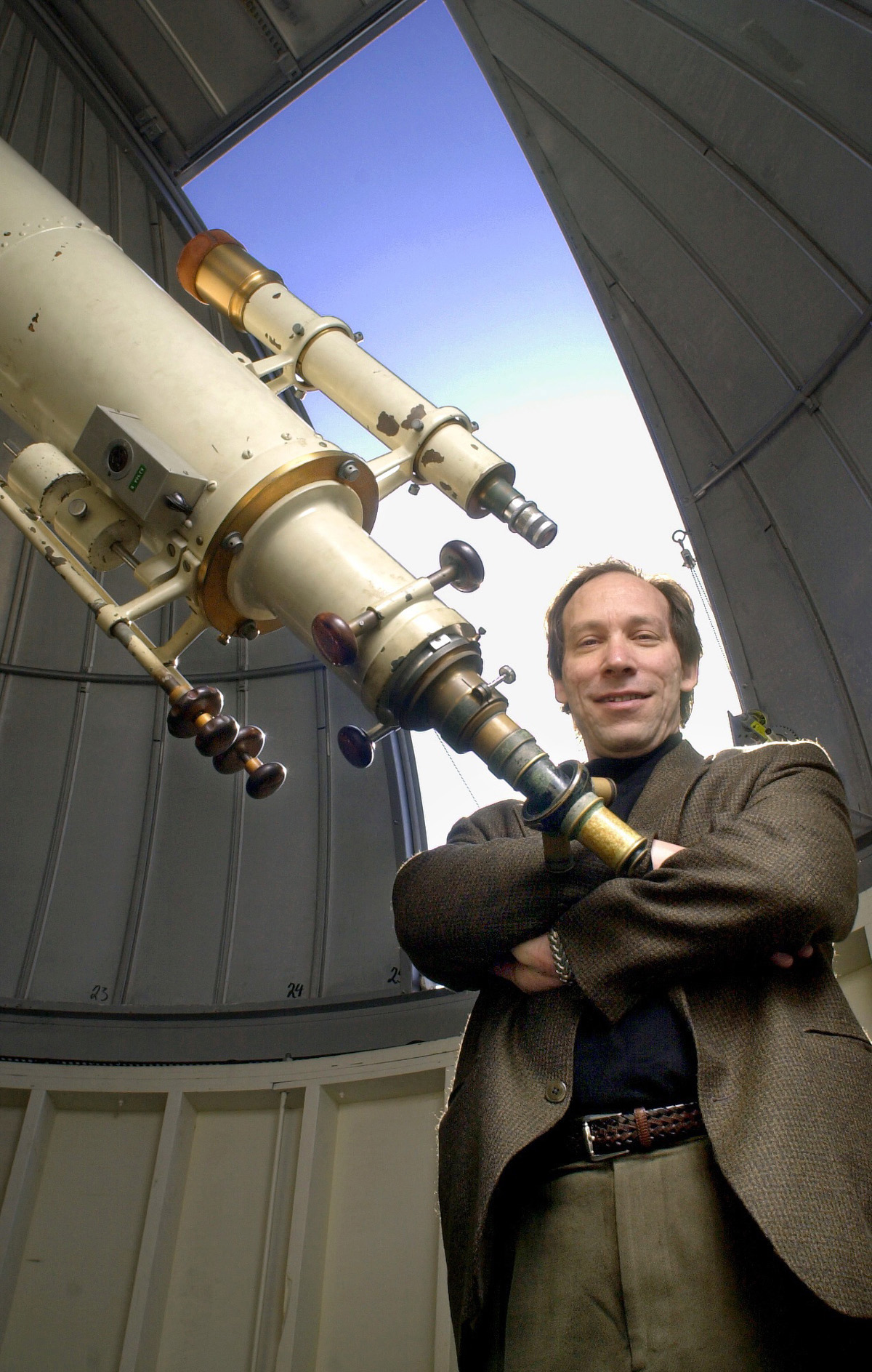 Speaker: Lawrence Krauss, Arizona State University
Title: "From Inflation to Eternity"
Abstract:
The last decade or two have represented the golden age of observational cosmology, producing a revolution in our picture of the Universe on its largest scales, and perhaps also its smallest ones. I will argue that these recent developments bring to the forefront some vexing questions about whether various fundamental assumptions about the universe are in fact falsifiable. I will focus on 3 issues: (1) "Proving" Inflation, (2) Dark Energy and Anthropic Arguments, and (3) Cosmology of the far future.
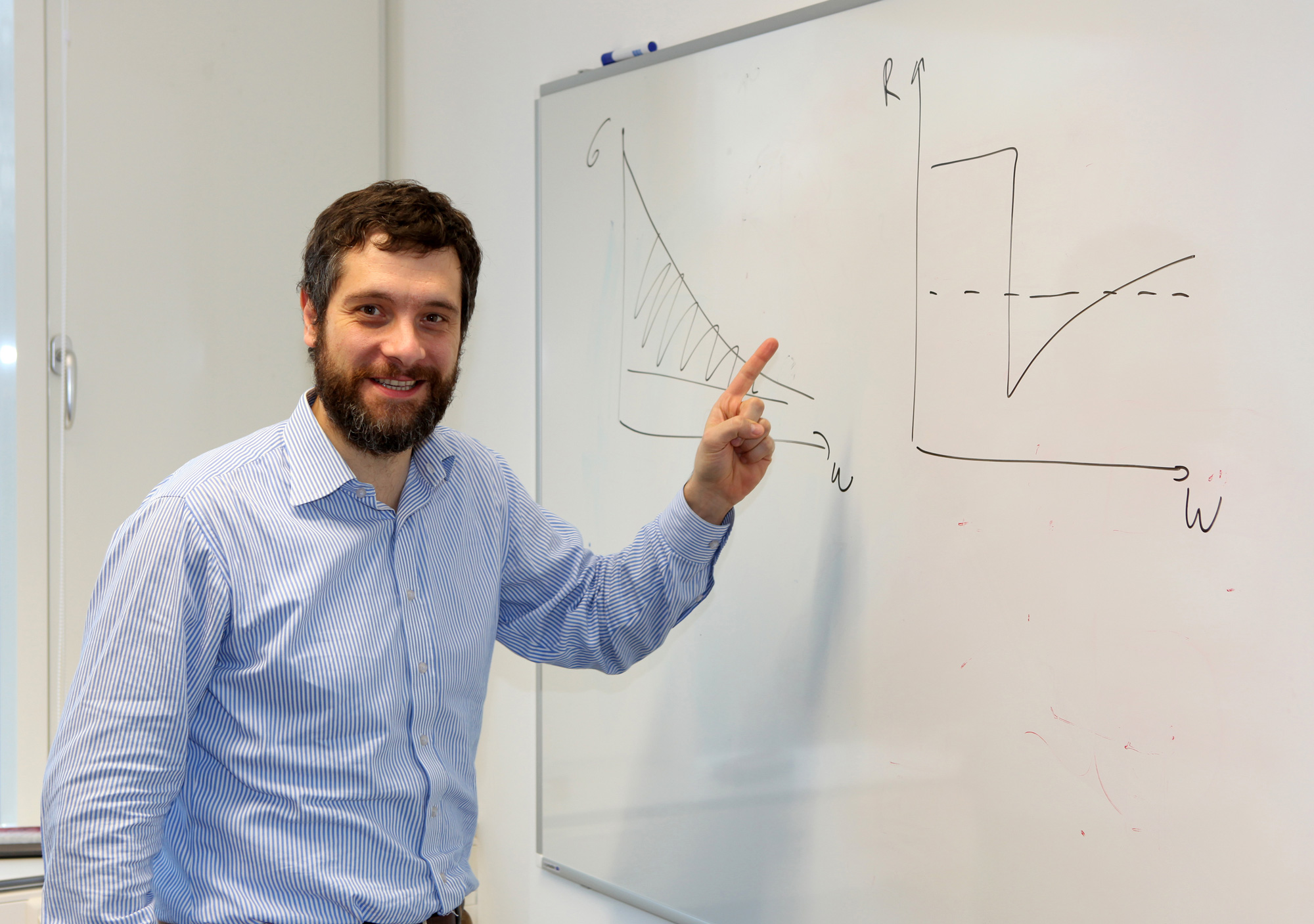 Speaker: Andrea Cavalleri, University of Oxford
Title: “Optical control of High Tc cuprates”
Abstract:
In this talk I will discuss some of our recent work aimed at controlling superconductivity in the High Tc cuprates with light.
High-field THz radiation is used to coherently manipulate low lying excitations, selectively driving them to amplitudes far in excess of thermal fluctuations. This regime of excitation extends the coherent manipulation of quantum matter far beyond the limits explored with microwave technology, notably in NMR or EPR experiments. Yet, we explore a photon energy regime well under that of “ionizing” eV energy scale radiation used in conventional femtosecond spectroscopy. Nonlinear control of broken symmetry states becomes possible with these tools.
In our early work, we have excited large amplitude vibrational excitations to melt competing ordered states with mid infrared light. More recent work has focused on direct control of the interlayer Josephson phase, manipulated with strong THz electric field transients. In some recent experiments have demonstrated coherent oscillations between superconducting and ohmic states of cuprates, in the spirit of the AC Josephson effect .
This dynamics is probed with femtosecond x-ray radiation, and selected examples of the application of Free Electron Lasers to this class of problems will be discussed.